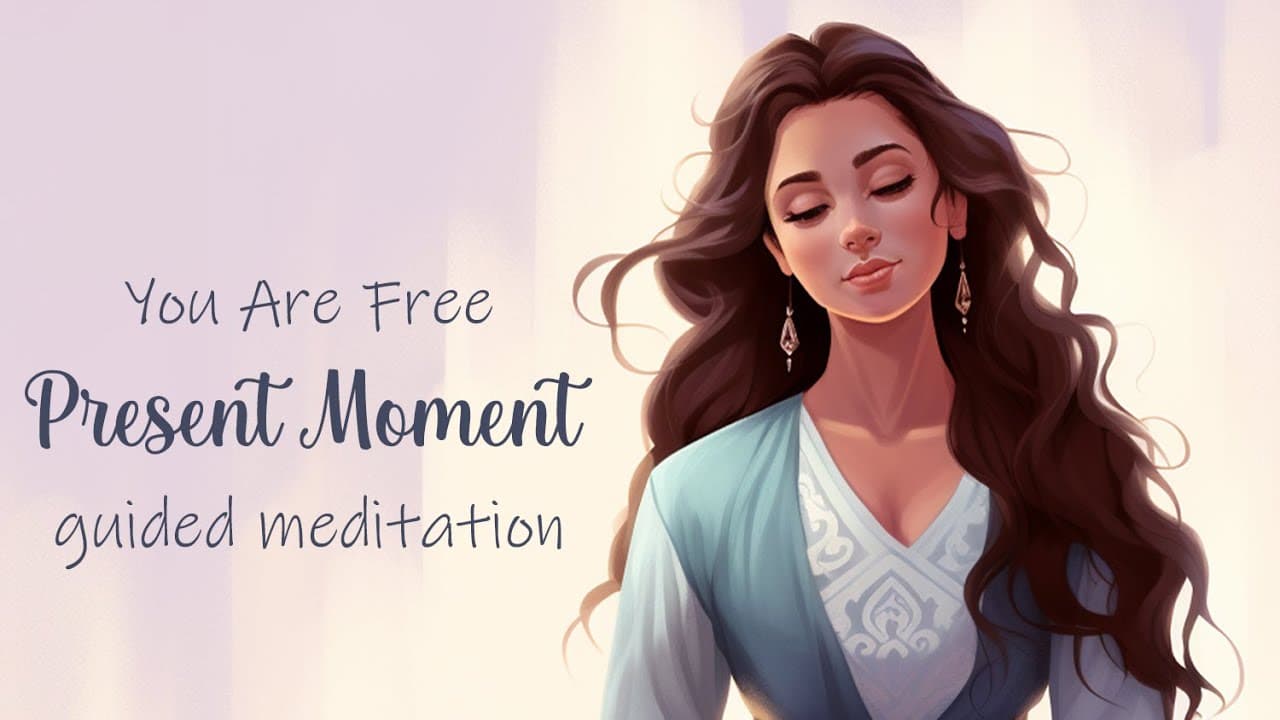
Guided Meditation: How Do You Practice “In This Moment You Are Free”?
TL;DR
You practice “In This Moment You Are Free” by settling into a comfortable position, breathing deliberately, relaxing unused muscles, and treating the present as complete. The meditation guides awareness from the top of the head to the toes, allows thoughts without judgment, and imagines all eternity existing now. Read on for the full sequence and guidance for carrying this refreshed presence into the rest of the day.
Transcript
Begin by inviting yourself to get into whatever position feels best right now gently closing your eyes when you're ready and slowly letting awareness drift until you find yourself present with your own internal experience of you tuning in to the sensations of breath as you let belly be nice and soft and loose taking each sip of air deliberately and... Read More
Key Insights
- Comfort guides the starting posture: The meditation does not prescribe sitting, lying down, or holding a particular pose. It begins by inviting you into whatever position feels best right now. Closing the eyes is also approached gently and only when you are ready, establishing a practice directed by present comfort rather than an imposed physical form.
- Attention turns inward gradually: Awareness is allowed to drift until it arrives at your internal experience. This is not presented as a forceful effort to shut out everything else. The transition happens slowly, with attention settling on what it feels like to be you before the practice moves more deeply into breath, bodily sensation, and relaxation.
- Breathing combines intention and gratitude: Each sip of air is taken deliberately, with appreciation for its movement. The breath is not merely counted or controlled. It becomes an experience to notice with gratitude while the belly remains soft, loose, and receptive. This combination supports presence without requiring a rigid breathing rhythm or externally determined pace.
- Your pace remains personally chosen: The repeated invitation to move at your own pace makes self-trust part of the meditation. You are asked to unlock what feels best in this moment instead of pursuing a standard experience. The same principle later governs how long you remain in spaciousness and when you decide that it is right to transition out.
- Relaxation follows a body scan: Awareness travels from the top of the head to the tips of the toes while unnecessary muscles release. The scan gives attention a clear physical path without demanding that every area relax immediately. You release wherever you can, continuing to breathe and stay present as relaxation gradually spreads throughout the body.
- Thoughts require neither resistance nor judgment: Thoughts may come and go during the body scan, and their presence is treated as acceptable. The instruction is not to suppress them or analyze why they appeared. Instead, avoid getting caught up in them or judging them, then invite awareness to remain with the breath and body.
- Breath and body are enough: The practice repeatedly removes pressure to achieve a special mental state. When thoughts arise, staying present with breathing and bodily sensation is described as enough for now. This reframes meditation as direct contact with current experience, rather than a test of whether the mind can become completely empty or perfectly still.
- Wholeness emerges through releasing: The meditation links progressive relaxation with feeling released, relaxed, and whole. Completeness is not postponed until some external task is finished or some improved identity is reached. It is encountered in the current body and moment, after unnecessary effort and tension have been allowed to soften.
- Eternity becomes a temporary imagination: For this practice, you are invited to imagine that all eternity exists in the present moment. The instruction is framed as something to explore only for now, not as a claim that must be intellectually proven. This imagination creates room to feel already done, complete, and free.
- Freedom means suspending demands: Within the imagined completeness of the moment, there is nothing more to do, to be, or to prove. Freedom is therefore experienced as a pause from demands rather than as another achievement. The practice allows the present to stand on its own, without measuring it against unfinished tasks or desired versions of yourself.
- The body can hold timelessness: The mind may engage with thoughts about eternity if doing so feels good, but thinking is optional. The alternative is to let timelessness become a job for the body. Spaciousness, eternity, and the sense of having been in the moment forever are approached through sensing, feeling, and breathing.
- Meditative awareness remains portable: Awe, wonder, appreciation, and presence are described as still available after the inward practice. The transition is not a rejection of the meditative state. By bringing current awareness into the surrounding world, you can wake the body, open the eyes, and meet what lies ahead while feeling refreshed and renewed.
Install to Summarize YouTube Videos and Get Transcripts
Explore YouTube Video Summarizer or Get YouTube Transcript Extractor
Questions & Answers
Q: How do you practice the Guided Meditation “In This Moment You Are Free”?
Choose whatever position feels best, close your eyes gently when ready, and let attention settle on your internal experience. Keep the belly soft while breathing deliberately and appreciating each sip of air. Scan from the top of your head to your toes, releasing muscles you do not need. Then rest in the idea that this moment contains eternity, leaving nothing more to do, become, or prove for now.
Q: How does the guided meditation begin?
The practice begins by inviting you to find the position that feels best right now. When ready, gently close your eyes and allow awareness to move toward your internal experience. Notice the sensations of breath while keeping the belly soft and loose. This opening establishes a personally chosen pace and makes present bodily experience the foundation of the meditation.
Q: How should I breathe during this meditation?
Take each sip of air deliberately and with intention to appreciate it. Let the belly remain soft and loose rather than introducing unnecessary effort. Continue at your own pace, noticing what feels best in the moment. The breath anchors attention while gratitude and bodily softness support the gradual release of tension.
Q: How do I release physical tension in the practice?
As you breathe deliberately, begin relaxing any muscles you do not need to use right now. Move awareness from the top of your head down to the tips of your toes. Release and relax wherever you can while continuing to stay present with each breath. This gradual scan allows the entire body to move toward feeling released, relaxed, and whole.
Q: What should I do when thoughts arise?
Let thoughts come and go, and treat their appearance as okay. Do not become caught up in them or judge them. Invite awareness to continue resting with the breath and the body instead. If the mind later wants to consider eternity, you may allow it when that feels good, but thinking is never required.
Q: How does the meditation create a sense of freedom?
The practice asks you to imagine, for this moment, that all eternity exists right here. If eternity is already present, then everything is treated as completed. There is temporarily nothing more to do, to be, or to prove. This creates freedom by allowing your present self and present experience to be complete without another demand.
Q: How can I experience eternity without analyzing it?
Let eternity become a job for the body rather than the mind. Sense and feel your way into the current moment while allowing it to be enough. As you access feelings of spaciousness and timelessness, simply continue breathing. You may remain there for a while, trusting yourself to recognize what feels right at this time.
Q: How do I transition out of the guided meditation?
When you are ready, bring the awareness developed in meditation into the world around you. Stay connected to the present as you feel the body waking up and notice yourself feeling refreshed and renewed. Blink your eyes open gently and take in whatever is before you. The transition matters because awe, wonder, appreciation, and presence can remain with you wherever you go that day.
Summary & Key Takeaways
-
Entering your internal experience: Begin in whatever position feels best, then gently close your eyes when ready. Let awareness drift toward your internal experience and notice the sensations of breathing. Keep the belly soft and loose while taking each sip of air deliberately and appreciatively. There is no prescribed pace to match. Instead, move at your own pace and allow the breath to help you recognize what feels best in the present moment.
-
Releasing tension through awareness: Continue breathing deliberately and with gratitude while relaxing every muscle that is not needed right now. Let awareness travel gradually from the top of the head to the tips of the toes. Release tension wherever possible without abandoning attention to the breath. If thoughts appear and disappear, allow that process rather than becoming caught in the thoughts or judging them. Returning to breath and body is enough for now.
-
Recognizing present completeness: As relaxation spreads, sense the body as released, relaxed, and whole. The meditation asks you to experience yourself as complete exactly as you are in this moment. For the duration of the practice, let nothing exist outside the present. Imagine that all eternity is contained here. From that perspective, everything is already completed, so there is temporarily nothing more to do, become, or prove.
-
Feeling eternity in the body: If the mind wants to think about the idea of eternity, trust yourself and allow that when it feels good. Otherwise, make the experience a job for the body by sensing and feeling your way into the moment. Tune into spaciousness and timelessness, perhaps sensing that you have been in this moment forever. There is no further task. You can simply breathe and remain with the feeling for as long as seems right.
-
Returning refreshed and present: The awe, wonder, and appreciation felt during meditation do not need to disappear when the practice ends. Carry those awarenesses into the surrounding world while remaining connected to the present moment. When ready, feel the body waking up and notice a sense of being refreshed, renewed, and present. Blink the eyes open gently, take in whatever lies before you, and continue into the day as complete exactly as you are.
Read in Other Languages (beta)
Share This Summary 📚
Summarize YouTube Videos and Get Video Transcripts with 1-Click
Try YouTube Summary with ChatGPT & Claude or YouTube Transcript Generator
Explore More Summaries from Great Meditation 📚

Summarize YouTube Videos and Get Video Transcripts with 1-Click
Try YouTube Summary with ChatGPT & Claude or YouTube Transcript Generator