Which Stocks Could Benefit From 2026 Market Themes?
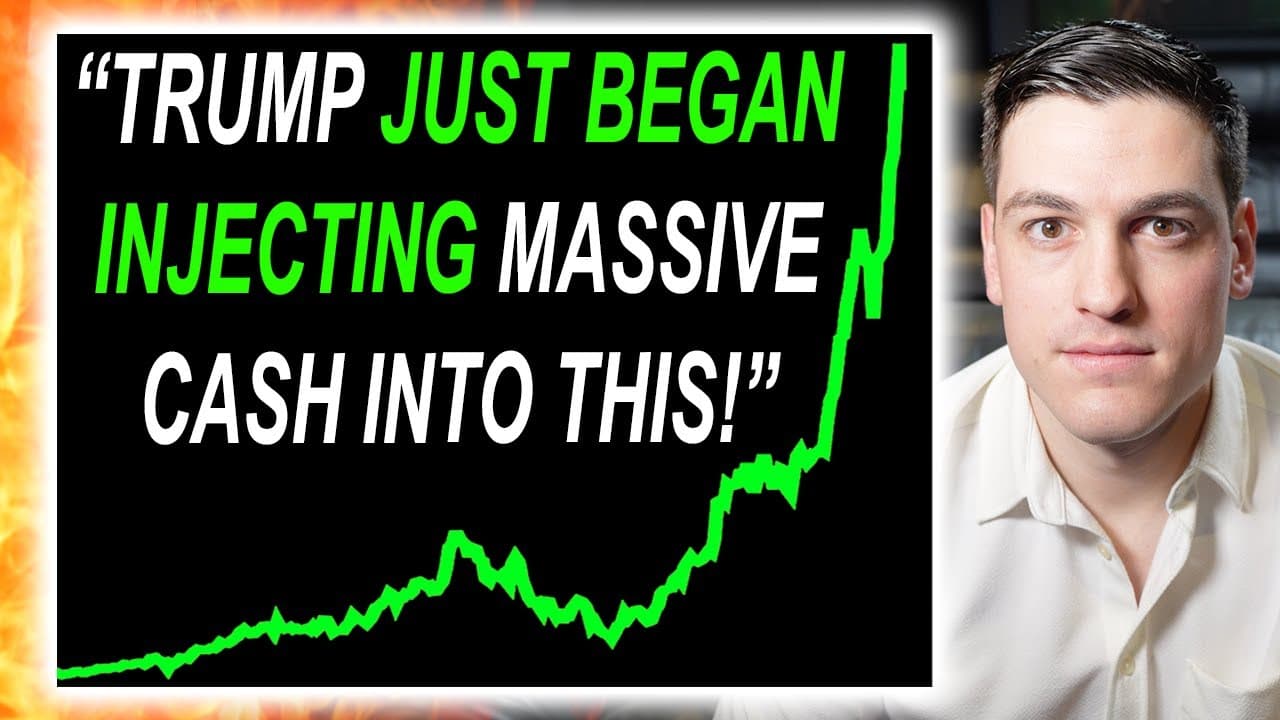
TL;DR
Chevron and the iShares Silver Trust are the two disclosed ideas in the provided transcript. The case for Chevron rests on its existing Venezuelan operations, the Guyana production ramp, and anticipated rebuilding, while SLV offers liquid exposure to silver demand and dollar weakness. The presenter warns that political instability, volatile oil prices, delayed infrastructure work, and general trading losses remain material risks.
Transcript
Folks, this year is going to be one of the most opportune in stock market history. And in today's video, we're going to break down the top five stocks that I consider must buys right now in January 2026. These are all going to be stocks that you're going to see people talking about all year. And in many cases, I think these are going to move extrem... Read More
Key Insights
- The 2026 investment framework is built around five themes: dollar depreciation, Venezuelan oil development, geopolitical tensions, the AI power shortage, and US government support for strategic industries. The presenter connects every selected investment to at least one of these themes.
- The dollar-depreciation thesis is based on US debt reaching $38 trillion, compared with $5.6 trillion in 2000, $10 trillion in 2008, and $27 trillion in 2020. The presenter expects policymakers to favor inflation over austerity or default.
- The Venezuela thesis assumes that rebuilding oil production could weaken OPEC's pricing power and suppress energy-driven inflation. Venezuela is described as holding 303 billion barrels of reserves, while production reportedly fell from 3.5 million to under 900,000 barrels per day.
- The geopolitical thesis is that conflict preparation increases military production and government spending even when direct war does not occur. The presenter highlights Iran, Greenland, China, and Taiwan as areas where nuclear concerns, strategic resources, shipping routes, drones, and weapons stockpiles could drive expenditures.
- The AI power thesis is that electricity supply has become a central constraint on further AI development. The presenter identifies nuclear energy as the leading power source for AI infrastructure and expects investment attention to shift from developing AI toward supplying its data centers with electricity.
- Chevron's Venezuela advantage is its established presence in the country. The presenter says it is the only major US oil company currently operating there and was producing roughly 17% of Venezuela's output before Maduro's reported capture, providing assets, relationships, knowledge, and first-mover positioning.
- Chevron's listed catalysts are its January 30 fourth-quarter earnings, integration of the Hess acquisition, capital-allocation guidance, the Guyana offshore production ramp with Exxon, and potential Venezuelan sanctions relief. Management is said to target more than 10% annual free-cash-flow growth through 2030.
- SLV's investment case is based on liquid exposure to the spot price of silver and active options trading. The presenter describes silver as scarce, as the best conductor of electricity, and as an input for solar panels, electric vehicles, military equipment, and AI data center hardware.
Install to Summarize YouTube Videos and Get Transcripts
Explore YouTube Video Summarizer or Get YouTube Transcript Extractor
Questions & Answers
Q: What market themes shape the stock ideas for 2026?
The presenter identifies five themes: continued depreciation of the US dollar, reconstruction of Venezuela's oil industry, heightened geopolitical tensions, an electricity shortage affecting AI expansion, and stronger US government support for strategic industries. The selected investments are intended to benefit from one or more of these conditions, particularly demand for real assets, energy infrastructure, nuclear power, defense production, rare earths, and semiconductors.
Q: Why does the presenter expect the US dollar to lose value?
The argument begins with US debt of $38 trillion, up from $5.6 trillion in 2000, $10 trillion in 2008, and $27 trillion in 2020. The presenter considers austerity and default unlikely, leaving inflation as the expected method of reducing the debt's real burden. Under that thesis, investors move money from dollars into stocks, gold, silver, and other assets that may retain value.
Q: How could Venezuelan oil affect inflation and OPEC?
The presenter argues that rebuilding Venezuela's production from under 900,000 barrels per day toward 2 to 3 million could add 1 to 2 million barrels of supply controlled by American companies rather than OPEC. Greater supply could pressure energy prices and reduce their contribution to CPI. In the presenter's thesis, lower reported inflation would give the US more room to expand the money supply while weakening OPEC's pricing influence.
Q: Why is Chevron presented as a way to invest in Venezuela's oil recovery?
Chevron is described as the only major US oil company currently operating in Venezuela. Before Maduro's reported capture, it was already responsible for roughly 17% of the country's output, according to the presenter. Its existing relationships, assets, and operating knowledge could provide a first-mover advantage if sanctions are relaxed and private companies are permitted to rebuild Venezuela's damaged oil infrastructure.
Q: What catalysts could affect Chevron during 2026?
The first cited catalyst is Chevron's fourth-quarter earnings on January 30, when management could discuss Venezuelan licensing, integration of the Hess acquisition, and capital allocation. Additional catalysts include offshore production growth in Guyana with Exxon and a possible Venezuelan reconstruction program following sanctions relief and political stabilization. The presenter also says management is targeting more than 10% annual free-cash-flow growth through 2030.
Q: What are the principal risks to the Chevron thesis?
Venezuela's oil infrastructure is described as severely damaged and likely to require years of rebuilding. The thesis also depends on sanctions relief, an orderly political transition, and sufficient stability for private investment. Oil prices remain volatile, and events on the ground may not develop as expected. Even if redevelopment proceeds, delays could prevent Chevron from realizing the anticipated production growth within the presenter's preferred timeframe.
Q: Why does the presenter favor SLV for silver exposure?
SLV is an exchange-traded fund that tracks the spot price of silver. The presenter prefers it as a trading vehicle because both its shares and options offer substantial liquidity, while noting that physical bars are another possible form of ownership. The investment case combines expected dollar weakness with silver's industrial roles in solar panels, electric vehicles, military equipment, and AI data center hardware.
Q: Were all five stock selections identified in the provided transcript?
No. The supplied transcript fully names Chevron as selection number five and begins discussing the iShares Silver Trust, SLV, as selection number four. It ends during the silver discussion, before selections three, two, and one are identified or analyzed. Any attempt to name those remaining investments would require information that is absent from the title, transcript, and description provided.
Summary & Key Takeaways
-
The presenter organizes the 2026 outlook around five themes: dollar depreciation, expanded Venezuelan oil supply, geopolitical tensions, rising electricity requirements for AI, and government support for strategic industries. The central thesis is that real assets and selected companies connected to energy, defense, nuclear power, rare earths, and semiconductors could attract investment.
-
Chevron is presented as a direct way to gain exposure to a potential reconstruction of Venezuela's oil industry. The company is described as the only major US oil producer currently operating there, with existing assets, relationships, knowledge, and roughly 17% of national output before Maduro's reported capture, according to the presenter.
-
SLV is introduced as a liquid vehicle that tracks the spot price of silver. The bullish argument combines monetary concerns with industrial uses in solar panels, electric vehicles, military equipment, and AI data center hardware. The provided transcript ends during this discussion and does not identify the remaining three selections.
Read in Other Languages (beta)
Share This Summary 📚
Summarize YouTube Videos and Get Video Transcripts with 1-Click
Try YouTube Summary with ChatGPT & Claude or YouTube Transcript Generator
Explore More Summaries from ZipTrader 📚

Summarize YouTube Videos and Get Video Transcripts with 1-Click
Try YouTube Summary with ChatGPT & Claude or YouTube Transcript Generator