What Impact Did Fritz Haber Have on Agriculture and Warfare?
TL;DR
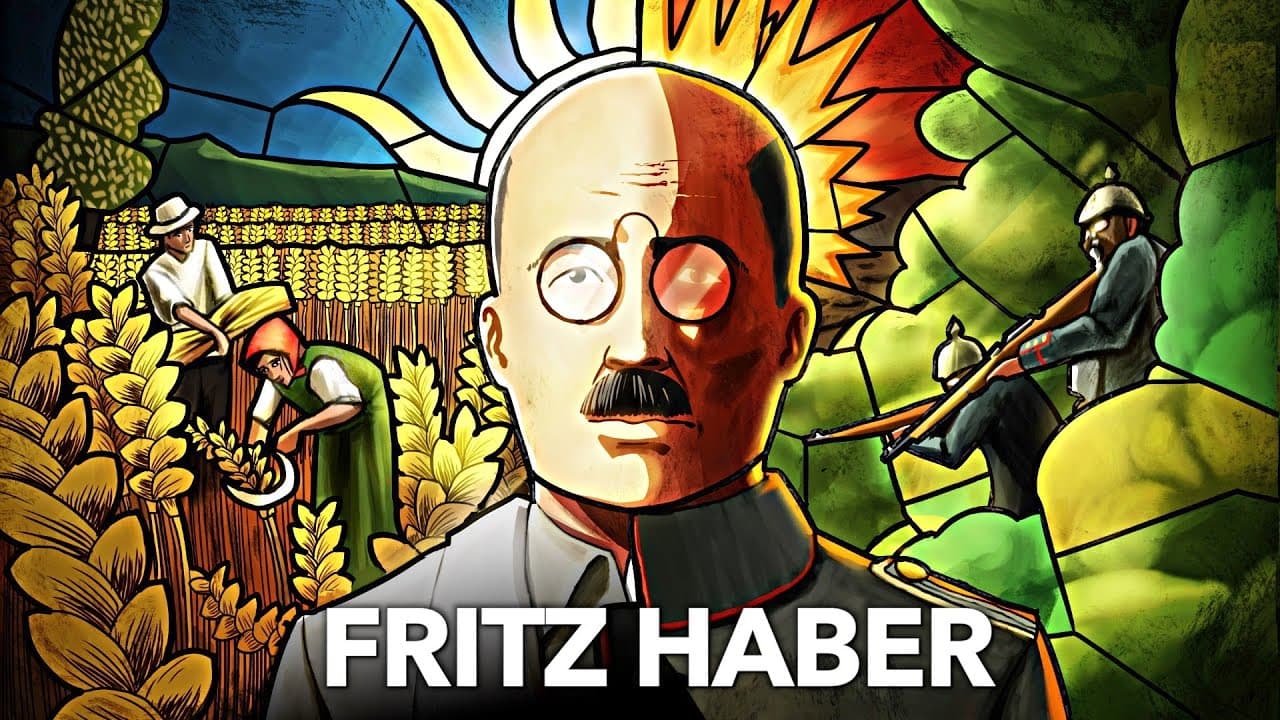
Fritz Haber revolutionized agriculture by inventing nitrogen fertilizer, which significantly increased food production and supported the world’s population growth. However, his legacy is marred by his role in developing chemical weapons during World War I, raising ethical questions about the dual-use nature of scientific advancements.
Transcript
- The 1918 Nobel Prize for Chemistry is probably the most important Nobel Prize ever awarded. It was given to German scientist Fritz Haber for solving one of the biggest problems humanity has ever faced. His invention is directly responsible for the lives of 4 billion people today. But when he received his prize, many of his peers refused to attend... Read More
Key Insights
- 🥘 Fritz Haber's invention of nitrogen fertilizer revolutionized agriculture and allowed for a significant increase in food production.
- 🥺 His scientific achievements were overshadowed by his involvement in chemical warfare during World War I, which led to tragic deaths and tarnished his reputation.
- 🖐️ Nitrogen fertilizer continues to play a crucial role in modern agriculture and has contributed to the quadrupling of the world's population.
- 👨🔬 The ethical dilemmas surrounding scientific advancements highlight the need for responsible research and consideration of potential consequences.
- ✊ Science and technology have the power to improve lives and solve global challenges, but they also come with the potential for misuse and destruction.
- 🛟 The story of Fritz Haber serves as a reminder of the complexities and moral implications of scientific progress.
- 🪐 It is important to critically examine the impact and consequences of scientific advancements to ensure the well-being of humanity and the planet.
Install to Summarize YouTube Videos and Get Transcripts
Explore YouTube Video Summarizer or Get YouTube Transcript Extractor
Questions & Answers
Q: What was Fritz Haber's most significant invention?
Fritz Haber's most significant invention was the process of converting nitrogen from the air into ammonia, which revolutionized agriculture and allowed for increased food production.
Q: How did nitrogen fertilizer contribute to population growth?
Nitrogen fertilizer addressed nitrogen deficiency in soil, leading to healthier and more abundant crops. This increase in food production allowed the world's population to quadruple.
Q: What led to the tarnishing of Fritz Haber's reputation?
Haber's involvement in chemical warfare during World War I, including the development of chlorine gas, led to the tragic deaths of thousands of soldiers. This overshadowed his scientific achievements and led to peers rejecting his Nobel Prize and criticism from the media.
Q: How did Haber's invention impact the world today?
Haber's invention of nitrogen fertilizer has saved countless lives by increasing food production and addressing nitrogen deficiency in soil. It continues to play a crucial role in modern agriculture.
Summary & Key Takeaways
-
Fritz Haber won the Nobel Prize for his invention of nitrogen fertilizer, which revolutionized agriculture and allowed for increased food production.
-
His invention was crucial in addressing nitrogen deficiency in soil, leading to higher crop yields and a quadrupling of the world's population.
-
However, Haber's involvement in chemical warfare during World War I, including the development of deadly gases like chlorine, tainted his reputation and overshadowed his scientific accomplishments.
Read in Other Languages (beta)
Share This Summary 📚
Summarize YouTube Videos and Get Video Transcripts with 1-Click
Try YouTube Summary with ChatGPT & Claude or YouTube Transcript Generator
Explore More Summaries from Veritasium 📚




Summarize YouTube Videos and Get Video Transcripts with 1-Click
Try YouTube Summary with ChatGPT & Claude or YouTube Transcript Generator