How Is AI Transforming Education and Tutoring?
TL;DR
AI can improve education by providing personalized, Socratic guidance, expanding access to tutoring, and reducing teachers’ administrative burdens. Effective adoption requires equal access, clear classroom policies, redesigned assessments, and explicit privacy assurances so students trust institution-provided tools. Study Mode is an early step toward a tutor that adapts to learners, asks follow-up questions, offers quizzes, and encourages deeper understanding.
Transcript
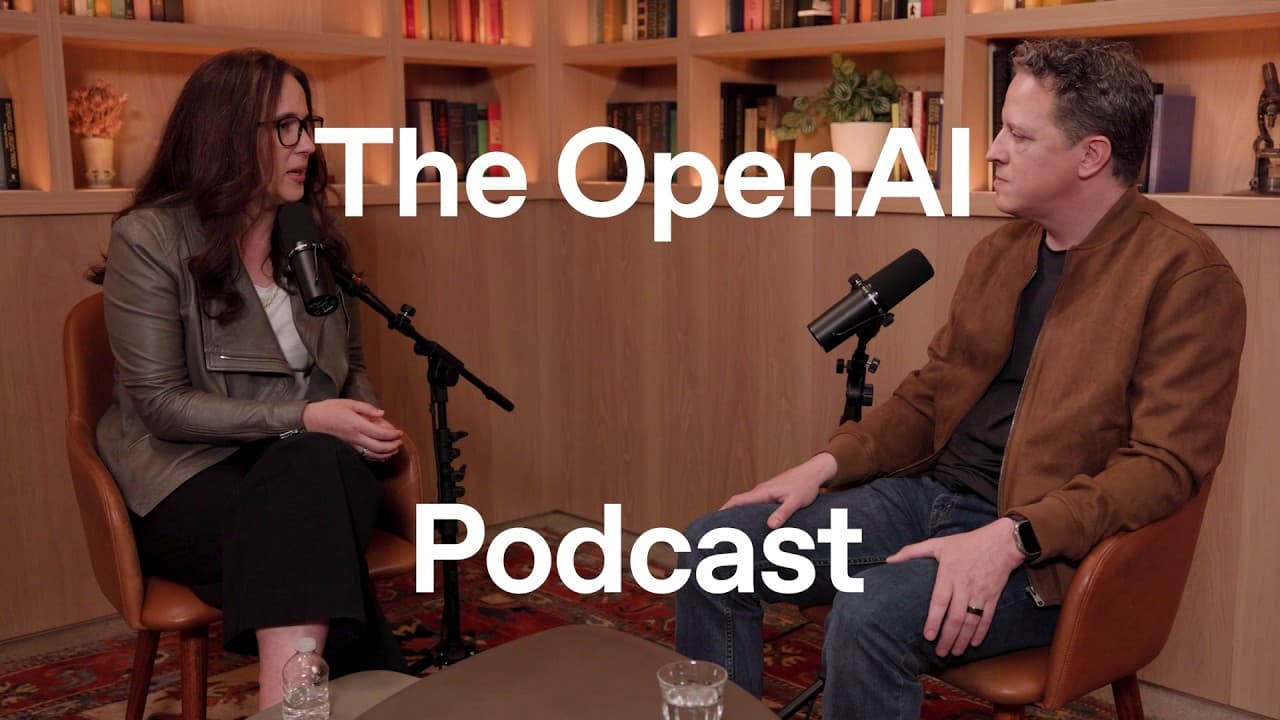
Hello, I'm Andrew Maine and this is the OpenAI podcast. Today we're going to talk about chat GPT and education. Does it cause brain rot? Is chat GPD just a tool for cheating? We're going to speak with Leah Bellski, head of education at OpenAI, and a couple students who are active users. Chat GPD at this point is now the world's largest learning pla... Read More
Key Insights
- ChatGPT is described as the world’s largest learning platform, with learning among its leading use cases across 600 million users. Its educational role extends beyond schools because people also use it independently to explore ideas, ask questions, and develop knowledge outside formal systems.
- AI adoption in national education systems serves two connected goals: improving learning and preparing students for an AI-powered economy. Countries want graduates to gain practical experience using AI throughout their classes, rather than treating AI literacy as the subject of only a separate course.
- Equal access is a central reason universities provide AI across entire campuses. Without institution-wide availability, students with greater financial resources can purchase access to newer models while students with fewer resources cannot, potentially reproducing existing differences in educational opportunity.
- Student trust is necessary for institution-provided AI to succeed. Universities must clearly explain that they are not monitoring private conversations because students shaped by remote learning during COVID may approach educational technology with concern about surveillance and institutional oversight.
- Early institutional responses to AI often emphasized policing and detection rather than clear expectations. The discussion argues that educators should define when AI is permitted, reconsider homework design, and redesign assessments instead of relying on inaccurate detection tools or avoiding the technology entirely.
- Study Mode is designed to guide learners toward answers instead of merely producing answers. It responds Socratically, adapts explanations to the learner’s level and context, asks follow-up questions, offers quizzes, and encourages students to investigate a subject more deeply.
- Study Mode was informed by learning science, pedagogical experts, and examples gathered from specialists around the world. Its development considered whether responses were encouraging, supported curiosity, and matched each student’s needs, making pedagogical behavior part of the product design process.
- AI tutoring could eventually become multimodal, proactive, and continuous. The envisioned system might provide interactive diagrams, generate examples for assignments, revisit learning goals weeks later, and help students remember material over time rather than supporting only immediate test preparation.
Install to Summarize YouTube Videos and Get Transcripts
Explore YouTube Video Summarizer or Get YouTube Transcript Extractor
Questions & Answers
Q: How is AI transforming education and tutoring?
AI is transforming education by making personalized guidance available both within schools and through independent learning. ChatGPT can answer questions, adapt explanations, reduce teachers’ administrative burdens, and support classroom activities. Study Mode goes further by using Socratic questioning, follow-up prompts, quizzes, and level-appropriate responses to guide students toward understanding instead of simply delivering completed answers.
Q: What is ChatGPT Study Mode and how does it work?
ChatGPT Study Mode is a learning-focused experience designed to guide students toward answers rather than only provide them. It responds Socratically, considers the learner’s level and educational context, asks useful follow-up questions, offers quizzes, and encourages deeper exploration. It represents an early step toward making ChatGPT function as a more effective and personalized tutor.
Q: Why are countries introducing AI into education systems?
Countries are interested in AI as core infrastructure for education because they want to improve teaching while preparing students for economic change. Their goal is not limited to adding separate AI courses. They want students to use AI during regular classes so graduates enter an AI-powered economy with practical experience, stronger workforce readiness, and familiarity with the technology.
Q: How can universities provide equitable access to AI?
Universities can support equitable access by making capable AI tools available across the entire campus instead of leaving students to purchase access individually. Without institutional provision, students who have more financial resources may use the latest models while others cannot. Campus-wide access treats AI as shared educational infrastructure and reduces resource-based differences in who can benefit from it.
Q: Why might students avoid AI tools provided by universities?
Students may hesitate to use university-provided AI when they believe their conversations could be monitored. The current university population includes students whose early educational experiences during COVID involved Zoom, Google Classroom, and close digital oversight. Institutions therefore need to state their privacy practices clearly, explain that conversations are not being watched, and build genuine trust around educational technology.
Q: Why are AI detectors a poor foundation for classroom policy?
AI detectors can create mistrust because they may flag writing incorrectly, while prompted AI text can also be altered to avoid detection. A false accusation can damage the relationship between students and educators. The discussion favors explicit rules about permitted use, thoughtful homework design, and redesigned assessments over beginning with policing, concealment, or dependence on unreliable detection tools.
Q: How was ChatGPT Study Mode developed?
Study Mode emerged after an OpenAI team visited India and observed strong demand for educational advancement alongside significant family spending on tutors and after-school help. The team created a framework informed by learning science and pedagogical experts, then gathered strong response examples from specialists worldwide. Development examined tone, curiosity, encouragement, personalization, and whether answers matched students’ learning needs.
Q: What could an AI tutor do in the future?
A future AI tutor could combine personalized explanations with multimodal and proactive support. It might show interactive diagrams, provide sample material for biology or organic chemistry assignments, remember a student’s academic goals, and prompt the student to revisit a topic weeks later. Such continuity could support long-term retention and accompany learners over time instead of addressing only immediate questions.
Summary & Key Takeaways
-
ChatGPT has become a major destination for learning both inside and outside formal education. Teachers use it to reduce administrative work and introduce new classroom practices, while countries view AI as educational infrastructure and preparation for an AI-powered economy. The broader goal is to improve human potential and make effective tutoring widely accessible.
-
Universities see institution-wide AI access as a way to reduce inequality between students who can purchase advanced tools and those who cannot. Adoption also depends on trust. Students may avoid school-provided AI if they suspect monitoring, so institutions must communicate privacy practices clearly and establish transparent rules for appropriate academic use.
-
Study Mode shifts ChatGPT from simply supplying answers toward guiding students through the learning process. It uses Socratic responses, adapts to the learner’s level and context, asks follow-up questions, offers quizzes, and encourages deeper exploration. Future versions could add interactive diagrams, multimodal explanations, proactive reminders, and support that continues over time.
Read in Other Languages (beta)
Share This Summary 📚
Summarize YouTube Videos and Get Video Transcripts with 1-Click
Try YouTube Summary with ChatGPT & Claude or YouTube Transcript Generator
Explore More Summaries from OpenAI 📚


Summarize YouTube Videos and Get Video Transcripts with 1-Click
Try YouTube Summary with ChatGPT & Claude or YouTube Transcript Generator