How Could Starship Create Artificial Gravity?
TL;DR
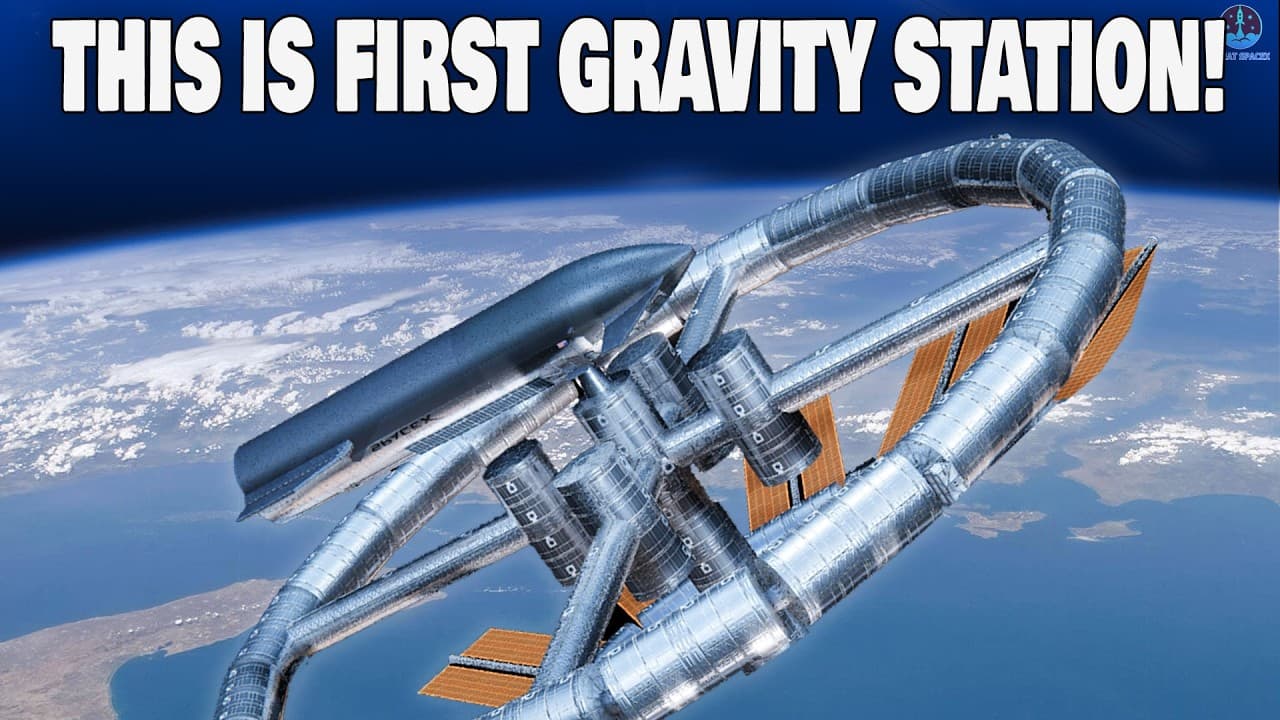
Starship could serve as a spacious orbital habitat and generate artificial gravity when multiple modules rotate around a central hub. Its large structure could provide more comfortable rotation, support extensive living facilities, and reduce health problems associated with microgravity, although deployment, initial spin-up, orbital control, and steady rotation would present major engineering and financial challenges.
Transcript
We are witnessing a race to establish humanity's home in space. The giants such as the ISS and Tong Gong already define the landscape. Soon new contenders like Vast, Axiom, Orbital Reef, and Starlab will enter the competition. So which name is missing from that list? SpaceX, the industry leader, will not stand on the sidelines. In the realm of spac... Read More
Key Insights
- • Starship is presented as a feasible station module because its habitation systems, life-support equipment, and interior fittings could be installed on Earth before launch. Once in orbit, a custom thruster system would maintain its trajectory while the vehicle continuously circles Earth.
- • A single Starship could provide more usable interior volume than the current International Space Station. Converting it from a rocket stage into a dedicated habitat could create additional pressurized space by removing propellant tanks, reinforcing structural areas, and using more of the vehicle's height.
- • Artificial gravity would be created by arranging multiple Starships around a central hub and rotating the entire structure. Radial cables would connect the modules, while centrifugal force in the outer sections would imitate the gravitational conditions that residents experience on a planetary surface.
- • A large rotating diameter allows artificial gravity to be produced at a slower, steadier rotation rate. This matters because smaller rotating habitats must spin faster, potentially causing motion sickness and disorientation that would make long-term residence less comfortable.
- • Artificial gravity could reduce bone density loss, muscle atrophy, and cardiovascular strain during extended stays in orbit. Better preservation of astronaut health could support longer missions, reduce the frequency of crew rotations, and broaden opportunities for scientific research and exploration.
- • Daily life becomes more intuitive when gravity is available. Eating, showering, and using the restroom could require fewer restraints and specialized systems, while improved physical comfort could also support the psychological well-being of people living far from Earth.
- • Starship's interior could be divided into storage, utilities, dining, gardening, exercise, sanitation, sleeping, and communal observation zones. Hydroponic or aeroponic gardens could supplement food supplies while also providing a relaxing activity for crew members who enjoy caring for plants.
- • Building a rotating Starship station would require substantial time, labor, money, and propulsion capability. Initial spin-up would be a major engineering task, and operators would also need to maintain a stable rotation rate while managing orbital control and the connected structure.
Install to Summarize YouTube Videos and Get Transcripts
Explore YouTube Video Summarizer or Get YouTube Transcript Extractor
Questions & Answers
Q: How could Starship be converted into a space station?
Starship could be outfitted on Earth with habitation systems, life-support infrastructure, interior furnishings, utilities, and a custom thruster system. It would then launch much like another spacecraft intended for long-term orbital service. After reaching orbit, it would continuously circle Earth, use its thrusters for orbital maintenance, and provide a pressurized environment for residents, equipment, and research activities.
Q: How would a Starship station create artificial gravity?
Multiple Starships could be positioned in a circular arrangement around a central hub and connected to it by radial cables. Rotating the assembled station would generate centrifugal force in the outer modules, imitating gravity for their occupants. The resulting gravity level would depend on the system's radius and rotation speed, so operators could adjust the station's motion to create suitable living conditions.
Q: Why is Starship suitable for a rotating space station?
Starship is suitable because each vehicle offers an exceptionally large structure and substantial potential living volume. When several modules are arranged around a hub, the complete station could have a very large diameter. That scale would allow the habitat to generate artificial gravity with slower, steadier rotation, reducing the motion sickness and disorientation that faster-spinning, smaller systems can cause.
Q: How could artificial gravity protect astronaut health?
Artificial gravity could lessen several health effects associated with prolonged microgravity, including declining bone density, muscle atrophy, and cardiovascular strain. Preserving physical condition would make longer stays in orbit more practical and could reduce how often crews must be replaced. Exercise would remain important, but residents would perform daily activities in conditions that more closely resemble life on Earth.
Q: What could the interior of a Starship station contain?
The interior could be divided into functional levels for storage, utilities, dining, gardening, exercise, sanitation, sleeping, and shared activities. Lower areas could hold tools, scientific instruments, electrical equipment, power converters, and water systems. Other sections could include private cabins, workout machines, bathrooms, hydroponic or aeroponic gardens, and a communal living and observation area near the spacecraft's nose.
Q: Why would gardens be included in a Starship habitat?
Hydroponic or aeroponic gardens could help residents grow fresh, nutritious produce while living in orbit. They would supplement stored food rather than serving only as decorative features. Plant care could also provide a relaxing and therapeutic activity, giving crew members a familiar routine and an additional source of psychological comfort within the station's enclosed living environment.
Q: Could a Starship station be cheaper to expand than traditional stations?
The concept could offer economic advantages because Starship uses reusable, cost-efficient stainless-steel structures rather than relying entirely on highly specialized station modules and separate expensive launch vehicles. Using the vehicle itself as a habitat could reduce both manufacturing and launch expenses. That approach could make long-term expansion, repeated upgrades, and the addition of more pressurized modules more practical.
Q: What are the main challenges of a rotating Starship station?
The principal challenges are constructing and deploying an enormous connected structure, investing the required time, labor, and money, and controlling its rotation. Powerful thrusters would be needed to begin spinning the station, making initial spin-up a demanding engineering operation. Afterward, the system would need to preserve a steady rotation rate while maintaining its orbit and managing forces across the hub, cables, and modules.
Summary & Key Takeaways
-
Starship could be converted into an orbital station by installing habitation equipment, life-support infrastructure, interior fittings, and a custom thruster system before launch. Its large pressurized interior could exceed the volume of the current International Space Station, while redesigned station variants could remove propellant tanks and provide substantially more usable space.
-
A larger station concept would connect multiple Starships to a central hub using radial cables. Rotating this structure would create centrifugal force in the outer modules, producing artificial gravity. The system's large diameter could permit slower rotation than smaller designs, potentially reducing the motion sickness and disorientation associated with rapid spinning.
-
The proposed interior would separate storage, utilities, dining, gardens, fitness facilities, bathrooms, sleeping cabins, and communal observation areas into functional zones. Artificial gravity could simplify daily routines and protect astronaut health, but building, deploying, spinning, and controlling such a massive station would require extensive investment and powerful propulsion systems.
Read in Other Languages (beta)
Share This Summary 📚
Summarize YouTube Videos and Get Video Transcripts with 1-Click
Try YouTube Summary with ChatGPT & Claude or YouTube Transcript Generator
Explore More Summaries from GREAT SPACEX 📚



Summarize YouTube Videos and Get Video Transcripts with 1-Click
Try YouTube Summary with ChatGPT & Claude or YouTube Transcript Generator