Why Did Cursor's New Pricing Anger Users?
TL;DR
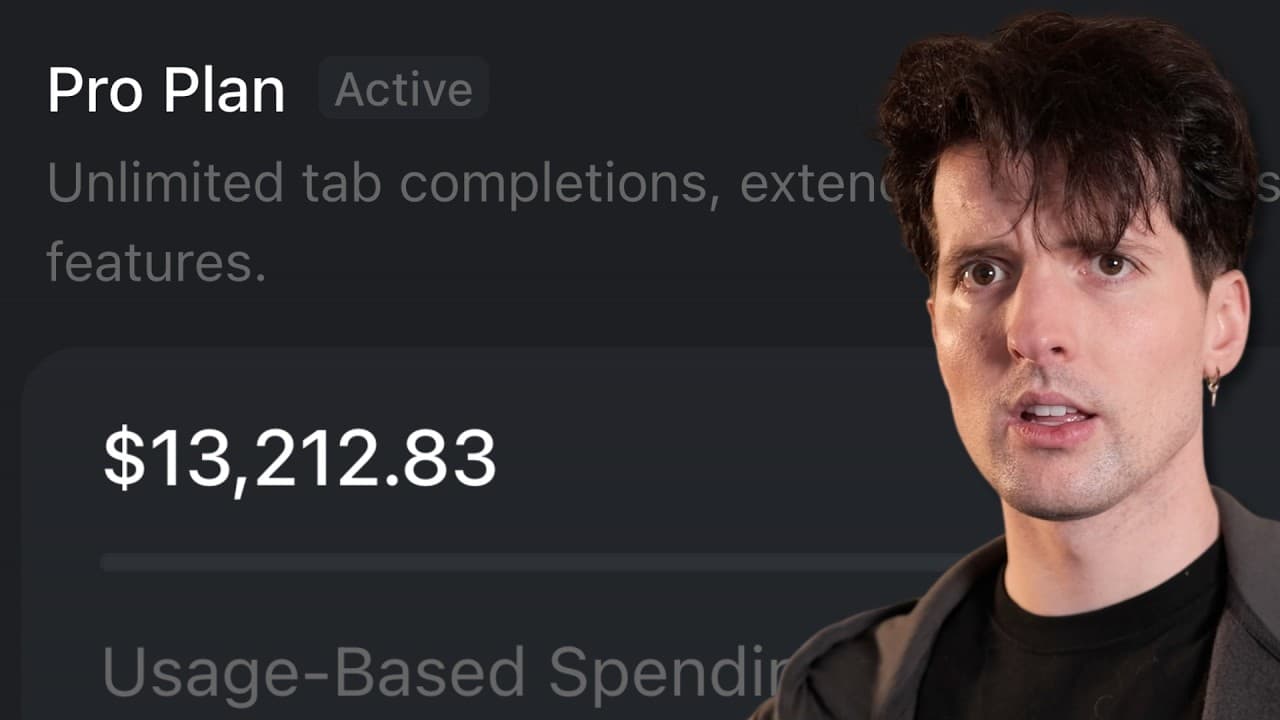
Cursor angered users by replacing its $20 Pro plan's 500 fast requests with $20 of model inference credit at API prices, while offering unlimited access only through Auto mode. The change was communicated poorly, causing some agent-heavy users to exhaust their included usage within one or two days and face unexpected charges or pressure to upgrade.
Transcript
Cursor is now forcing me to upgrade to the $60 per month subscription. Time to look for alternatives. What an a-hole move by Cursor. Just 12 days after announcing their unlimited plan, they changed the pricing back without notifying anyone. People were charged over $100 in usage, expecting unlimited requests. The f cursor. What are you doing? I was... Read More
Key Insights
- Cursor's revised Pro plan replaces 500 fast monthly requests with at least $20 of model inference at API prices. It also provides unlimited Auto model access and removes tool-call limits, substantially changing how subscribers' usage is measured.
- Unlimited access applies to Cursor's Auto mode, not every selectable model. Auto chooses a model based on factors such as task complexity, performance, speed, and likely cost, allowing Cursor to optimize its model expenses behind the scenes.
- Cursor's communication was unclear enough that users interpreted the revised $20 plan as broadly unlimited. Some subscribers consequently received unexpected usage charges, while others reported reaching their included limit after only a few manually selected model requests.
- Heavy agent-mode usage can consume the new allowance much faster than tab completion or occasional agent requests. The speaker's own usage remained manageable because agentic coding represented a relatively small portion of his activity, despite frequent use of Cursor.
- AI model usage is generally priced by input and output tokens rather than by messages. A token usually represents roughly three to five characters, and a request's cost depends on the selected model and the amount of text processed and generated.
- Output tokens can cost substantially more than input tokens. Claude 4 Sonnet is cited at $3 per million input tokens and $15 per million output tokens, so long generations can rapidly increase the cost of manually selected model usage.
- Reasoning models generate additional output while thinking, which can greatly increase total spending even when their listed per-token rates appear similar. In the speaker's T3 Chat example, output rose from roughly one-fourth or one-fifth of costs to around half or more.
- Cursor offers a $200 Ultra plan for power users, described as providing 20 times more usage than Pro. Existing subscribers can also choose to retain the earlier 500-request system, while Pro users may set spending limits for continued model-specific usage.
Install to Summarize YouTube Videos and Get Transcripts
Explore YouTube Video Summarizer or Get YouTube Transcript Extractor
Questions & Answers
Q: Why did Cursor's new pricing make users angry?
Cursor's new pricing angered users because the $20 Pro plan appeared to promise unlimited access, but unlimited usage applied specifically to Auto mode. Manually choosing models consumed a $20 inference allowance at API prices. Cursor did not communicate that distinction clearly enough, so some users exhausted their allowance quickly, encountered upgrade prompts, or received unexpected usage charges.
Q: How did Cursor's $20 Pro plan change?
Cursor replaced the previous allowance of 500 fast requests per month with at least $20 of model inference valued at API prices. The revised Pro plan also includes unlimited access to Auto models and removes limits on tool calls. Existing users were given the option to remain on the earlier 500-request method if they preferred that structure.
Q: What does unlimited Auto mode mean in Cursor?
Unlimited Auto mode means users can let Cursor select the model instead of manually choosing one such as Claude 4 Sonnet. Cursor can base that choice on task complexity, performance, speed, and likely price. Because the company can optimize model selection and control its underlying costs, it can provide considerably more access through Auto than through metered model-specific usage.
Q: Why can Cursor users reach their limits so quickly?
Users can reach the new limits quickly when they rely heavily on agent mode, select expensive models, use Max mode for more context, or request large amounts of generated output. The revised plan measures compute value rather than simply counting requests. Consequently, a few costly operations may consume the allowance faster than many inexpensive tab completions or Auto-mode interactions.
Q: How are AI model requests priced by tokens?
AI requests are usually billed according to input and output tokens, commonly measured in millions, rather than through a flat price per message. A token is described as roughly three to five characters, similar to a syllable. Costs therefore rise with the amount of conversation history or prompt text processed and with the amount of text the model generates.
Q: Why do output tokens increase AI usage costs?
Output tokens represent the text and reasoning generated by a model, and they may cost much more than input tokens. The transcript cites Claude 4 Sonnet at $3 per million input tokens and $15 per million output tokens. Longer answers, larger code generations, and extensive reasoning can therefore consume a usage allowance much faster than short prompts and responses.
Q: Why are reasoning models more expensive to use?
Reasoning models can be more expensive because thinking involves generating many additional tokens before or alongside the visible answer. Even if the listed rate per token does not change greatly, the total number of generated tokens can rise sharply. The speaker reports that output grew from about one-fourth or one-fifth of T3 Chat's costs to roughly half or more.
Q: Who is most affected by Cursor's usage-based pricing?
Power users who spend much of their time in agent mode are most affected because their workflows can process large contexts and generate substantial amounts of code or reasoning. Users who mainly rely on tab completion or use agent mode only occasionally may still fit comfortably within Pro. Cursor introduced a $200 Ultra tier offering 20 times more usage for heavier workloads.
Summary & Key Takeaways
-
Cursor previously offered Pro subscribers 500 fast requests each month, unlimited slow requests, unlimited tab completion, and access to several middle-tier models. Its revised system replaced the fixed request allowance with at least $20 of model inference at API prices, alongside unlimited Auto mode and unrestricted tool calls.
-
The new structure affects users differently. People who mostly accept tab completions or use agent mode sparingly may remain within the included allowance. Power users who rely heavily on agent mode, select costly models, enable Max mode, or generate extensive reasoning output can consume their compute allowance much faster.
-
The central failure was communication rather than the existence of usage-based pricing. Cursor did not clearly distinguish unlimited Auto requests from metered access to manually selected models. The controversy also illustrates a broader shift from subsidized AI services toward pricing that reflects token consumption and the cost of model inference.
Read in Other Languages (beta)
Share This Summary 📚
Summarize YouTube Videos and Get Video Transcripts with 1-Click
Try YouTube Summary with ChatGPT & Claude or YouTube Transcript Generator
Explore More Summaries from Theo - t3․gg 📚






Summarize YouTube Videos and Get Video Transcripts with 1-Click
Try YouTube Summary with ChatGPT & Claude or YouTube Transcript Generator