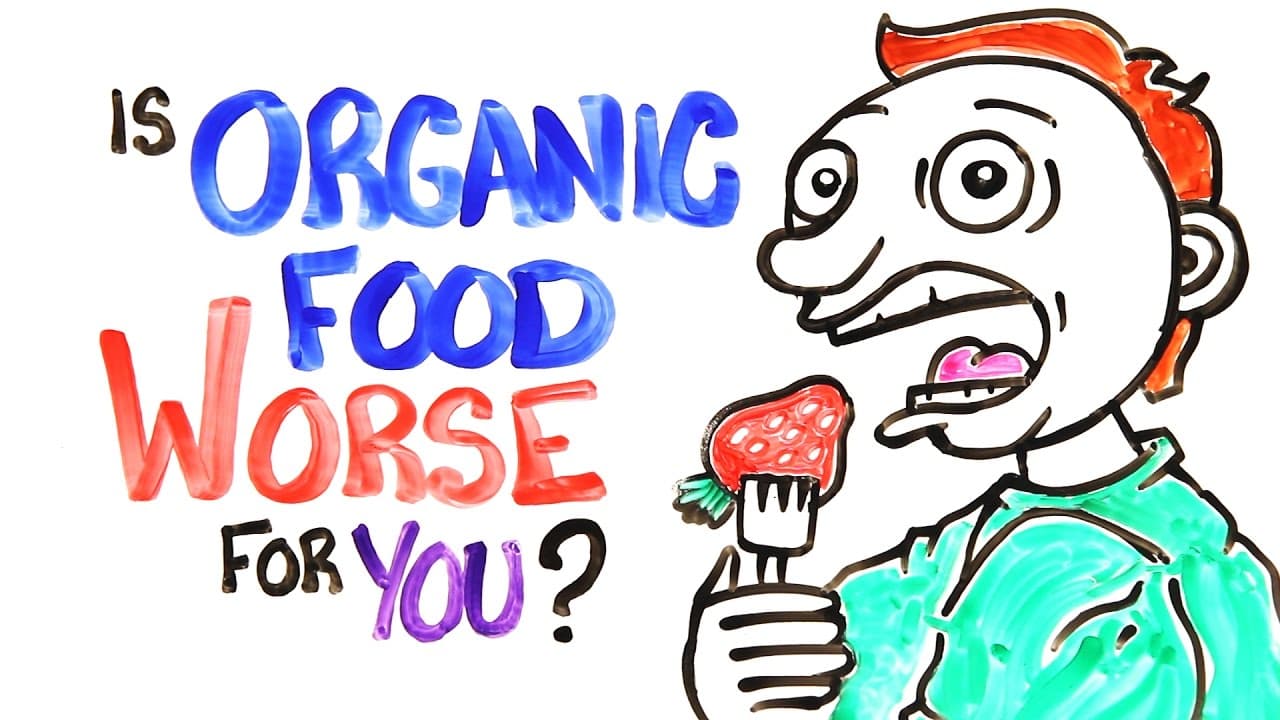
Is Organic Food Worse For You?
TL;DR
Organic food is not necessarily healthier or better for the environment than conventionally grown food, as organic farmers can still use natural pesticides and fungicides that can be more harmful than synthetic ones.
Transcript
many people buy organic food hoping to feel healthier and potentially have a positive impact on the environment but our organic foods even better for you and the environment in the first place for plants the term organic basically means something grown without the use of synthetic fertilizers or pesticides but this is a little bit misleading you se... Read More
Key Insights
- 🎙️ Organic farming practices such as crop rotations and mixed planting are better for the soil and the environment.
- ⏳ Organic crop yields are, on average, 25% lower than conventional ones, putting a greater strain on farmland.
- 😋 Organic fruit and vegetables are not significantly more nutritious than conventionally grown food.
- 🍉 Short-term studies show minor health benefits of organic diets, but long-term studies are challenging due to mixed diets.
- 😋 Organic food can be contaminated and has a higher recall rate than conventional food.
- 🧑⚕️ Both organic and conventional farming methods can coexist and contribute to overall health and environmental sustainability.
- 💨 Claims that one way of farming is fully better than the other are not supported by scientific evidence.
Install to Summarize YouTube Videos and Get Transcripts
Explore YouTube Video Summarizer or Get YouTube Transcript Extractor
Questions & Answers
Q: Are organic foods completely free of pesticides?
No, organic farmers can still use natural pesticides and fungicides to prevent pest damage, but these pesticides are derived from natural sources and not synthetically made.
Q: Are natural pesticides safer than synthetic ones?
Not necessarily. Studies have shown that some natural pesticides can be more harmful to health and the environment than synthetic ones.
Q: Do organic foods have higher nutritional value?
Organic fruit and vegetables are not more nutritious than conventionally grown food. Long-term studies of purely organic diets are difficult, but short-term studies show minor differences in nutrient levels.
Q: Is eating organic food always better for you?
No, organic junk food, for example, still lacks nutritional value. Organic food also has a higher incidence of contamination and has been recalled for safety reasons.
Summary & Key Takeaways
-
Organic food is grown without the use of synthetic fertilizers or pesticides, but organic farmers can still use natural pesticides and fungicides to protect their crops.
-
Some natural pesticides are more harmful to health and the environment than synthetic ones.
-
Not all organic foods are completely organic, and labels like "organic" or "made with organic ingredients" only require a certain percentage of organic ingredients.
Read in Other Languages (beta)
Share This Summary 📚
Summarize YouTube Videos and Get Video Transcripts with 1-Click
Try YouTube Summary with ChatGPT & Claude or YouTube Transcript Generator
Explore More Summaries from AsapSCIENCE 📚

Summarize YouTube Videos and Get Video Transcripts with 1-Click
Try YouTube Summary with ChatGPT & Claude or YouTube Transcript Generator