A Simple Clear Explanation of the Verb TO DO
TL;DR
Learn how to use "to do" for present, past, and questions in English conversations.
Transcript
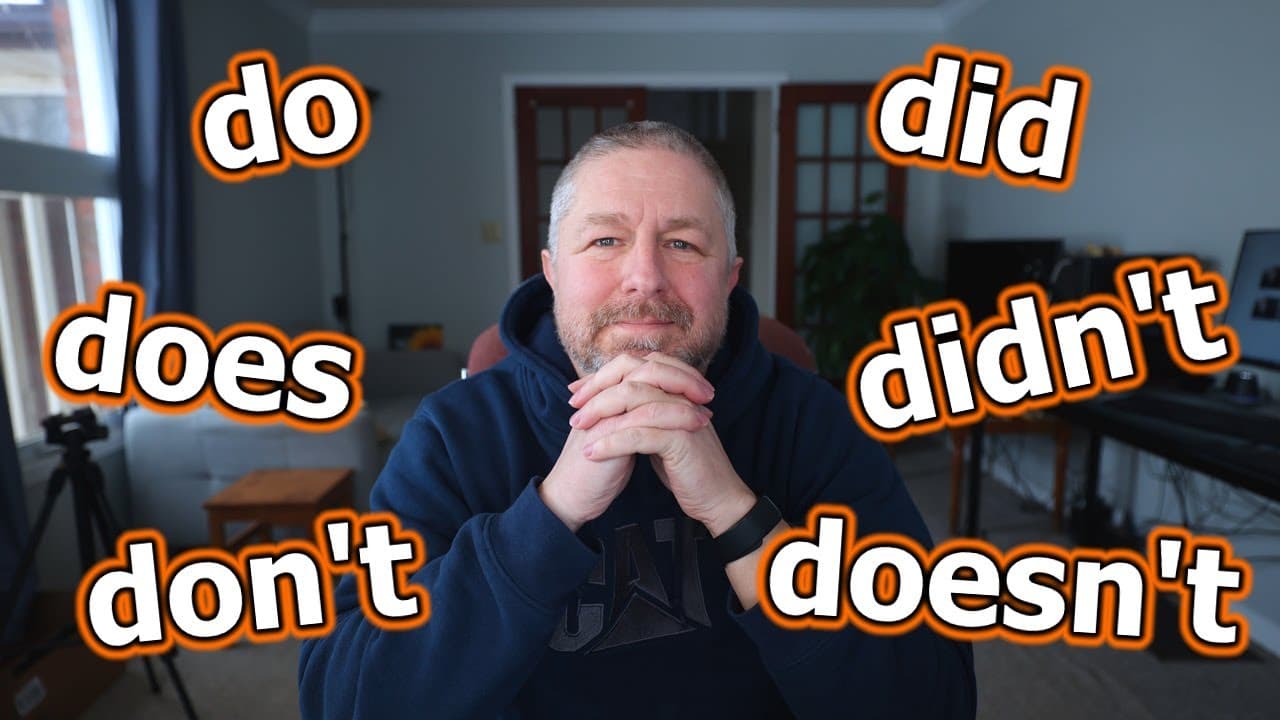
Well, hello and welcome to this English lesson about the verb, to do. I've had a number of requests from viewers to do a lesson about this, about the verb, to do, do, does, did, didn't, doesn't, all the various forms of that verb and how to use it when you're having an English conversation. So in this English lesson, I'll do just that, but you'll h... Read More
Key Insights
- 😑 The verb "to do" is essential for forming questions, emphasizing statements, and expressing negatives in English conversations.
- 💁 Different forms of "to do," such as do, does, did, and their negatives, are used for present and past tenses.
- ⌛ Questions in English conversations often start with do, does, or did based on the time frame being discussed.
Install to Summarize YouTube Videos and Get Transcripts
Explore YouTube Video Summarizer or Get YouTube Transcript Extractor
Questions & Answers
Q: How is the verb "to do" used for emphasizing statements?
The verb "to do" is used to emphasize statements by affirming truths or answering questions in English conversations. For example, "I do like bananas" or "He does work at that store."
Q: When is "does" used with the verb "to do"?
"Does" is used with the verb "to do" when referring to he and she in the present tense. For example, "She does enjoy movies."
Q: How is the negative form of "to do" used in English?
The negative form of "to do" is used by adding "not" or the contraction "don't/didn't" to express something that isn't true. For instance, "I don't like bananas" or "He didn't buy the computer."
Q: How are questions formed using the verb "to do"?
In English, questions related to the present or current events start with "do/does," and questions about the past start with "did." For example, "Do you like bananas?" or "Did you have a good weekend?"
Summary & Key Takeaways
-
The verb "to do" has various forms like do, does, did, and is used for emphasizing statements in English conversations.
-
In the present tense, "do" is used for I, you, they, and we, while "does" is used for he and she.
-
In the past tense, "did" is used for all subjects to talk about something that is no longer true.
Read in Other Languages (beta)
Share This Summary 📚
Summarize YouTube Videos and Get Video Transcripts with 1-Click
Try YouTube Summary with ChatGPT & Claude or YouTube Transcript Generator
Explore More Summaries from Learn English with Bob the Canadian 📚





Summarize YouTube Videos and Get Video Transcripts with 1-Click
Try YouTube Summary with ChatGPT & Claude or YouTube Transcript Generator