Is Science Deceiving Us? A Philosopher's Take on Faith and Evolution
TL;DR
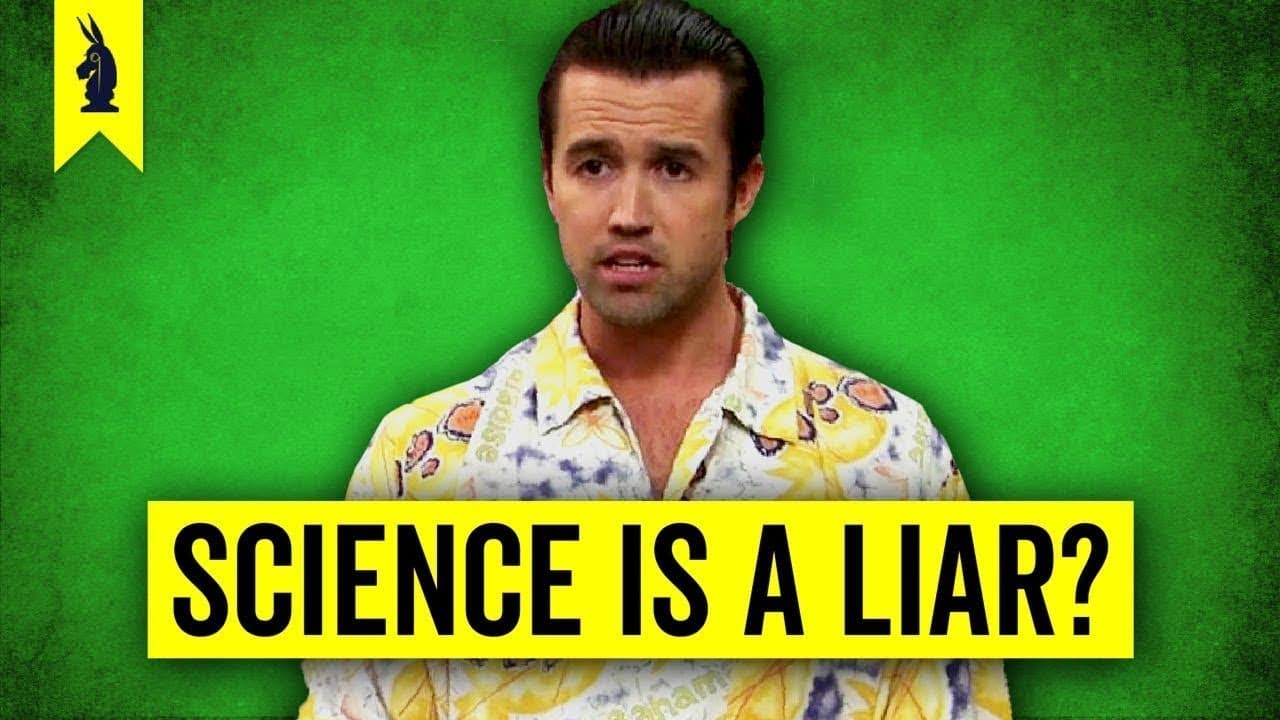
The video explores whether science can be considered deceptive in a humorous debate from It's Always Sunny in Philadelphia. It highlights how the distinction between faith and fanaticism complicates discussions around evolution, arguing that both can coexist. Ultimately, it emphasizes the importance of empirical evidence in scientific discourse while illustrating the historical context of scientific understanding.
Transcript
this video is brought to you by Warby Parker what's up wisecrack Michael here and I'm back to putting my doctorate in philosophy to the most honorable of uses analyzing the philosophical Merit of fictional debates and popular television and for this one we need to visit the Athens of the Mid-Atlantic the Gathering Place of poets and Scholars alike ... Read More
Key Insights
- 🎮 The video emphasizes the humorous yet insightful conflict between faith and science as depicted in a popular sitcom.
- 💀 Mac's caricatured understanding of evolution and religion illustrates the dangers of fanaticism over nuanced belief systems.
- 🇲🇰 Historical thinkers like Kant and Descartes show that faith and reason can coexist, challenging Mac's binary viewpoint.
- 🏑 Science is portrayed not as a dogma, but as a dynamic field that evolves through paradigm shifts and historical context.
- 🙈 The distinction made between valid scientific inquiry and blind faith underscores the importance of empirical evidence.
- 🤑 The dialogue highlights the political nature of contemporary debates surrounding science and religion, rather than purely philosophical ones.
- 🫵 The frequent errors made by historical figures in science remind viewers that knowledge is a continually evolving journey.
Install to Summarize YouTube Videos and Get Transcripts
Explore YouTube Video Summarizer or Get YouTube Transcript Extractor
Questions & Answers
Q: What is the central theme of the debate depicted in It's Always Sunny in Philadelphia?
The central theme revolves around the clash between scientific understanding and religious belief, specifically the theory of evolution. The characters, particularly Mac, present arguments that caricature the conflict, leading to philosophical insights about fanaticism, faith, and the nature of truth. This makes viewers reconsider the validity of both perspectives.
Q: How does the video portray Mac's understanding of faith and science?
Mac's portrayal is that of a rigid thinker who conflates faith with fanaticism, illustrating a failure to recognize shades of nuance. He insists on a binary view between faith and scientific reasoning, undermining the coexistence of the two. The analysis critiques this oversimplification, showing how philosophical thought has historically reconciled faith and rationality without conflict.
Q: What does the video suggest about the historical relationship between science and religion?
The video suggests that science and religion have historically engaged in a conversation rather than outright opposition. Enlightenment thinkers believed in a synergy between God and rational thought, advocating that faith can exist alongside scientific inquiry. This interaction enriches both fields rather than fostering the dichotomy Mac presents.
Q: Which philosopher is noted for emphasizing the distinction between fanaticism and faith?
Emmanuel Kant is highlighted for making a distinction between faith, which can coexist with reason, and fanaticism, defined as blind zeal lacking critical thought. Kant's views underscore the dangers of fanaticism, illustrating how it can lead to destructive behaviors while advocating for a more harmonious relationship between faith and rational understanding.
Q: What humorous insights does the video provide about famous scientists and their theories?
The video humorously explores how renowned scientists like Aristotle and Galileo were wrong in some theories, yet their contributions laid the groundwork for significant scientific advancements. This playful examination of historical blunders serves to emphasize that science is iterative and can evolve, underscoring the importance of learning from mistakes in the pursuit of knowledge.
Q: How does the video conclude the discussion on science and religion?
The video concludes by asserting that the perceived conflict between science and religious belief is more political than philosophical. It points out that both can coexist, suggesting that philosophical reflection can enhance the robustness of both realms. The conclusion invites viewers to think critically about these issues rather than blindly align with one viewpoint.
Q: What argument does Dennis make against Mac's reliance on faith?
Dennis counters Mac's faith-based arguments by emphasizing the empirical nature of scientific knowledge, which relies on peer review and reproducibility. He underscores the importance of having a foundation for claims made, contrasting Mac's trust in religious texts with the necessity for scientific verification, thus highlighting the significance of observable evidence.
Q: What cultural critique does the video present regarding the characters' views on science and faith?
The video critiques the tendency of characters like Mac to reduce complex philosophical questions into simplistic cultural war narratives. It illustrates how this oversimplification neglects valuable discussions about the nature of belief and knowledge, suggesting that the real issue lies in the manipulation of these ideas for political or ideological agendas rather than a genuine exploration of truth.
Summary & Key Takeaways
-
The video dissects a humorous debate in It's Always Sunny in Philadelphia where characters confront evolution and religious faith, led by Mac's misguided arguments.
-
It highlights the philosophical distinction between faith and fanaticism, emphasizing how excessive zeal can lead to a misunderstanding of both science and religion.
-
Educator Michael discusses the historical context of scientific knowledge versus religious belief, illustrating how both can coexist and offering insights into the evolution debate's relevance today.
-
(Content reviewed on 2026-08-27.)
Read in Other Languages (beta)
Share This Summary 📚
Summarize YouTube Videos and Get Video Transcripts with 1-Click
Try YouTube Summary with ChatGPT & Claude or YouTube Transcript Generator