What Does the Ancient Egyptian Vase Reveal About Manufacturing?
TL;DR
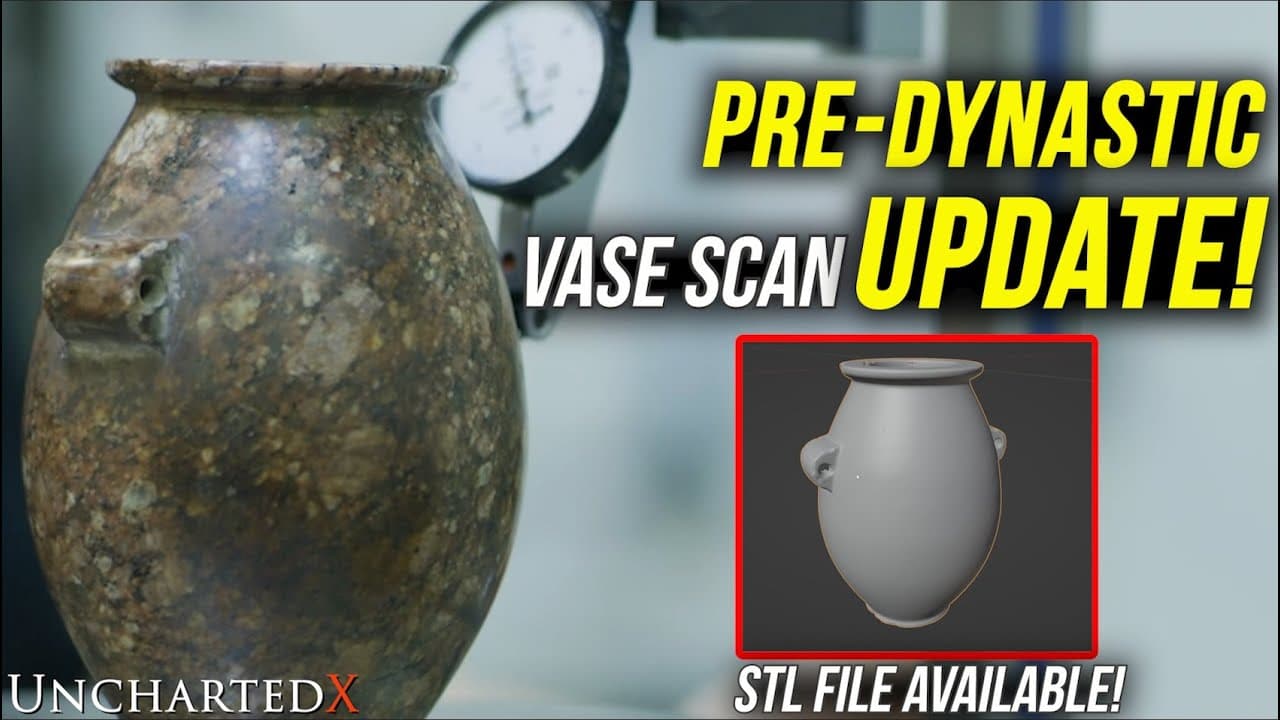
The ancient Egyptian vase analyzed using structured light scanning demonstrates astonishing precision, challenging mainstream views on early manufacturing techniques. Key areas, such as between the lug handles, reveal that the vase could not have been shaped on a lathe, suggesting advanced tools or methods were used. This suggests a sophisticated technology possibly from a much earlier civilization, raising questions about inheritance of such artifacts by the Egyptians.
Transcript
foreign X this is Ben and this video is an update and continuation from my last video which was the introduction to and discussion of a pre-dynastic ancient Egyptian Granite vase the vase in question was analyzed by expert metrologists working from the results of a structured light scan a process that mapped the vases geometric features accurately ... Read More
Key Insights
- ❓ The vase challenges mainstream beliefs about ancient Egyptian manufacturing capabilities.
- 😒 The precision of the vase indicates the use of advanced machining techniques.
- 🤨 The vase raises questions about the inheritance or discovery of precision-made artifacts by ancient Egyptians.
- 🪡 Further analysis and scanning of similar artifacts are needed to understand ancient manufacturing techniques fully.
- ❓ The granite material of the vase poses additional challenges to achieving such precision.
- 🎚️ The vase's precision implies a level of sophistication and technological capability beyond what is traditionally attributed to early Old Kingdom Egyptians.
- ❓ The copying and imitation of these vases by later civilizations suggests recognition of their value and significance.
Install to Summarize YouTube Videos and Get Transcripts
Explore YouTube Video Summarizer or Get YouTube Transcript Extractor
Questions & Answers
Q: How was the precision of the vase analyzed?
The vase was scanned using a structured light scanner, mapping geometric features and revealing precision down to a thousandth of an inch.
Q: How were the lug handles created without a lathe?
The precise shape and placement of the lug handles cannot be achieved by turning on a lathe. It is likely that a combination of a turning process and a separate machining process was used.
Q: What materials were the vase made from?
The vase was carved from Rose granite, a highly challenging material to work with due to its differing hardnesses and inclusions of extremely hard materials.
Q: What does the precision of the vase imply about ancient Egyptian manufacturing capabilities?
The precision of the vase suggests that ancient Egyptians had advanced manufacturing techniques and technologies far earlier than mainstream egyptology acknowledges.
Summary & Key Takeaways
-
The vase was analyzed using structured light scanning, revealing precision down to a thousandth of an inch and challenging mainstream beliefs about ancient Egyptian manufacturing techniques.
-
The area of the vase between the lug handles cannot be carved by turning on a lathe, raising questions about the use of wheels and lathes in early Old Kingdom Egypt.
-
The vase represents a technological contradiction when compared to other artifacts from the same time period, suggesting that it may have been inherited or found by the Egyptians.
Read in Other Languages (beta)
Share This Summary 📚
Summarize YouTube Videos and Get Video Transcripts with 1-Click
Try YouTube Summary with ChatGPT & Claude or YouTube Transcript Generator
Explore More Summaries from UnchartedX 📚



Summarize YouTube Videos and Get Video Transcripts with 1-Click
Try YouTube Summary with ChatGPT & Claude or YouTube Transcript Generator