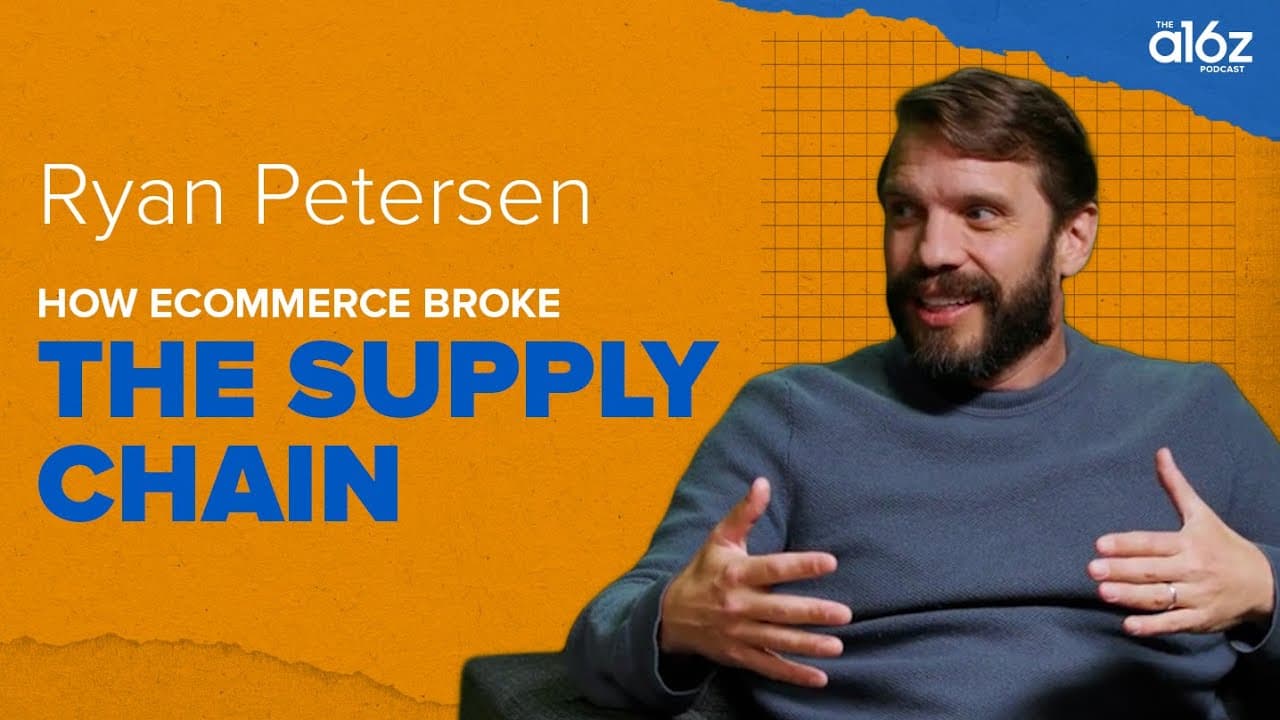
Flexport Co-CEO Ryan Petersen on ecomm's impact on the supply chain
TL;DR
E-commerce has shifted supply-chain control toward customers, who expect more choice and faster delivery. Ryan Petersen says brands need about five fulfillment centers for two-day delivery nationwide and roughly 16 for next-day service, while carefully balancing inventory to avoid lost customers or capital tied up in unsold goods. Read on to see why this transformation challenges legacy brands and creates opportunities for smaller businesses.
Transcript
what have you seen as the impact really of e-commerce and the internet on on the supply chain and on how it works yeah well I think you want to start with the with the customers with all of us and the internet has really put us us you and me and everybody else out there in charge in a way that we've never seen before um that the world you know in t... Read More
Key Insights
- 🛍️ The internet has empowered customers with a multitude of choices and personalized shopping experiences.
- 💨 Companies need to invest in a responsive and agile supply chain to meet customer demands for fast and convenient delivery.
- 😀 Traditional brands that fail to adapt to e-commerce are facing bankruptcy, while smaller businesses have the potential to thrive.
- 😒 Supply chain transformation requires the use of technology, data science, and machine learning to optimize operations and improve decision-making.
- ⌛ Data integration and real-time communication between supply chain stakeholders are essential for efficient and agile asset management.
- 😌 The future of supply chain lies in using technology and data to make informed decisions, optimize asset routing, and improve overall efficiency.
- 🥺 Smarter supply chain strategies can prevent bottlenecks and delays, leading to better customer experiences and cost savings.
Install to Summarize YouTube Videos and Get Transcripts
Explore YouTube Video Summarizer or Get YouTube Transcript Extractor
Questions & Answers
Q: How has e-commerce affected the supply chain?
E-commerce has created demand for wider product selection, faster delivery, and inventory stored closer to customers. Supply chains must now respond quickly to changing demand while balancing product availability against the cost of excess inventory.
Q: How has the internet changed customers’ control over purchasing?
Customers are no longer limited to the small number of brands promoted through mass media and stocked in stores. The internet gives them many choices and lets them select products that match their personal tastes.
Q: How many fulfillment centers are needed for fast nationwide delivery?
Ryan Petersen says a brand needs about five fulfillment centers to provide two-day delivery nationwide. Next-day delivery requires closer to 16, while same-day or two-hour delivery may require inventory in almost every ZIP code.
Q: Why must e-commerce inventory be stored close to customers?
Customers increasingly expect products to arrive within days or even hours. Brands therefore need multiple fulfillment centers that keep goods near the edges of the distribution network rather than relying on one central US distribution center.
Q: Why is inventory load balancing important for e-commerce brands?
Holding too much inventory ties up working capital in products that are not earning a return and can contribute to bankruptcy. Holding too little causes stockouts, potentially sending customers to competing brands permanently.
Q: How has the role of logistics teams changed?
Logistics teams can no longer focus only on buying freight at the cheapest rate. Their role now includes keeping products in stock, enabling sales and marketing, improving customer experience, and helping the CFO avoid excessive inventory.
Q: Why are legacy brands struggling with e-commerce supply chains?
Many established brands were built for a less agile system with predictable demand and centralized distribution. Petersen says companies unable to create a responsive supply chain with broader assortments and faster delivery have been going bankrupt.
Q: How can smaller brands compete in the e-commerce era?
Smaller businesses can outsource logistics and supply-chain work instead of hiring a large team that pushes paper. This approach can help them grow quickly without the bureaucracy associated with a traditional in-house operation.
Summary
In this video, the speaker discusses the impact of e-commerce and the internet on the supply chain. He explains that with the internet, customers now have a wide range of choices and expect faster delivery times. This has led to a need for companies to have multiple fulfillment centers and load balance their inventory. However, many companies, especially iconic brands, have struggled to adapt and have gone bankrupt. The speaker believes that there is a need to help both new and legacy brands navigate these changes and transform their supply chains for success.
Questions & Answers
Q: What is the impact of e-commerce and the internet on the supply chain?
The internet has given customers more choices and control over their purchases, leading to a demand for faster delivery times and a wider assortment of products. This has required companies to have multiple fulfillment centers and load balance their inventory.
Q: How has the internet changed the control of brands and choices for customers?
In the past, companies relied on mass media to advertise and had limited product choices available. With the internet, customers now have access to a million choices and can find products that match their personal tastes. Brands now need to cater to individual preferences and ensure they have the desired product in stock to meet customer demands.
Q: What challenges do companies face in adapting to the new supply chain configuration?
Companies need to have a supply chain that is responsive and agile to customer demands. This requires storing inventory close to the customers and having multiple fulfillment centers. The challenge lies in finding the right balance of inventory to avoid sitting on excess working capital or losing customers due to stock shortages.
Q: How do logistics teams approach supply chain challenges?
Many logistics teams still focus on securing the cheapest freight rates and fail to recognize the larger problem of enabling a superior customer experience and ensuring product availability. This mindset needs to shift to empower sales, marketing, and finance teams by providing them with the necessary tools and insights to solve these supply chain challenges.
Q: Why have iconic brands been going bankrupt in recent times?
Many iconic brands have failed to adapt to the changing demands of e-commerce and the internet. They have struggled to transform their supply chains to meet customer expectations and compete with newer, more agile brands. This failure to adapt has led to financial difficulties and bankruptcies.
Q: How does the speaker aim to help small businesses and enterprise brands?
The speaker's goal is to provide solutions that enable small businesses to grow rapidly without the need for large logistics teams. They do this by outsourcing supply chain management to the cloud. Additionally, they aim to help enterprise brands transform themselves and survive in the world of e-commerce.
Q: What analogy does the speaker use to describe making the supply chain resilient and reliable?
The speaker compares the goal of making the supply chain resilience and reliability to that of the power grid. They aim to create a supply chain infrastructure that can withstand disruptions like a pandemic or geopolitical conflicts.
Q: What are the challenges in achieving a resilient and reliable supply chain?
The supply chain is currently fragmented, with multiple companies involved in each transaction. This leads to information bottlenecks and sub-optimal decision making. Companies rely on outdated systems, manual processes, and limited data sharing, making it difficult to achieve real-time visibility and agile decision-making.
Q: What are the two possible solutions to the challenges in the supply chain?
One solution is for a single mega corporation to own all the assets involved in the supply chain and create a unified infrastructure. Another solution is to leverage machine learning and data science to incentivize asset owners to participate in a platform that facilitates data sharing, collaboration, and insights.
Q: How can data and technology be used to improve supply chain operations?
By utilizing data and technology, companies can optimize their operations, such as routing containers more efficiently, identifying bottlenecks, and making agile decisions based on real-time information. This will require a shift in industry practices and a greater reliance on technology and data-driven insights.
Takeaways
The impact of e-commerce and the internet on the supply chain has been significant. Customers now have more choices and expect faster delivery times, which has led to a need for companies to have multiple fulfillment centers and load balance their inventory. However, many iconic brands have struggled to adapt and have faced financial difficulties. To overcome these challenges, the supply chain needs to become more resilient, reliable, and data-driven. By leveraging technology and data, companies can optimize their operations and make agile decisions to meet customer demands effectively.
Summary & Key Takeaways
-
The internet has empowered customers with a wide range of choices, enabling them to find products that match their personal tastes and preferences.
-
Companies need to have a responsive and agile supply chain to meet customer demands for fast delivery, which requires multiple fulfillment centers and inventory load balancing.
-
Traditional brands are facing challenges in adapting to the new e-commerce landscape, with many iconic companies going bankrupt, while smaller businesses have the opportunity to grow rapidly.
Read in Other Languages (beta)
Share This Summary 📚
Summarize YouTube Videos and Get Video Transcripts with 1-Click
Try YouTube Summary with ChatGPT & Claude or YouTube Transcript Generator
Explore More Summaries from The a16z Podcast 📚




Summarize YouTube Videos and Get Video Transcripts with 1-Click
Try YouTube Summary with ChatGPT & Claude or YouTube Transcript Generator