Who Owns AI Art and Can Machines Be Creative?
TL;DR
AI-generated art raises unresolved questions about ownership, creativity, employment, and the value of human-made work. Artists can respond by understanding AI’s capabilities and limitations, developing technical, marketing, and business skills, and exploring ways to use AI as an assistant or as a tool for creating new artistic forms and mediums.
Transcript
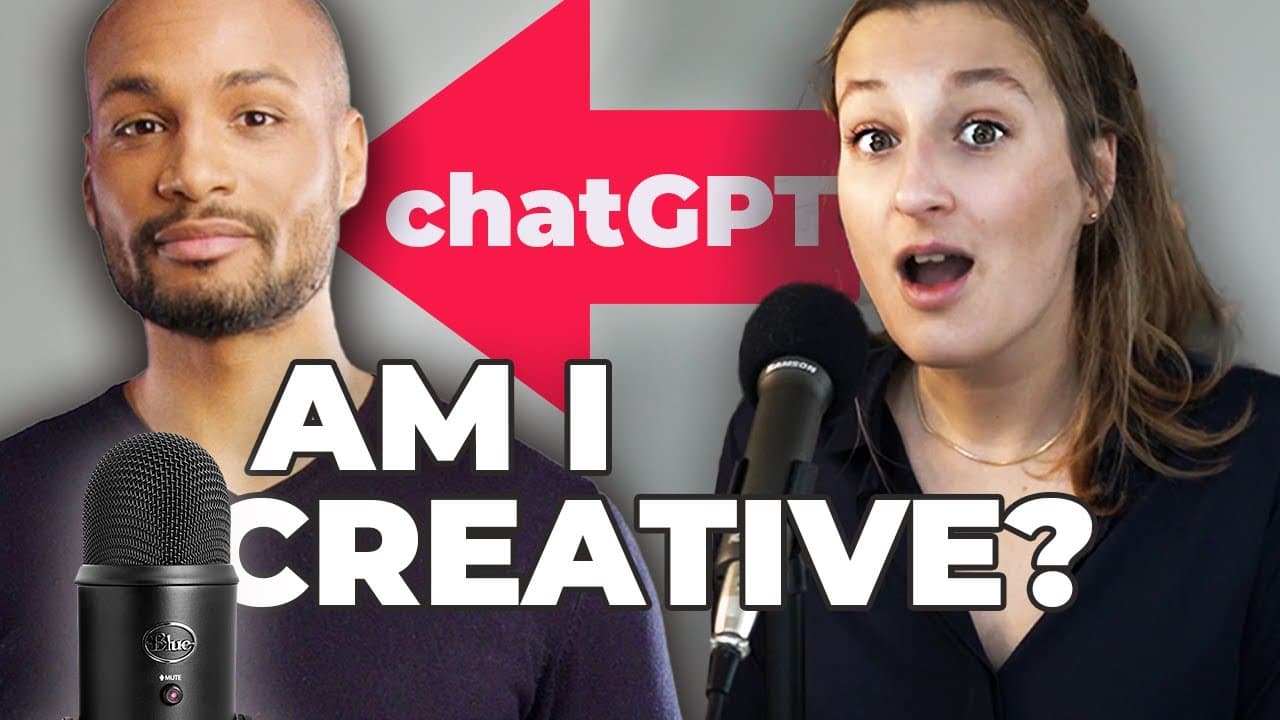
I discovered the ethics of AI art with Chad GPT another perspective is that AI algorithms themselves should be considered the creators of AI art and therefore they should be granted the rights to their own Creations open AI same guys who released daily 2 made it public to talk to GPT 3 and called it Chad GPT it's not just that you can talk ... Read More
Key Insights
- AI art is creative work generated with artificial intelligence, including visual art, music, and literature. The transcript describes it as a relatively new and rapidly evolving field enabled by advanced machine learning algorithms that can generate or transform artistic material.
- The history of AI art includes Harold Cohen’s AARON, which the host identifies as dating to 1973. The conversation also mentions Simon Colton’s Painting Fool, Google’s 2015 DeepDream algorithm, AIVA, and Amper Music as examples of systems associated with generated imagery or music.
- The future of AI art may involve more sophisticated and nuanced outputs that become difficult to distinguish from human-created work. Such development could blur the boundary between human and machine creativity while increasing AI’s role both as an artistic assistant and an independent generator.
- AI can potentially support art restoration and conservation by analyzing and restoring damaged works. The proposed benefit is preservation for future generations, showing that artistic AI applications can extend beyond producing new images, compositions, or written works.
- Ownership of AI-generated art is unresolved because several parties could claim rights. The transcript identifies algorithm creators, owners of the data used for training, and AI algorithms themselves as possible rights holders, while acknowledging that machine ownership would require major legal and conceptual changes.
- Creativity is defined as the ability to produce original and imaginative ideas or works. The debate centers on whether an algorithm following patterns learned from human-generated data is genuinely creative, even when its output appears original, imaginative, valid, and valuable.
- AI poses employment and economic risks for artists if generated work replaces humans in particular roles. The transcript also warns that machine-produced work of equal or higher quality could lower the perceived worth of human art and cause financial harm across the art industry.
- Artists can adapt by learning about AI’s capabilities and limitations, developing technical, marketing, and business expertise, and exploring new opportunities. Potential paths include using AI to assist existing practices and helping create artistic forms or mediums that did not previously exist.
Install to Summarize YouTube Videos and Get Transcripts
Explore YouTube Video Summarizer or Get YouTube Transcript Extractor
Questions & Answers
Q: Who owns art created by artificial intelligence?
Ownership of AI-generated art has no clear answer in the discussion. Possible owners include the people who created the generating algorithm, the owners of the data used to train it, or the algorithm itself. Treating an AI system as the creator with rights to its outputs would require a significant change in how creativity and ownership are understood, while also raising complex legal and ethical questions.
Q: Can AI-generated art be considered genuinely creative?
AI-generated art may be considered creative if creativity is defined as producing original and imaginative works. One position holds that AI cannot be truly creative because it follows rules and patterns learned from human-generated data. Another position argues that algorithms can produce original, imaginative outputs and that work generated by AI can be as valid and valuable as work produced by human artists.
Q: What are the main ethical concerns surrounding AI art?
The main ethical concerns discussed are ownership, creativity, employment, and the economic value of human-made art. Questions arise about whether rights belong to algorithm creators, training-data owners, or AI systems. There is also debate about whether pattern-based generation counts as creativity, whether AI will replace artists, and whether abundant machine-generated work could reduce the perceived worth of human artistic labor.
Q: How could AI affect the jobs and livelihoods of artists?
AI could replace human artists in certain roles and industries as its outputs become more advanced and harder to distinguish from human-created work. That substitution could lead to job losses and damage artists’ livelihoods. AI could also reduce the perceived value of human-made art if machine-generated work reaches equal or higher quality, potentially causing financial losses for artists and harming the wider art industry.
Q: How should artists respond when AI threatens their work?
Artists should learn about AI and understand both its capabilities and limitations so they can identify threats and opportunities. They can also build skills in using AI to create art while strengthening marketing and business expertise. Exploring assisted workflows, new art forms, and previously unavailable mediums may help artists remain competitive, influence the industry’s direction, and preserve an integral role in artistic production.
Q: What is the future of artificial intelligence in art?
AI is expected to play an increasingly important role in art by assisting human artists and generating original works on its own. More advanced machine learning algorithms may create increasingly sophisticated, detailed, and nuanced results that are difficult to distinguish from human work. AI may also contribute to restoration and conservation by analyzing damaged artworks and helping preserve them for future generations.
Q: What examples illustrate the development of AI art?
The discussion identifies Harold Cohen’s AARON, dated by the host to 1973, as an early AI painting system. It also mentions Simon Colton’s Painting Fool from the mid-2000s and Google’s 2015 DeepDream algorithm, which manipulates visual elements of photographs to produce surreal images. In music, AIVA and Amper Music are presented as programs that generate original compositions using machine learning algorithms.
Q: How was the AI interview video produced?
The creator first used ChatGPT to ask questions and obtain answers, stating that the answers were not edited, although some repetitive conclusions were removed. Colossyan was then used to generate an actor, and Descript was used to edit the complete production. Descript also created an artificial version of the creator’s voice, which was hidden somewhere in the finished video as an Easter egg.
Summary & Key Takeaways
-
AI art uses algorithms to generate visual art, music, and literature. The discussion traces examples including Harold Cohen’s AARON, the Painting Fool, Google’s DeepDream, AIVA, and Amper Music. It presents the field as rapidly evolving, with growing potential to influence how people understand art, authorship, and creativity.
-
Ownership of AI-generated art remains unsettled. Possible rights holders include the people who created the algorithms, the owners of the training data, or even the algorithms themselves. Each position creates difficult legal and ethical questions because AI systems are built by humans but can generate outputs described as original and imaginative.
-
AI may assist artists, enable new artistic forms, and support restoration of damaged works, but it may also replace some artistic roles or reduce the perceived value of human-made art. Artists are advised to study AI, develop technical and commercial skills, and explore emerging opportunities while helping shape the industry’s future.
Read in Other Languages (beta)
Share This Summary 📚
Summarize YouTube Videos and Get Video Transcripts with 1-Click
Try YouTube Summary with ChatGPT & Claude or YouTube Transcript Generator
Explore More Summaries from Goda Go 📚
Summarize YouTube Videos and Get Video Transcripts with 1-Click
Try YouTube Summary with ChatGPT & Claude or YouTube Transcript Generator