Why Do You Feel Lost in Life, and How Can You Find Yourself? | Jay Shetty
TL;DR
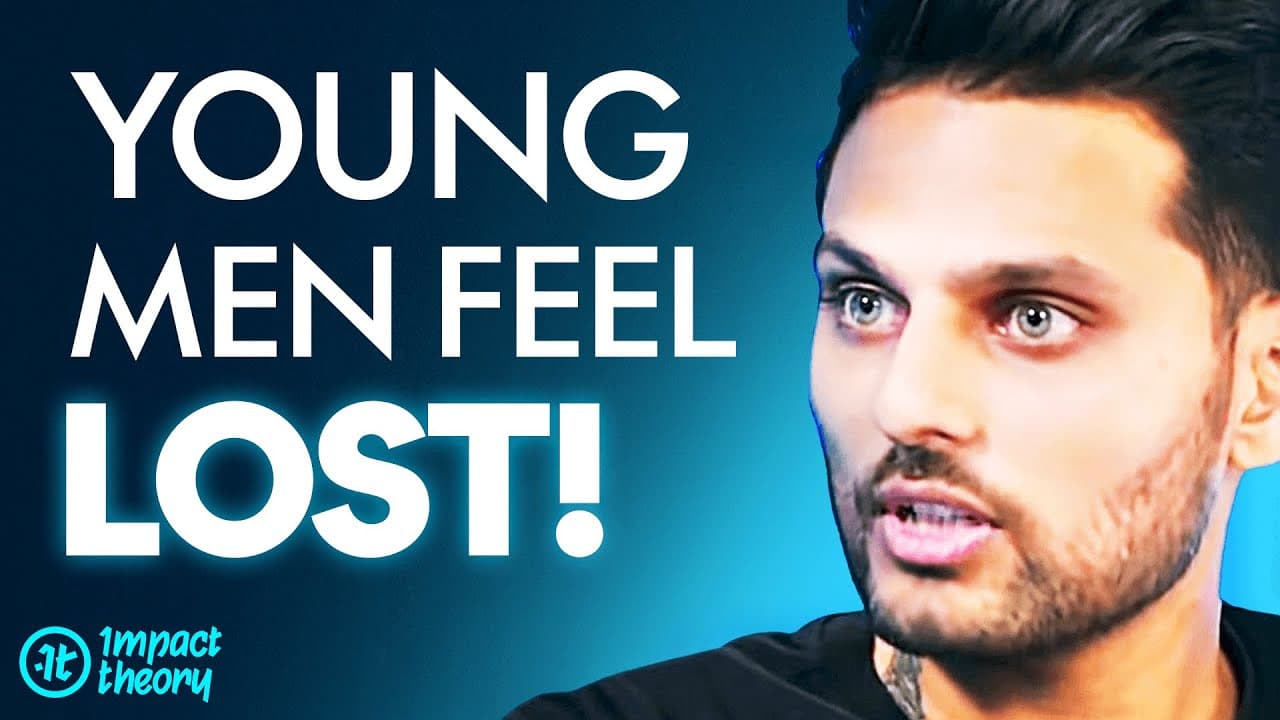
Jay Shetty says finding yourself starts by distinguishing your immediate, conditioned reactions from the more reflective intelligence that considers the long term. He describes these as system one and system two, drawing on Daniel Kahneman’s Thinking, Fast and Slow, and explains how expectations from parents, partners, and society can drown out your inner voices. Read on for practical ways to recognize your strengths, reactions, and sources of external noise.
Transcript
the one way to know your strengths is to ask yourself what do you do that you feel the most confidence doing have you ever looked at how much content you've put out no it's a lot dude like when you search your name like to go because i normally try to watch like basically everything and i was like i give up it's just it's really incredible um and g... Read More
Key Insights
- 🤳 Self-awareness is the cornerstone of personal growth, requiring differentiation between default reactions and calculated responses.
- 🤳 External noise and societal pressures can muddle internal voices, affecting decision-making and hindering self-awareness.
- 😌 Insecurity and lack of understanding one's strengths can lead to behaviors like lying on resumes as individuals seek validation and cover up insecurities.
Install to Summarize YouTube Videos and Get Transcripts
Explore YouTube Video Summarizer or Get YouTube Transcript Extractor
Questions & Answers
Q: Why do people feel lost in life, according to Jay Shetty?
People can feel lost because expectations from parents, partners, and society create persistent background noise. That noise makes it harder to distinguish immediate mental reactions from the reflective intelligence needed for better decisions.
Q: How can you develop greater self-awareness?
Start by observing the different voices within you and separating your initial reaction from your more considered response. Jay Shetty calls recognizing this distinction the first level of self-awareness and a starting point for better future decisions.
Q: What are system one and system two?
System one is the immediate, default reaction that arises when something happens, such as fleeing from a knife or defending yourself when your ego is hurt. System two considers the bigger picture and long-term consequences, checking whether the initial reaction is true or useful.
Q: How does Jay Shetty relate the mind and intelligence to system one and system two?
He connects system one with the mind and system two with intelligence in Vedic philosophy. The mind reacts from conditioning and habit, while intelligence processes that reaction through checks before deciding how to respond.
Q: Why does Jay Shetty compare system one and system two to a child and parent?
System one resembles an impatient child that wants things immediately and reacts when it does not get them. System two resembles a thoughtful parent that understands what the child wants while considering what will be better over the long term.
Q: Is an immediate system-one reaction always harmful?
No, an immediate reaction can protect you, such as feeling afraid and running when someone pulls out a knife. It becomes less helpful when a wounded ego triggers instant defensiveness without reflection.
Q: How do other people’s expectations interfere with self-awareness?
Expectations from parents, society, or a partner can become like a song playing repeatedly in the background until you barely notice it. Even when you become accustomed to that noise, it can still drown out your ability to recognize the mind and intelligence separately.
Q: How can you identify your personal strengths?
Ask yourself what you do while feeling the most confident. Jay Shetty presents that question as one way to begin recognizing your strengths.
Summary & Key Takeaways
-
Embracing self-awareness and differentiating between mind and intelligence is crucial for personal growth.
-
Challenging the noise from outside and understanding the root cause of behaviors like lying on resumes stem from insecurity and lack of self-awareness.
-
The journey from rebel without a cause to monk mindset involves exposure to new experiences, serious introspection, and embracing potential role models.
Read in Other Languages (beta)
Share This Summary 📚
Summarize YouTube Videos and Get Video Transcripts with 1-Click
Try YouTube Summary with ChatGPT & Claude or YouTube Transcript Generator
Explore More Summaries from Tom Bilyeu 📚



Summarize YouTube Videos and Get Video Transcripts with 1-Click
Try YouTube Summary with ChatGPT & Claude or YouTube Transcript Generator