How to Choose Between Stocks, Bonds, and Property

TL;DR
Individual stocks offer the strongest return potential among the options discussed, provided you understand the business and apply strict numerical criteria. Real estate can also work when bought at a substantial discount in a strong location, while commodity companies require low production costs and bonds may struggle against inflation. Mutual fund fees can significantly reduce market-level returns.
Transcript
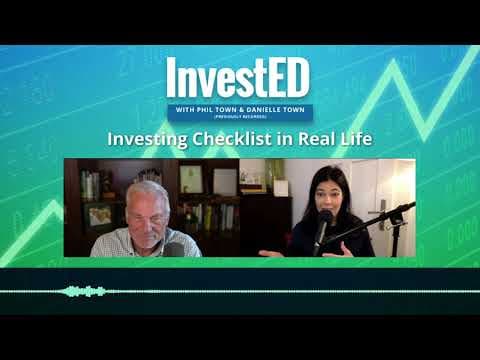
Hi, guys. I'm Phil Town from Rule #1 Investing, and today, I wanna talk to you guys about different types of investment and what the best option for you probably is. There are a lot of things that you can invest your money in. All of them have an upside and a downside, so we should take a look at each one. For example, we could do gold, real estate... Read More
Key Insights
- Gold is a commodity whose price, in Town's account, is supported primarily by scarcity and fear rather than inflation alone. It may suit investors who expect a more fearful future, but buying it without a clear view of future scarcity and demand amounts more to betting than Rule #1 investing.
- Commodity producers cannot freely increase selling prices when their costs rise. An oil producer, for example, can face severe pressure if extraction remains expensive while oil falls from $100 to $40 per barrel, so profitability depends on factors that management may be unable to control.
- A low production cost is a powerful moat for a commodity business. Town illustrates this with farmland producing 200 bushels of corn per acre when other land produces 100, creating an advantage that may protect profits even when the market price is unfavorable.
- Real estate is an investment only when its purchase price and cash generation justify the commitment. Town says the difficult part is finding a house at 50% of its value, because housing prices are often influenced by factors unrelated to the revenue that the property can generate.
- Location is the moat of a rental property. Proximity to good schools, improving or growing neighborhoods, rising resident incomes, and declining crime can strengthen demand and help distinguish a property from less favorably situated alternatives.
- Free cash flow is the rent remaining after property taxes, insurance, maintenance, advertising, management expenses, utilities, and other operating costs. Town suggests multiplying this annual amount by ten to estimate an attractive purchase price, describing that valuation as a 10 cap rate.
- Government bonds are considered low risk because the government can print money to repay them, but their returns may fail to preserve purchasing power. The example given is a 10-year U.S. Treasury yielding about 2.5% annually, which could be insufficient if inflation rises.
- Individual stocks are Town's preferred vehicle for building wealth because they can offer higher returns than the alternatives discussed. He advises beginners to study simple businesses they understand and appreciate, then invest only when those companies also satisfy stringent numerical requirements.
Install to Summarize YouTube Videos and Get Transcripts
Explore YouTube Video Summarizer or Get YouTube Transcript Extractor
Questions & Answers
Q: How should investors choose among stocks, bonds, commodities, and real estate?
Investors should compare each asset by its economics, controllable risks, and ability to produce returns. Commodity businesses need low production costs, rental properties need favorable prices, positive free cash flow, and strong locations, and bonds must be weighed against inflation. Town favors individual companies that are understandable, aligned with the investor's values, and supported by stringent numerical criteria.
Q: When is a commodity company a good investment?
A commodity company can be attractive when it has the absolute low cost of production, because it cannot simply raise its selling price when expenses increase. Town calls this advantage a price moat. His example is farmland yielding 200 bushels of corn per acre while the rest of the world produces 100, allowing the operator to produce at a lower unit cost.
Q: Why does investing in commodities carry special risks?
Commodity producers often have little control over either their production costs or the market price of what they sell. Town illustrates the risk with oil falling from $100 to $40 per barrel while extraction remains expensive, squeezing profits. Without reliable evidence that scarcity will create enough demand to increase prices, he considers commodity purchases closer to betting than Rule #1 investing.
Q: How can investors evaluate the price of a rental property?
Town recommends treating a rental property like a business. Add the total rent, then subtract property taxes, insurance, maintenance, advertising, management costs, utilities, and other operating expenses to calculate free cash flow. Multiplying that remaining annual cash flow by ten provides a possible purchase-price target. He describes buying at that valuation as a 10 cap rate, assuming the location is also good.
Q: What creates a moat for a rental property?
A rental property's moat is its location. Town looks for homes near good schools and in neighborhoods that are growing or improving. Rising resident incomes and declining crime also strengthen the location. These qualities can make a property more desirable and defensible, but the investor must still evaluate its revenue, operating expenses, free cash flow, and purchase price as with any business.
Q: Why can bonds lose purchasing power despite being considered safe?
Government bonds are considered low risk because the government can print money to repay bondholders when the securities expire. However, that security comes with a low return. Town cites a 10-year U.S. Treasury paying about 2.5% per year and warns that inflation could make the money received after ten years worth less than the original investment, even after interest.
Q: Why do many mutual funds underperform their market index?
Many mutual funds hold hundreds of stocks, bonds, or other assets, so their performance tends to approach the overall market average. Investors must then pay the manager, with Town citing a typical fee of around 2%. If the market and fund each earn 7% before fees, the investor receives about 5%, creating substantial long-term drag on retirement savings.
Q: How should a beginner start selecting individual stocks?
A beginner should first examine companies with simple business models that fall within the investor's area of understanding. Town suggests that teachers consider education businesses and engineers consider companies related to their professional fields. He also recommends businesses connected to values the investor supports. Personal enthusiasm is insufficient, however, because every candidate must also satisfy stringent numerical criteria before becoming an investment.
Summary & Key Takeaways
-
Gold and other commodities depend heavily on market prices that producers cannot control. A commodity company becomes more attractive when it possesses a durable cost advantage, such as unusually productive farmland. This low-cost position creates what Phil Town calls a price moat, helping the business remain profitable when commodity prices decline.
-
Rental property should be analyzed as a small business, with total rent treated as revenue and taxes, insurance, maintenance, advertising, management, and utilities deducted as expenses. The remainder is free cash flow. Town considers paying ten times annual free cash flow potentially attractive when the property also has a strong location.
-
Bonds offer low perceived risk but may deliver returns too small to offset inflation, while broadly diversified mutual funds can lose ground to their benchmarks after management fees. Town favors understandable individual companies that align with an investor's values and satisfy strict financial criteria, although every investment requires careful evaluation.
Read in Other Languages (beta)
Share This Summary 📚
Summarize YouTube Videos and Get Video Transcripts with 1-Click
Try YouTube Summary with ChatGPT & Claude or YouTube Transcript Generator
Explore More Summaries from Rule #1 Investing 📚
Summarize YouTube Videos and Get Video Transcripts with 1-Click
Try YouTube Summary with ChatGPT & Claude or YouTube Transcript Generator