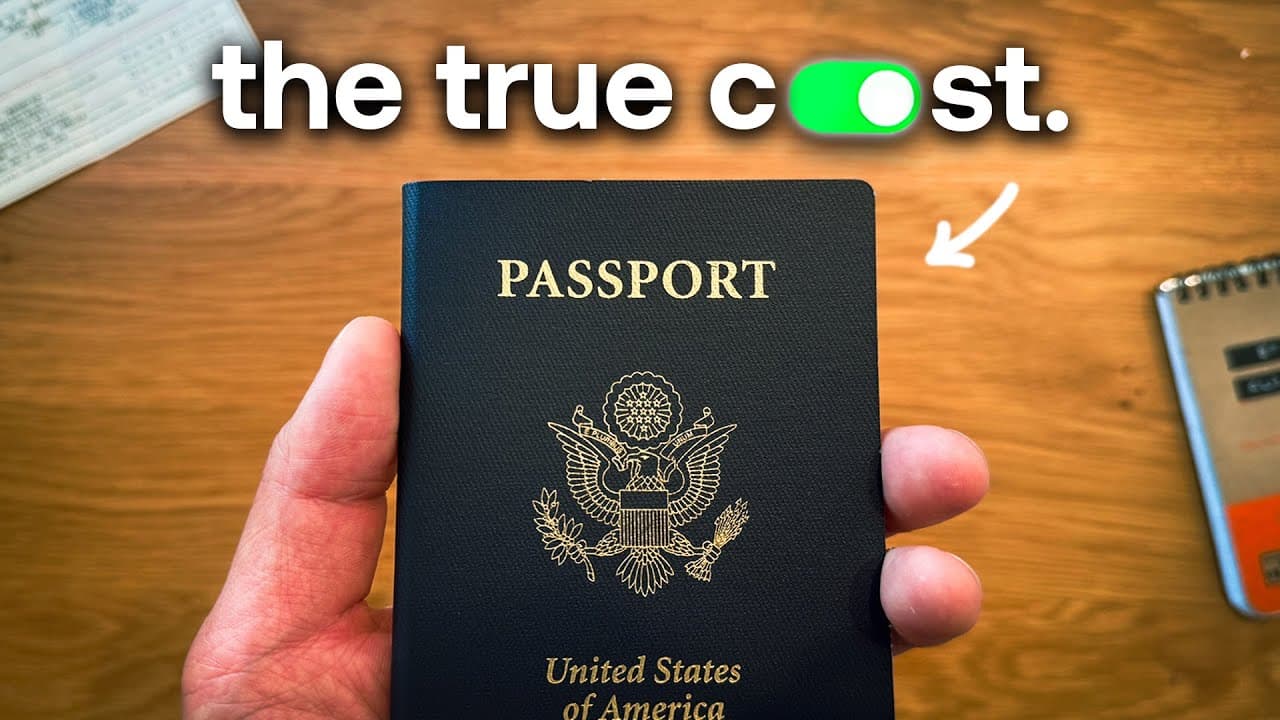
why I stopped being a digital nomad
TL;DR
Digital nomad life is challenging but offers valuable insights.
Transcript
Earlier this year, I spent three months working as a digital nomad in Asia. And honestly, there are a few things I wish I knew before going on this journey, which could have saved me tons of time, money, and frustration. And the first is solo travel is overrated. So, I didn't travel alone, but there definitely were days where I spent the day by mys... Read More
Key Insights
- Solo travel can be overrated; shared experiences often create more memorable moments and foster deeper connections.
- A consistent routine is crucial for productivity; without it, maintaining focus and achieving deep work becomes challenging.
- Sometimes, having no plan yields better results; randomness can lead to unexpected and enriching experiences.
- Minimizing possessions can enhance flexibility and happiness; carrying less allows for easier travel and mental clarity.
- The environment significantly shapes behavior and mindset; where you live influences your daily life and interactions.
- Slow travel allows for deeper cultural immersion and personal growth; staying longer in one place leads to richer experiences.
- You cannot escape personal issues by changing locations; self-reflection and being present are key to personal growth.
- Despite its challenges, the digital nomad lifestyle offers unique perspectives and is worth trying if possible.
Install to Summarize YouTube Videos and Get Transcripts
Explore YouTube Video Summarizer or Get YouTube Transcript Extractor
Questions & Answers
Q: Why does the speaker find solo travel overrated?
The speaker finds solo travel overrated because they believe shared experiences create more memorable moments and foster deeper connections. While solo travel allows for self-reflection and new ideas, the speaker feels that experiences shared with others are more impactful and enjoyable, providing a lasting sense of connection and shared history.
Q: What challenges did the speaker face regarding productivity as a digital nomad?
The speaker faced significant challenges in maintaining productivity due to the lack of a consistent routine. Traveling frequently disrupted their ability to engage in deep work, as they struggled to establish a stable workspace and daily routine. This led to wasted mental energy and a loss of momentum, highlighting the importance of having a dedicated workstation and routine.
Q: How does the speaker view the concept of planning while traveling?
The speaker suggests that sometimes the best plan is no plan, as optimizing for randomness can lead to better results than strictly adhering to a specific goal. They found that unplanned experiences often resulted in unexpected discoveries and more enriching experiences, both in travel and in life, encouraging a balance between planning and spontaneity.
Q: What is the speaker's perspective on material possessions while traveling?
The speaker believes that carrying fewer possessions enhances flexibility and happiness. They discovered that having more belongings tied them down and made them less adaptable. By reducing their luggage to a single backpack, they experienced greater freedom and mental clarity, allowing them to focus on essential needs and enjoy their travels more fully.
Q: How does the speaker describe the impact of environment on personal behavior?
The speaker emphasizes that the environment significantly shapes behavior and mindset. They note that geographical location and local culture influence daily habits, interactions, and thought processes. By changing their environment, individuals can alter their lifestyle and perspectives, as different places encourage different priorities and ways of thinking.
Q: What are the benefits of slow travel according to the speaker?
The speaker advocates for slow travel, which involves staying in one location for an extended period. This approach allows for deeper cultural immersion and personal growth, as travelers can form routines, build relationships with locals, and gain a more authentic understanding of the area's lifestyle. Slow travel contrasts with the superficial experience of short-term visits.
Q: What does the speaker mean by 'wherever you go, there you are'?
The phrase 'wherever you go, there you are' highlights the idea that changing locations does not solve personal issues. The speaker stresses the importance of self-reflection and being present, as internal challenges remain regardless of external circumstances. Travel offers new perspectives, but personal growth requires confronting and working through one's thoughts and feelings.
Q: Why does the speaker recommend journaling for digital nomads?
The speaker recommends journaling as a tool for self-discovery and personal development. Journaling provides a structured way to reflect on experiences, thoughts, and emotions, helping individuals process their journeys and identify patterns in their lives. It serves as a valuable practice for digital nomads to gain insights, track progress, and enhance self-awareness while traveling.
Summary & Key Takeaways
-
The speaker reflects on their three-month experience as a digital nomad in Asia, sharing key lessons learned. They emphasize the importance of shared experiences over solo travel, the necessity of a routine for productivity, and the value of embracing randomness. They also highlight the benefits of traveling light and the impact of one's environment on their mindset.
-
The speaker discusses the concept of slow travel, which involves staying in one place for an extended period, allowing for a deeper understanding of local culture and lifestyle. They contrast this with the less immersive experience of short-term travel and suggest that slow travel provides more meaningful interactions and personal growth opportunities.
-
The speaker concludes by emphasizing the importance of self-reflection and being present, regardless of location. They acknowledge the challenges of the digital nomad lifestyle but encourage others to try it for the unique perspectives it offers. They also recommend journaling as a tool for self-discovery and personal development.
Read in Other Languages (beta)
Share This Summary 📚
Summarize YouTube Videos and Get Video Transcripts with 1-Click
Try YouTube Summary with ChatGPT & Claude or YouTube Transcript Generator
Explore More Summaries from Reysu 📚



Summarize YouTube Videos and Get Video Transcripts with 1-Click
Try YouTube Summary with ChatGPT & Claude or YouTube Transcript Generator