5 Japanese books that changed the way I think
TL;DR
Exploring five Japanese books offering unique life insights.
Transcript
five Japanese books with ideas that could help improve your life I'm actually staying in the Japanese Countryside right now so I have a lot of time to go through these books and really think about these ideas but for each of these books I'll go through each of the key takeaways and some of these are bests sellers in Japan that actually haven't been... Read More
Key Insights
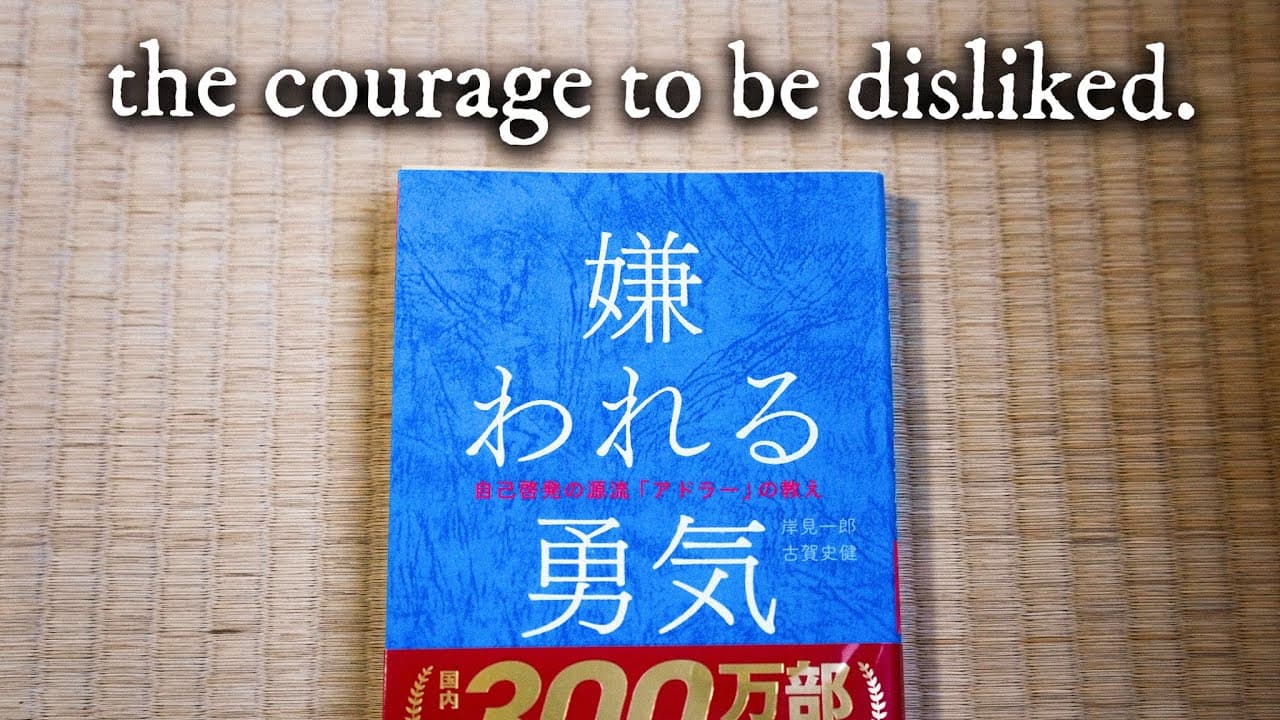
- The book 'The Courage to Be Disliked' challenges traditional views on trauma, suggesting it's a narrative choice rather than a defining factor.
- Interpersonal relationships are central to personal problems, and separating tasks can help manage these issues effectively.
- Minimalism, as discussed in 'Goodbye Things,' emphasizes the value of experiences over material possessions for a fulfilling life.
- Journaling offers profound benefits, including enhanced self-awareness and improved communication skills, as explored in 'The Power of Journaling.'
- Non-reaction, a concept from Zen Buddhism, involves managing stress by changing one's reaction to uncontrollable situations.
- Murakami's book highlights the discipline and routine required for both writing and running, paralleling the dedication needed for personal growth.
- Japanese culture values depth and mastery in one's craft, contrasting with Western ideals of autonomy and financial freedom.
- Mindfulness and self-awareness are recurring themes in these books, promoting a conscious approach to life and decision-making.
Install to Summarize YouTube Videos and Get Transcripts
Explore YouTube Video Summarizer or Get YouTube Transcript Extractor
Questions & Answers
Q: What is the main idea of 'The Courage to Be Disliked'?
The main idea of 'The Courage to Be Disliked' is that trauma is a narrative choice rather than a defining factor of one's identity. The book argues that individuals have the power to choose their current situation and focus on what they can control, rather than being limited by past traumas. This perspective empowers readers to take actionable steps towards improving their lives.
Q: How does 'Goodbye Things' approach minimalism?
'Goodbye Things' approaches minimalism by emphasizing the value of experiences over material possessions. The author argues that placing less value on things saves time and reduces stress, allowing individuals to focus on meaningful experiences and relationships. This minimalist mindset encourages readers to declutter their lives and prioritize what truly matters for personal fulfillment.
Q: What are the benefits of journaling according to 'The Power of Journaling'?
'The Power of Journaling' highlights several benefits of journaling, including enhanced self-awareness, improved communication skills, and better clarity of thought. The book explains that focused journaling helps individuals reflect deeply on ideas and extract valuable insights. By separating factual notes from reflective insights, journaling becomes a powerful tool for personal growth and self-discovery.
Q: What is the concept of non-reaction in Zen Buddhism?
Non-reaction in Zen Buddhism is the practice of managing stress by changing one's reaction to uncontrollable situations. The book 'The Practice of Not Reacting' explains that stress stems from things we cannot control. By choosing not to react to these situations, individuals can reduce stress and cultivate a more peaceful mindset. This practice involves understanding emotions logically and separating reactions from situations.
Q: How does Murakami's routine reflect his philosophy on discipline?
Murakami's routine, as described in 'What I Talk About When I Talk About Running,' reflects his philosophy on discipline through its structured and consistent nature. He wakes up early, dedicates hours to writing, and incorporates physical exercise into his daily life. This routine mirrors his commitment to marathon training, highlighting the importance of discipline, repetition, and dedication in achieving personal and professional goals.
Q: What cultural differences are highlighted between Japanese and Western values?
The video highlights cultural differences between Japanese and Western values, particularly in terms of mastery and autonomy. Japanese culture places a strong emphasis on depth and mastery within one's craft, valuing consistent effort and refinement. In contrast, Western culture often prioritizes autonomy and financial freedom. These differing values influence how individuals approach personal development and success in each culture.
Q: How does the book 'The Courage to Be Disliked' view interpersonal problems?
'The Courage to Be Disliked' views interpersonal problems as central to all personal issues. The book suggests that many problems arise from comparing oneself to others and that separating tasks can help manage these issues. By focusing only on one's own problems and respecting others' decisions, individuals can maintain healthier relationships and reduce unnecessary stress caused by external expectations.
Q: What is the significance of 'migaku' in Japanese culture?
In Japanese culture, 'migaku' signifies the concept of refining something through consistent effort, care, and repetition. This value is deeply ingrained in Japanese society, emphasizing mastery and depth in one's craft. The video discusses how this cultural emphasis contrasts with Western ideals of autonomy and financial freedom, highlighting the importance of dedication and discipline in achieving personal and professional excellence.
Summary & Key Takeaways
-
The video explores five influential Japanese books that offer unique perspectives on personal growth, relationships, and minimalism. Each book provides key takeaways that challenge conventional thinking and encourage a more mindful approach to life.
-
Key concepts discussed include the narrative nature of trauma, the power of minimalism, the benefits of journaling, and the importance of managing stress through non-reaction. These insights aim to empower viewers to live more fulfilling and authentic lives.
-
The video emphasizes the cultural differences between Japanese and Western values, particularly in terms of mastery and autonomy. Through these books, viewers are encouraged to reflect on their own lives and consider adopting new mental frameworks for personal development.
Read in Other Languages (beta)
Share This Summary 📚
Summarize YouTube Videos and Get Video Transcripts with 1-Click
Try YouTube Summary with ChatGPT & Claude or YouTube Transcript Generator
Explore More Summaries from Reysu 📚






Summarize YouTube Videos and Get Video Transcripts with 1-Click
Try YouTube Summary with ChatGPT & Claude or YouTube Transcript Generator