What Could Trump and Xi Agree to at APEC?
TL;DR
President Trump and President Xi were expected to use their South Korea meeting to seek relief from escalating trade tensions, but a detailed agreement was unlikely to emerge immediately. The most plausible outcomes included commitments to continue negotiations over Chinese rare-earth export controls, possible U.S. software restrictions, soybean market access, and competition in advanced technology.
Transcript
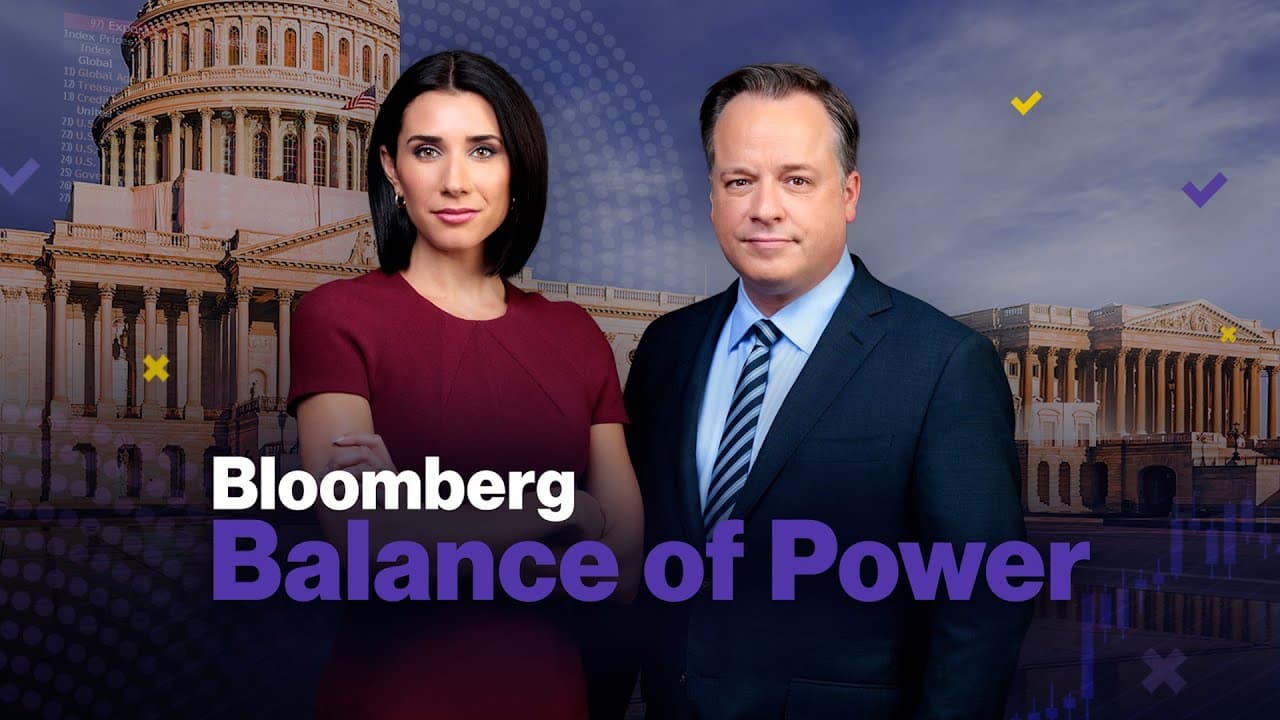
THIS IS "BALANCE OF POWER." LIVE FROM WASHINGTON, D.C. JOE: FROM BLOOMBERG'S WASHINGTON, DC STUDIOS TO OUR TV AND RADIO AUDIENCES WORLDWIDE, WELCOME TO "BALANCE OF POWER." I'M JOE MATHIEU. ALONGSIDE JULIE FINE IN WASHINGTON. TONIGHT, MAJOR GEOPOLITICAL SHIFTS PUTTING PRESSURE ON THE U.S.. BETWEEN RUSSIA'S WAR IN UKRAINE AND THE NEW SANCTIONS, TH... Read More
Key Insights
- • The Trump-Xi meeting was officially confirmed by the White House after Trump had suggested that it might not happen, giving markets reason to expect possible progress toward reducing trade tensions between the world's two largest economies.
- • U.S. software restrictions were being considered as leverage against China's export controls on rare-earth elements, although the proposed restrictions' scope remained unclear and could range from chip-design tools to broader categories of software sales.
- • China's technology strategy was centered on greater domestic self-sufficiency in artificial intelligence, semiconductors, and other advanced fields, reducing its dependence on American companies such as Nvidia and AMD while strengthening its own domestic technology industry.
- • Chinese rare-earth export controls were a central bargaining instrument because critical minerals support numerous American industries, making restored access one of the Trump administration's likely priorities during negotiations with Beijing.
- • A detailed trade agreement was unlikely to be completed during the leaders' initial meeting, because presidential engagement typically establishes commitments and direction before negotiating teams develop the individual components of an agreement.
- • Soybean market access was a major American priority because U.S. farmers wanted sales to China restored, placing agricultural exports alongside technology and critical minerals among the meeting's most immediate potential deliverables.
- • International technology competition was expanding beyond China and the United States, with Chinese companies promoting DeepSeek and a broader Chinese technology stack in Africa as a model that could also be taken to other global markets.
- • Coordination with G7 allies was presented as an important part of the U.S. approach, particularly if Washington needed collective pressure against China while Beijing maintained relationships with Russia, North Korea, and Iran.
Install to Summarize YouTube Videos and Get Transcripts
Explore YouTube Video Summarizer or Get YouTube Transcript Extractor
Questions & Answers
Q: What could Trump and Xi agree to during the APEC Summit?
Trump and Xi could establish a framework for continued trade negotiations rather than complete a comprehensive agreement in their first meeting. Potential areas for progress included restoring American soybean sales to China, easing Chinese export controls on rare-earth elements, addressing possible U.S. software restrictions, and directing negotiating teams to develop detailed commitments after the leaders met.
Q: Why was the confirmed Trump-Xi meeting important for markets?
The confirmation reduced uncertainty after Trump had both suggested and questioned whether the meeting would happen. Markets responded positively because direct engagement between the two leaders created an opportunity to de-escalate the trade conflict and produce forward progress. However, continuing U.S. pressure over software and the 2020 trade deal showed that negotiations would remain difficult.
Q: Why was the United States considering software restrictions on China?
The United States was considering software restrictions as leverage before trade negotiations and as a possible response to Chinese export controls on rare-earth elements. The precise scope was unclear. Restrictions could have focused on chip-design software, as an earlier measure had done, or extended more broadly if China did not lift its mineral export controls.
Q: How does China's technology self-sufficiency plan affect U.S. companies?
China's plan sought greater self-sufficiency in advanced technologies, including artificial intelligence and semiconductors. That objective could reduce Chinese reliance on products from American companies such as Nvidia and AMD. It also complicated U.S. efforts to sell less advanced American AI technology in China and compete with Chinese suppliers in Africa, Latin America, and other markets.
Q: Why were rare-earth elements central to U.S.-China negotiations?
Rare-earth elements and other critical minerals were central because they support numerous industries in the United States. China used export restrictions on these materials as negotiating leverage, while Washington considered software restrictions in response. Securing renewed access to the minerals was therefore identified as a likely priority for the Trump administration during and after the leaders' meeting.
Q: Why were soybean exports expected to be discussed by Trump and Xi?
Soybean exports were expected to receive attention because American farmers, especially those connected to the soybean industry, wanted the Chinese market reopened. Restoring sales would provide a concrete trade outcome affecting U.S. agriculture. Julianne Smith identified renewed soybean flows as one of Trump's likely priorities, alongside critical minerals and advanced technology competition.
Q: Could Trump and Xi finalize a detailed trade deal in one meeting?
A complete and detailed trade deal was considered unlikely to emerge from the first meeting. Julianne Smith said leader-level discussions generally require time and should produce a commitment for negotiating teams to continue working. Those teams would then flesh out the separate components covering agriculture, technology, critical minerals, export controls, and other disputed trade issues.
Q: How was China challenging U.S. technology influence outside China?
China was promoting its technology in markets beyond its borders, including Africa. DeepSeek illustrated that Chinese artificial intelligence could be developed at lower cost, while China was pitching DeepSeek and a wider Chinese technology stack to African customers. The approach challenged U.S. suppliers and could be repeated in other markets around the world.
Summary & Key Takeaways
-
The White House confirmed that Trump and Xi would meet in South Korea during the APEC Summit after uncertainty about whether the bilateral discussion would occur. Markets reacted positively, reflecting hopes for progress, although possible U.S. software restrictions and an examination of China's compliance with the 2020 trade deal preserved negotiating pressure.
-
The central trade dispute involved leverage over strategically important resources and technologies. Washington was considering software sales restrictions if China did not lift export controls on rare-earth elements, while Beijing's new five-year plan emphasized greater self-sufficiency in artificial intelligence, semiconductors, and other advanced technologies that previously depended on American suppliers.
-
Julianne Smith argued that the leaders were more likely to establish a negotiating framework than settle every detail during their first meeting. Priorities included restoring soybean sales to China, securing access to critical minerals, protecting American technology, coordinating with G7 allies, and preserving international demand for U.S. technology amid growing Chinese competition.
Read in Other Languages (beta)
Share This Summary 📚
Summarize YouTube Videos and Get Video Transcripts with 1-Click
Try YouTube Summary with ChatGPT & Claude or YouTube Transcript Generator
Explore More Summaries from Bloomberg Television 📚


Summarize YouTube Videos and Get Video Transcripts with 1-Click
Try YouTube Summary with ChatGPT & Claude or YouTube Transcript Generator