Which Vitamins and Minerals Should You Avoid?
TL;DR
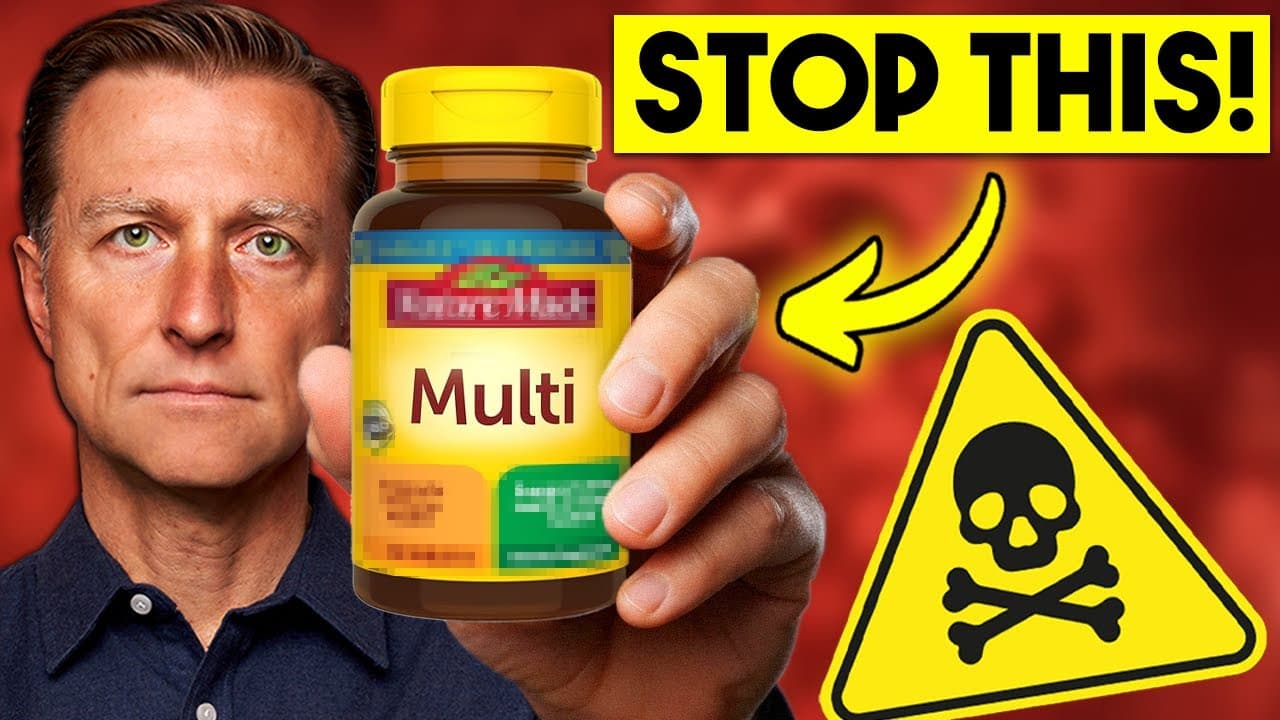
Avoid choosing supplements solely by nutrient name, because the specific form and dose determine how the body handles them. The source advises checking labels for synthetic vitamin A, beta-carotene, folic acid, cyanocobalamin, calcium carbonate, ferrous sulfate, magnesium oxide, vitamin D2, added omega-6, and high-dose copper, while favoring whole-food sources or the alternative forms identified.
Transcript
We're going to talk about the 10 vitamins and minerals you should never ever take, but not for the reason that they're ineffective, but for the bigger reason they can be very very dangerous. And I'm really surprised that they even allow these ingredients to be sold in your vitamins. Okay? And I I think I know why because simply they're so cheap. Yo... Read More
Key Insights
- Synthetic vitamin A is described as inefficiently converted and capable of accumulating in the liver and fat cells. The source links this buildup to toxicity, pregnancy-related birth-defect risk, interference with vitamins D and K2, bone loss, and an increased risk of fractures.
- Synthetic beta-carotene is not the active form of vitamin A and must be converted before use. The source says large studies found an 18% increase in lung cancer among smokers taking the synthetic version, while characterizing naturally occurring beta-carotene as protective.
- Folic acid is presented as a synthetic form of vitamin B9 that differs from folate. The source says 30 to 40% of the world population has an MTHFR alteration that can impair conversion, allowing folic acid to accumulate in the blood.
- Cyanocobalamin is described as a less bioavailable synthetic B12 containing a tiny amount of cyanide. Its conversion requires glutathione, so the source argues that frequent intake may deplete this major antioxidant, particularly creating concern for smokers or people with poor detoxification pathways.
- Calcium carbonate is described as a cheap, rock-like ingredient that may accumulate in arteries or kidneys. The source also links it to heart-attack risk and argues that supplemental calcium should be balanced with magnesium at a 1:1 ratio.
- Ferrous sulfate is characterized as a corrosive form of iron that the body cannot easily eliminate. The source highlights particular concern for men, postmenopausal women, and people with hemochromatosis, and recommends obtaining iron from liver, red meat, or other foods instead.
- Magnesium oxide is described as only about 3% absorbable, with larger amounts causing diarrhea that can flush out electrolytes. Magnesium glycinate is presented as the preferred alternative, with claimed absorption of 80 to 85% and less risk of diarrhea.
- Vitamin D2, added omega-6 fats, and high-dose cheap copper are presented as undesirable choices. The source favors vitamin D3, omega-3 sources such as fish and cod liver oil, and a zinc-to-copper balance of roughly 10:1.
Install to Summarize YouTube Videos and Get Transcripts
Explore YouTube Video Summarizer or Get YouTube Transcript Extractor
Questions & Answers
Q: How can I identify synthetic vitamin A on a label?
Synthetic vitamin A is usually identified on a product label as retinol palmitate or retinol acetate. The source advises avoiding these forms because their conversion to active vitamin A is inefficient and they may accumulate in the liver and fat cells. It instead recommends obtaining vitamin A from egg yolks, liver, or cod liver oil.
Q: Why does the source advise smokers to avoid synthetic beta-carotene?
The source says smokers already have substantial lung damage that leaves their lungs vulnerable. It reports that large studies of synthetic beta-carotene found an approximately 18% increase in lung cancer among smokers. The suggested distinction is that naturally occurring beta-carotene is protective, while the synthetic form may create problems in damaged lung tissue.
Q: What is the difference between folic acid and folate?
Folic acid is described as the synthetic form of vitamin B9, while folate is identified as the active form. The source says an MTHFR gene alteration can impair the conversion of folic acid into folate, causing folic acid to accumulate in the blood. It recommends choosing folate or eating dark leafy green vegetables.
Q: Why is cyanocobalamin considered an undesirable form of vitamin B12?
Cyanocobalamin is described as a synthetic B12 form that contains a tiny amount of cyanide, is less bioavailable than methylcobalamin, and remains in the body for less time. The source also says its conversion requires glutathione, potentially depleting this major antioxidant, and recommends obtaining B12 from red meat or liver instead.
Q: Why does the source discourage calcium carbonate supplements?
Calcium carbonate is described as a cheap, rock-like ingredient that can build up in the body and deposit in the arteries or kidneys. The source says it may increase heart-attack risk and worsen magnesium deficiency when taken without sufficient magnesium. It recommends dairy, cheese, yogurt, kefir, or certain leafy greens as calcium sources.
Q: Who should be especially cautious about supplemental iron?
The source identifies men and postmenopausal women as especially vulnerable because the body has little ability to eliminate iron other than blood donation or menstruation. It also highlights people with hemochromatosis, who retain iron particularly tightly. Ferrous sulfate and iron-fortified foods are discouraged in favor of food sources such as liver and red meat.
Q: Why is magnesium glycinate preferred over magnesium oxide?
Magnesium oxide is described as a poorly absorbed form, with absorption of only about 3%. Increasing the dose may pull water into the colon, cause diarrhea, and flush out electrolytes. Magnesium glycinate is presented as absorbing at roughly 80 to 85%, avoiding diarrhea, and supporting sleep, cortisol control, muscle relaxation, and energy.
Q: What alternatives are suggested for vitamin D2, omega-6, and copper?
The source recommends vitamin D3 instead of vitamin D2 because D2 is described as less potent, less efficiently converted, and less strongly carried by vitamin D binding protein. It advises obtaining omega fats from fish, cod liver oil, or grass-fed meat, and says copper intake should be balanced with approximately ten times as much zinc.
Summary & Key Takeaways
-
The source argues that supplement safety depends heavily on chemical form, absorption, conversion, accumulation, and interactions with other nutrients. It identifies ten ingredients of concern and recommends reading labels carefully instead of assuming that every product containing a familiar vitamin or mineral provides the same effects or benefits.
-
Synthetic vitamin A, beta-carotene, folic acid, cyanocobalamin, calcium carbonate, and ferrous sulfate are presented as potentially problematic because they may accumulate, convert inefficiently, disrupt nutrient balance, or raise toxicity concerns. The suggested alternatives include egg yolks, liver, red meat, dairy products, leafy greens, and explicitly named active nutrient forms.
-
Magnesium oxide, vitamin D2, added omega-6 fats, and excessive cheap copper are also discouraged. The source favors magnesium glycinate, vitamin D3, omega-3-rich foods, and attention to zinc and copper balance. Its broader recommendation is to prioritize food sources and evaluate the exact ingredient listed on each supplement label.
Read in Other Languages (beta)
Share This Summary 📚
Summarize YouTube Videos and Get Video Transcripts with 1-Click
Try YouTube Summary with ChatGPT & Claude or YouTube Transcript Generator
Explore More Summaries from Dr. Eric Berg DC 📚



Summarize YouTube Videos and Get Video Transcripts with 1-Click
Try YouTube Summary with ChatGPT & Claude or YouTube Transcript Generator