How to Grow a YouTube Shorts Channel in 2026
TL;DR
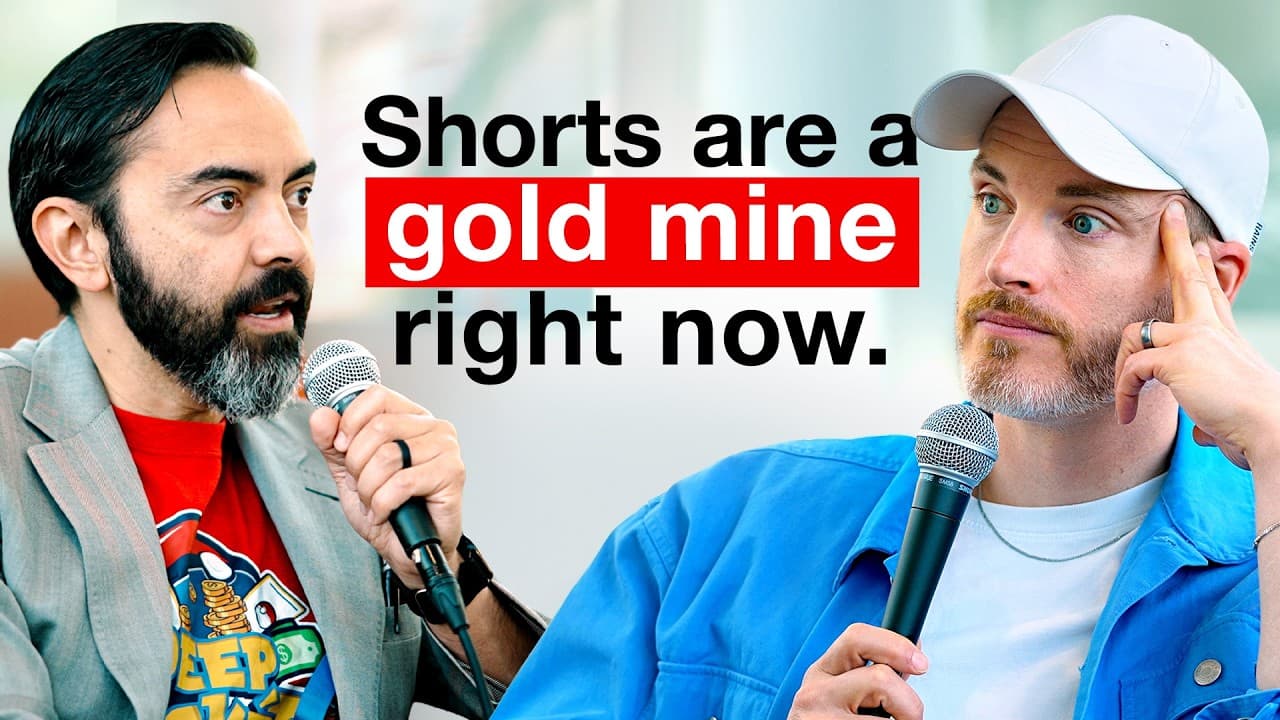
Publish a repeatable, authentic short-form series every day, and measure uploads rather than early views. Pat Flynn’s experiment gained little traction for 30 days, but a video reached 750,000 views on day 35 and lifted earlier posts, showing how consistency, audience anticipation, and rapid learning can compound over time.
Transcript
30 days into the 60-day experiment, I wasn't getting very many views. Normally, I would have given up by then, but the whole goal, again, wasn't views or subscriber counts. It was to count uploads, not views. >> Right now, you're getting 12 million views per day on YouTube Shorts. >> And climbing. Day 35 rolls around. One of those videos hits 750,0... Read More
Key Insights
- Daily publishing is a learning system that creates frequent opportunities to test hooks, settings, storytelling, and audience response. Flynn recommends it for short-form creators because each upload produces new evidence, while an unsuccessful post carries limited risk when another can be published the next day.
- A repeatable series is easier to produce and more compelling to follow than disconnected posts. Flynn used the same card-opening structure with a different pack each day, creating a recognizable show that viewers could anticipate, revisit, and binge after discovering any individual episode.
- Consistency is more sustainable when success is measured by uploads instead of immediate views or subscriber gains. Flynn continued through 30 days of limited traction because his stated target was completing the 60-day publishing experiment, which prevented early performance from ending the project.
- Production efficiency improves through repetition and reusable assets. Flynn’s editing time fell from 45 minutes to about 15 minutes as he learned shortcuts and assembled a library of sound effects, demonstrating that consistent practice can reduce the daily workload without abandoning the established format.
- Curiosity is built into the question, “Should I open it or should I keep it sealed?” The question creates tension at the start, gives viewers a reason to remain, and promises a result at the end, even for people who are not deeply interested in Pokémon collecting.
- Authenticity comes from showing ordinary outcomes as well as exceptional ones. Flynn published every pack opening regardless of whether it contained a desirable card, making the series more relatable than content that presents only successful results and preserving the genuine uncertainty behind each episode.
- An in-person interaction can distinguish an episode from a routine desk recording. Flynn observed that videos beginning with a card-shop purchase often performed better because viewers joined the transaction and then followed the story to discover whether the purchased pack was worth opening.
- Cross-platform distribution gives the same short-form video multiple chances to succeed. Flynn posts each episode to YouTube Shorts, Instagram Reels, Facebook, TikTok, and Snapchat, noting that a post may excel on one platform, perform across several, or fail everywhere.
Install to Summarize YouTube Videos and Get Transcripts
Explore YouTube Video Summarizer or Get YouTube Transcript Extractor
Questions & Answers
Q: How can a new YouTube Shorts channel grow from zero?
A new channel can begin with a simple, repeatable series that is published daily and contains a clear question or uncertain outcome. Flynn started a separate Pokémon channel without linking it to his established audience or showing his face. He focused on completing 60 daily uploads, studied the resulting performance data, improved his hooks, and continued even when the first 30 days produced limited views.
Q: Why should YouTube Shorts creators build an episodic series?
An episodic series gives viewers a familiar format, a reason to anticipate the next installment, and a backlog they can binge after discovering one successful post. Flynn’s daily card openings repeated the same structure while changing the pack and outcome. When one episode reached 750,000 views, viewers also returned to earlier episodes, causing those older videos to begin climbing.
Q: How often should creators publish short-form videos?
Flynn recommends publishing short-form content daily because frequent action produces data and accelerates learning. Each post gives the creator another opportunity to test what holds attention and what does not. A poor result carries little risk because another video can be released the following day, unlike a slower long-form schedule that offers fewer experiments and slower feedback.
Q: What should creators measure when early Shorts get few views?
Creators can measure completed uploads rather than making views or subscriber counts the primary target during an initial experiment. Flynn committed to 60 days and had limited traction after 30 days, but he continued because the goal was consistency. That approach preserved enough time to improve production, collect evidence from prior posts, and reach the breakout on day 35.
Q: How can creators make daily Shorts faster to produce?
Creators can use a stable format, learn editing shortcuts, and maintain a reusable library of production assets. Through daily repetition, Flynn reduced his editing time from 45 minutes per video to about 15 minutes. Because each episode followed the same structure with a different card pack, he also knew what the next video would require and avoided rebuilding the concept every day.
Q: What makes a strong hook for a short-form series?
A strong hook quickly creates a question whose answer is delivered at the end. Flynn begins by flipping the pack and asking whether he should open it or keep it sealed. That opening establishes immediate tension, while the unknown contents create additional mystery. The format encourages viewers to remain because the episode promises a concrete result rather than presenting an unrelated sequence of clips.
Q: Why did the card-shop Shorts perform better than desk recordings?
Flynn observed that episodes beginning inside a card shop often performed better because they included the transaction used to purchase the pack. Viewers entered the story during an active interaction, then followed along to see what the pack contained and whether the purchase was worthwhile. The changed setting and visible sequence gave those episodes more context than beginning directly at a desk.
Q: Should the same short-form video be posted on multiple platforms?
Flynn distributes the same daily video across YouTube Shorts, Instagram Reels, Facebook, TikTok, and Snapchat. He reports that performance varies by platform: a video may succeed strongly on one, do well across all of them, or perform poorly everywhere. Reusing the finished episode expands its opportunities without requiring a separate core concept for each platform.
Summary & Key Takeaways
-
Pat Flynn created a separate Pokémon Shorts channel without linking it to his existing audience or showing his face. He committed to opening one card pack daily for 60 days and judged progress by completed uploads rather than views or subscribers, allowing the experiment to continue despite weak results during its first month.
-
Repeated production made the process faster and more systematic. Flynn reduced editing time from 45 minutes to about 15 minutes by learning shortcuts and building a reusable sound-effect library. A consistent episodic structure also simplified planning while giving viewers a familiar show they could follow daily or watch as a backlog.
-
A card-shop episode reached 750,000 views on day 35, after Flynn improved his opening hook and incorporated an in-person purchase. Viewers then discovered and watched earlier episodes. He continued beyond the original experiment to day 647 and distributed each video across YouTube, Instagram, Facebook, TikTok, and Snapchat.
Read in Other Languages (beta)
Share This Summary 📚
Summarize YouTube Videos and Get Video Transcripts with 1-Click
Try YouTube Summary with ChatGPT & Claude or YouTube Transcript Generator
Explore More Summaries from Think Media Podcast 📚
Summarize YouTube Videos and Get Video Transcripts with 1-Click
Try YouTube Summary with ChatGPT & Claude or YouTube Transcript Generator