What Are the Ex-Banker's 11 Little-Known Investing Lessons for Europeans in 2026?
TL;DR
Europeans should generally invest through broadly diversified, low-cost index funds and ETFs instead of delaying while trying to predict the winning market, company size, or investment style. The speaker bases these lessons on investing €667 million as a European investment-company co-founder and warns that markets decline roughly one out of four years. Read on for practical guidance on diversification, popular themes, crashes, financial incentives, and exclusive investments.
Transcript
I've invested €667 million euros in index funds and ETFs as co-founder of a European investment company. Let me show you the most surprising and little known investing lessons that I learned along the way which could boost your profits and help you avoid expensive mistakes. And lesson one is critical for beginning investors. To explain it, let me a... Read More
Key Insights
- Starting with a good strategy is more practical than waiting for certainty. Investors cannot know whether American or European stocks, large or small companies, or growth or value strategies will lead. Broad diversification and low costs matter more than identifying the single best-performing approach before investing.
- The stock market is not the economy. China's economy reportedly grew about 8% annually in nominal terms over the referenced 15-year period, while its stock market grew about 5%; the United States grew about 5% economically, while the S&P 500 returned about 14%.
- Economic growth can diverge from shareholder returns for several reasons. Public companies may not represent the overall economy, new competitors can weaken listed incumbents, company profits may benefit insiders instead of shareholders, and anticipated growth can already be incorporated into expensive stock prices.
- Popular investment ideas are often already priced into markets. Themes such as European defense spending, artificial intelligence, or semiconductors may attract thousands of investors before an ordinary investor acts, pushing prices higher and reducing the original opportunity described by the investment thesis.
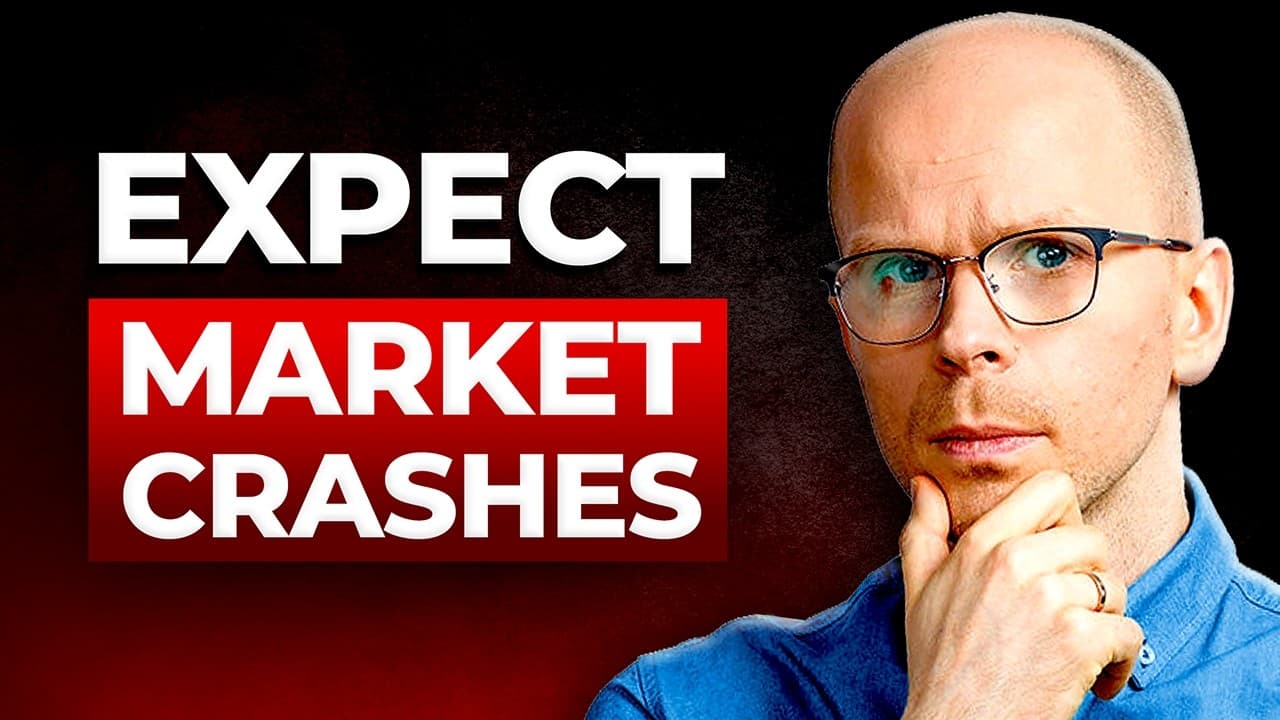
- Market crashes are an expected part of stock investing. The transcript states that markets decline in roughly one out of four years and that, during a typical 10-year period, investors may spend 12 months holding losses of 20–30% relative to the previous market peak.
- Crash preparation requires liquidity, suitable risk, and a predetermined response. An uninvested safety cushion can cover emergencies without forcing sales, while a tolerable portfolio allocation can reduce panic. For long-term investors, the stated plan is usually to continue investing at lower prices.
- Financial advice is influenced by how the provider earns money. Banks can profit by selling expensive investments and collecting high fees, while influencers may earn through courses or promoted schemes. Investors should examine those incentives before accepting recommendations from either source.
- Exclusive investments are not necessarily safer or more profitable. Hedge funds and private equity are described as complex, risky, expensive, and less liquid options marketed to wealthy clients. The transcript argues that their exclusivity reflects access restrictions rather than reliable superiority over index funds or ETFs.
Install to Summarize YouTube Videos and Get Transcripts
Explore YouTube Video Summarizer or Get YouTube Transcript Extractor
Questions & Answers
Q: How should Europeans invest in index funds and ETFs?
They should favor broad diversification and low costs rather than trying to predict whether American or European stocks, large or small companies, or growth or value stocks will perform best. The speaker says beginning investors should choose a good strategy and start, even if it does not become the most profitable strategy.
Q: Why shouldn't investors choose stocks based on the fastest-growing economy?
The stock market represents listed companies, not the entire economy, and successful industries can still disrupt established public companies. Expected growth may already be reflected in high share prices, while some company profits may benefit insiders rather than shareholders.
Q: How did Chinese and American economic growth compare with their stock-market returns?
Over the referenced 15 years, China's economy grew about 8% per year in nominal terms, while its stock market grew about 5% annually. The US economy grew about 5% per year, but the S&P 500 returned about 14% annually.
Q: Should investors buy AI, semiconductor, or European defense ETFs based on popular trends?
The underlying idea may be reasonable, but thousands of investors may have acted on it before an ordinary investor does. Those purchases can raise relevant stock prices, so the apparent opportunity may already be priced into the market.
Q: How often should stock investors expect market losses?
The transcript says the stock market declines in roughly one out of four years. During a typical 10-year period, investors may spend 12 months holding losses of 20–30% relative to the previous market peak, so significant temporary losses should be expected.
Q: How can investors prepare for a market crash?
They can keep an uninvested safety cushion for emergencies, select a level of portfolio risk they can tolerate, and decide beforehand how they will respond. For long-term investors, the stated approach is usually to continue investing at lower prices instead of panicking.
Q: Why should investors examine how banks and influencers make money?
Compensation can affect the recommendations they provide. Banks may profit from expensive investments and high fees, while influencers may earn from courses or promoted schemes, so investors should identify who benefits from the advice.
Q: Are exclusive investments better than index funds and ETFs?
Exclusivity alone does not make an investment safer or more profitable. Hedge funds and private equity are described as complex, risky, expensive, and less liquid, with access restrictions that do not guarantee superiority over index funds or ETFs.
Summary & Key Takeaways
-
Beginning investors can become trapped while comparing regions, company sizes, and investment styles. Because nobody can know the winning strategy in advance, the practical approach is to begin with broad diversification and low costs. A good strategy can still produce satisfactory results without becoming the market's absolute best performer.
-
Economic performance does not translate directly into stock returns. Listed companies may represent only part of an economy, successful industries can disrupt established public companies, insiders may capture profits, and expected growth may already be reflected in prices. Investors therefore should not select stocks merely by forecasting the strongest economy.
-
Long-term investors should expect crashes, prepare emergency reserves, and use a portfolio risk level they can tolerate. They should also investigate financial incentives behind advice and remain skeptical of exclusive, complex products. Bonds can appear safe because their payments are predictable, yet predictability alone does not ensure long-term financial sufficiency.
Read in Other Languages (beta)
Share This Summary 📚
Summarize YouTube Videos and Get Video Transcripts with 1-Click
Try YouTube Summary with ChatGPT & Claude or YouTube Transcript Generator
Explore More Summaries from Tom Crosshill 📚


Summarize YouTube Videos and Get Video Transcripts with 1-Click
Try YouTube Summary with ChatGPT & Claude or YouTube Transcript Generator