How to Stop Negative Thoughts and Ease Anxiety
TL;DR
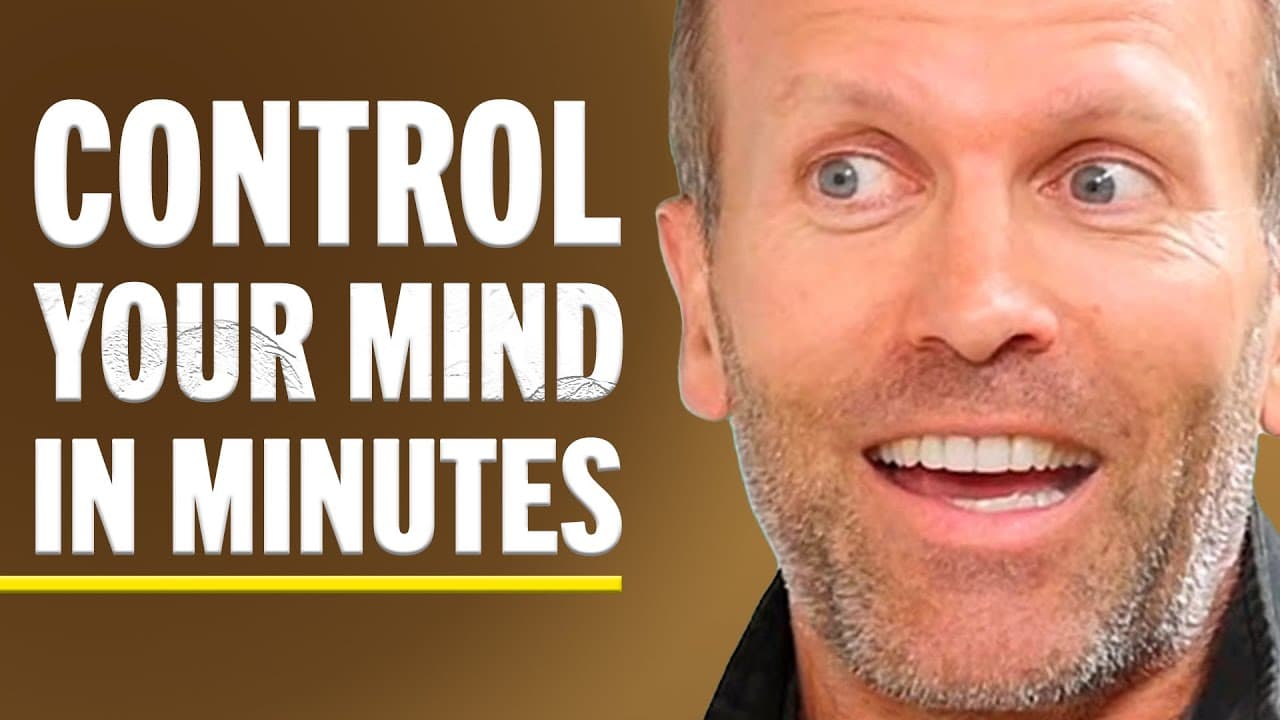
Anxiety often begins when the brain predicts an unwanted future and reacts to that imagined threat in the present. Notice this survival pattern, respond to yourself with compassion, and examine the past hurt informing the fear. Freedom grows when you stop treating circumstances as the sole cause of your inner experience and accept what you cannot directly control while retaining personal preferences.
Transcript
That's why I feel my work has helped so many people who have had sicknesses and diseases some of which have been chronic because as soon as they let go of the internal mechanism that creates that disease and they find peace then their external physiology eventually is given the permission to actually heal itself and miracles literally do happen. Wh... Read More
Key Insights
- Anxiety is a present reaction to a future that the brain predicts will be undesirable. The anticipated event may concern physical survival, but it can also involve ordinary situations such as conflict with a spouse, trouble with a boss, or meeting someone difficult.
- Fear is a protective response when physical danger is real. It can prompt a person to change behavior or take aversive action, but anxiety develops when that same survival mechanism treats an imagined possibility as though it were an immediate threat.
- Past hurt informs future fear because the brain remembers painful experiences and tries to prevent their repetition. Experiences ranging from severe abuse to childhood exclusion can shape later predictions, even though the form and intensity of each person’s trauma differ.
- Attempts to avoid pain can perpetuate the feared result when unresolved history creates tension and preemptive failure. The basketball player described in the conversation worried about missing free throws, became tense, and could not perform with the ease available when relaxed.
- Awareness is the first step in changing anxious patterns because it reveals that the brain is projecting an unwanted future and then trying to avoid its own projection. Seeing this internal loop can make the pattern appear less authoritative and even somewhat comical.
- Self-compassion is an appropriate response to fear because anxiety reflects a primal effort to survive and avoid pain. A person can respond as a caring parent would respond to a frightened child, offering reassurance rather than criticism, judgment, or dismissal.
- Freedom is independence from the belief that circumstances alone generate inner experience. When people assume external events determine how they feel, they try to control those events, which is exhausting and leaves them feeling like victims of circumstance.
- Acceptance is compatible with personal preference because not minding what happens does not require wanting every outcome. A person can prefer that a flight remain scheduled while accepting a cancellation that is already occurring and cannot be directly controlled.
Install to Summarize YouTube Videos and Get Transcripts
Explore YouTube Video Summarizer or Get YouTube Transcript Extractor
Questions & Answers
Q: Why do negative thoughts and anxiety arise?
Negative thoughts and anxiety arise because the brain is designed to predict potential threats and protect continued existence. It may project an undesirable future, then produce apprehension, worry, or fear in the present. This response is useful when danger is real, but it becomes distressing when the supposed threat is an imagined event, such as conflict, criticism, embarrassment, or another unwanted outcome.
Q: How does past hurt create future fear?
Past hurt creates future fear when the brain treats a painful experience as evidence that something similar could happen again. It then tries to manage or control the environment to prevent repetition. According to Peter Crone, unresolved hurt keeps a person living from history, so accepting and reconciling past experiences can reduce their use as material for anxious predictions about the future.
Q: How can awareness help stop negative thought patterns?
Awareness helps by exposing the structure of the pattern: one brain imagines an unwanted future and then becomes anxious while trying to prevent what it imagined. Recognizing this loop creates distance from the prediction and shows that the feared event has not happened. The person can then see anxiety as a survival tendency rather than unquestioned proof that something bad is about to occur.
Q: Why is self-compassion important when handling anxiety?
Self-compassion is important because fear is presented as a primal human response intended to prevent pain and preserve survival. Judging that response adds hostility to an already difficult experience. Peter Crone recommends treating the frightened part of yourself as a caring parent would treat a scared child, with reassurance, patience, and understanding that the protective pattern is human, even when it is unnecessary.
Q: How can fear become a self-fulfilling pattern?
Fear can become self-fulfilling when efforts to avoid failure create the physical and mental conditions that make failure more likely. The basketball example shows this process: concern about another missed free throw produced tension and worry, preventing relaxed, effortless performance. The athlete was reacting to previous embarrassment, guilt, and shame, so the attempt to prevent another painful result interfered with present performance.
Q: What is the difference between useful fear and anxiety?
Useful fear responds to real physical danger and encourages protective action that may prevent harm. Anxiety uses the same mechanism for a future threat that may exist only in the imagination. Both arise from the drive to survive, but anxiety can create present distress about an event that has not occurred, including situations that threaten the ego rather than a person’s literal existence.
Q: What does freedom mean in Peter Crone’s approach?
Freedom means no longer assuming that external circumstances are the sole source of inner experience. If someone believes events and other people determine how they feel, they must continually control the outside world to feel secure. Peter Crone describes that effort as exhausting and as being a victim of circumstance. Freedom involves changing this relationship to events rather than requiring every event to cooperate.
Q: Can acceptance coexist with wanting a different outcome?
Acceptance can coexist with preference because acknowledging reality does not mean liking every outcome. Peter Crone says he can avoid minding what happens while still having a personal preference. For example, he may prefer that a flight not be cancelled, yet accept the cancellation once it occurs, especially when it lies outside his immediate control. This reduces futile struggle without eliminating practical desires.
Summary & Key Takeaways
-
Anxiety belongs to a spectrum that includes apprehension, concern, worry, fear, panic, and terror. Although fear can protect someone from genuine physical danger, the same mechanism can respond to imagined future events. The brain then creates an unwanted possibility and becomes distressed while attempting to prevent its own prediction from happening.
-
Past hurt can become evidence the brain uses to anticipate similar pain. Attempts to prevent that pain may create tension, controlling behavior, and conditions that reproduce the feared outcome. Awareness reveals the pattern, while self-compassion helps a person approach fear as a human survival response instead of judging or attacking themselves for experiencing it.
-
Freedom means recognizing that inner experience is not simply generated by external circumstances. Trying to control every event or person to secure a preferred feeling is exhausting and leaves someone dependent on circumstances. A freer response accepts what is already happening, especially when it cannot be directly controlled, while still allowing personal preferences.
-
Key Insights
Read in Other Languages (beta)
Share This Summary 📚
Summarize YouTube Videos and Get Video Transcripts with 1-Click
Try YouTube Summary with ChatGPT & Claude or YouTube Transcript Generator
Explore More Summaries from Dr Rangan Chatterjee 📚



Summarize YouTube Videos and Get Video Transcripts with 1-Click
Try YouTube Summary with ChatGPT & Claude or YouTube Transcript Generator