[NEW] The Most Powerful People In The World Use These Techniques | Dr. Bruce Lipton
TL;DR
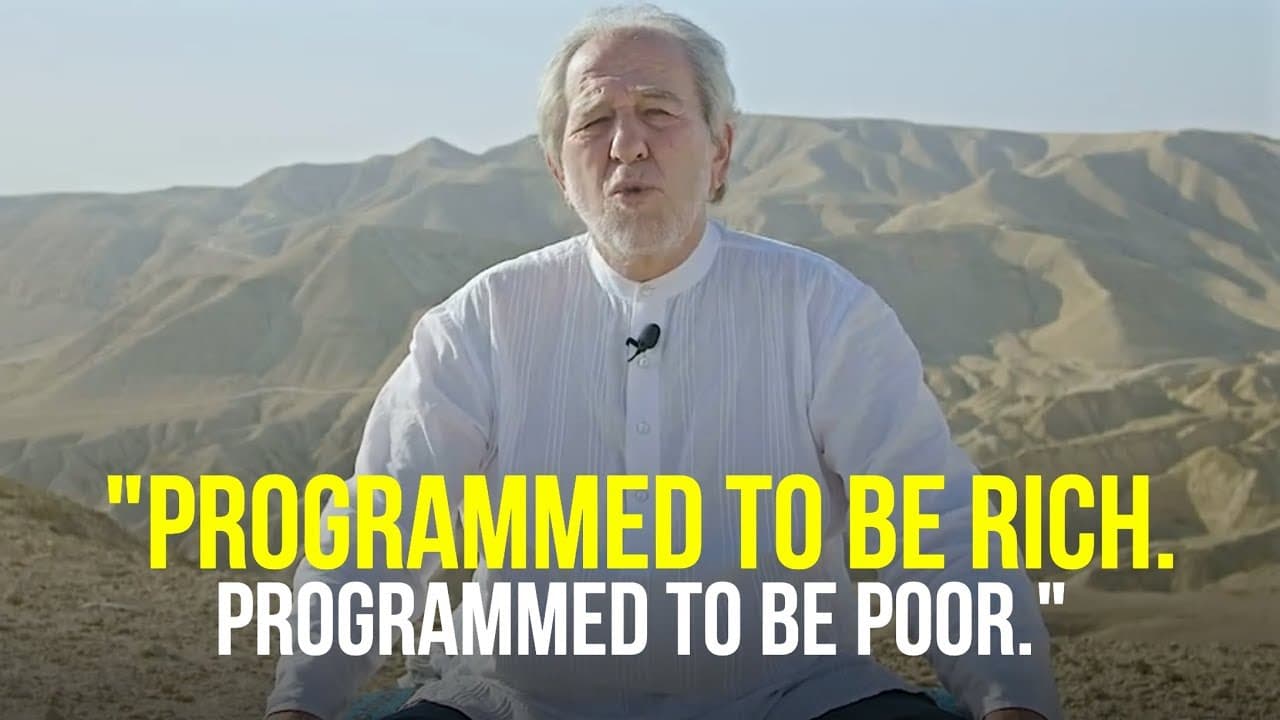
Early childhood programming significantly influences personal empowerment and life outcomes.
Transcript
do you think that's a minor thing that just would have slipped away in history that you can control the population by programming the first six years of their life it's a manipulation of people who are we whatever we've been programmed to be I get the first six years of programming I own your life it's not your choice now it's unconscious it will t... Read More
Key Insights
- 🛟 Early programming establishes foundational beliefs that dictate individuals' behaviors and choices throughout their lives.
- ❓ Empowerment and disempowerment are often derived from familial and societal programming, impacting personal and financial success.
- 🥺 A significant portion of human behavior is driven by subconscious processes, which often contradict conscious desires, leading to frustration and confusion.
- 🛟 The ability to change one’s life trajectory hinges on reprogramming subconscious beliefs to align with conscious intentions.
- ♻️ Energy and vibrational alignment are vital for well-being, suggesting that individuals should actively seek harmonious environments.
- 🤯 Increased understanding of how mind-body interactions work offers potential for profound personal transformation and healing.
- 🥶 Awareness of one’s programming can be the first step toward breaking free from limiting beliefs and realizing one’s true potential.
Install to Summarize YouTube Videos and Get Transcripts
Explore YouTube Video Summarizer or Get YouTube Transcript Extractor
Questions & Answers
Q: Why are the first six years of life so important for individual programming?
The first six years of life are foundational for programming because it's during this time that children are highly impressionable. They absorb beliefs and behaviors from their environment, including parents and community influences, which become subconscious programming. This programming is critical in forming their identity and influences their choices and experiences throughout their lives.
Q: How does socio-economic status impact personal programming?
Socio-economic status significantly influences the messages that children receive regarding empowerment or disempowerment. Children from wealthy families are often taught beliefs that lead to greater opportunities and a sense of empowerment. In contrast, those from poorer backgrounds may internalize limitations and beliefs that hinder their potential, perpetuating a cycle of poverty.
Q: What is the difference between conscious and subconscious programming?
The conscious mind is responsible for creative thinking, intentions, and desires—essentially, what a person actively wants out of life. In contrast, the subconscious mind operates autonomously, processing learned behaviors and experiences without the individual’s active engagement. Research shows that approximately 95% of life operates on subconscious programs, often leading to behavior that contradicts conscious wishes.
Q: How can individuals change their subconscious programming?
Individuals can change their subconscious programming by gaining awareness of their automatic behaviors and actively reprogramming their beliefs. Techniques such as mindfulness, affirmations, visualization, and behavioral therapy can help align subconscious beliefs with conscious desires. This alignment allows individuals to operate in a way that supports their true aspirations, even when they are not actively thinking about them.
Q: What role does energy play in health and well-being?
Energy plays a crucial role in health and well-being, as it influences both physical and emotional states. Positive energies and vibrations can enhance overall health, while negative environments and thoughts can detrimentally impact physical health. The concept of vibrational harmony suggests that individuals should seek environments and relationships that uplift their energy and promote healing.
Q: How does programming affect personal perception of power?
Programming affects how individuals perceive their own power in the world. Those programmed with limiting beliefs may feel disempowered and vulnerable, often questioning their capabilities. Conversely, individuals who have internalized empowering beliefs recognize their strength and potential. Understanding this dynamic is essential for reclaiming personal agency and fostering a powerful mindset.
Q: What scientific advancements challenge traditional views on biology and consciousness?
Recent scientific advancements, particularly in quantum physics, challenge the traditional Newtonian views of biology, which considered only material existence. New insights reveal that consciousness and energy also shape our biological reality, suggesting that our beliefs and thoughts can influence physiological processes. This shift in understanding encourages further exploration into the relationship between mind and body.
Summary & Key Takeaways
-
The first six years of life are crucial for programming an individual’s conscious and subconscious beliefs, which ultimately shapes their identity and potential for empowerment.
-
Socioeconomic background plays a critical role in familial programming, as children from rich families are taught empowerment, while those from poor families often receive disempowering messages.
-
New scientific insights suggest that our consciousness can either hinder or enhance our strength, emphasizing the importance of reprogramming subconscious beliefs to align them with conscious desires for a fulfilling life.
Read in Other Languages (beta)
Share This Summary 📚
Summarize YouTube Videos and Get Video Transcripts with 1-Click
Try YouTube Summary with ChatGPT & Claude or YouTube Transcript Generator
Explore More Summaries from Video Advice 📚


Summarize YouTube Videos and Get Video Transcripts with 1-Click
Try YouTube Summary with ChatGPT & Claude or YouTube Transcript Generator