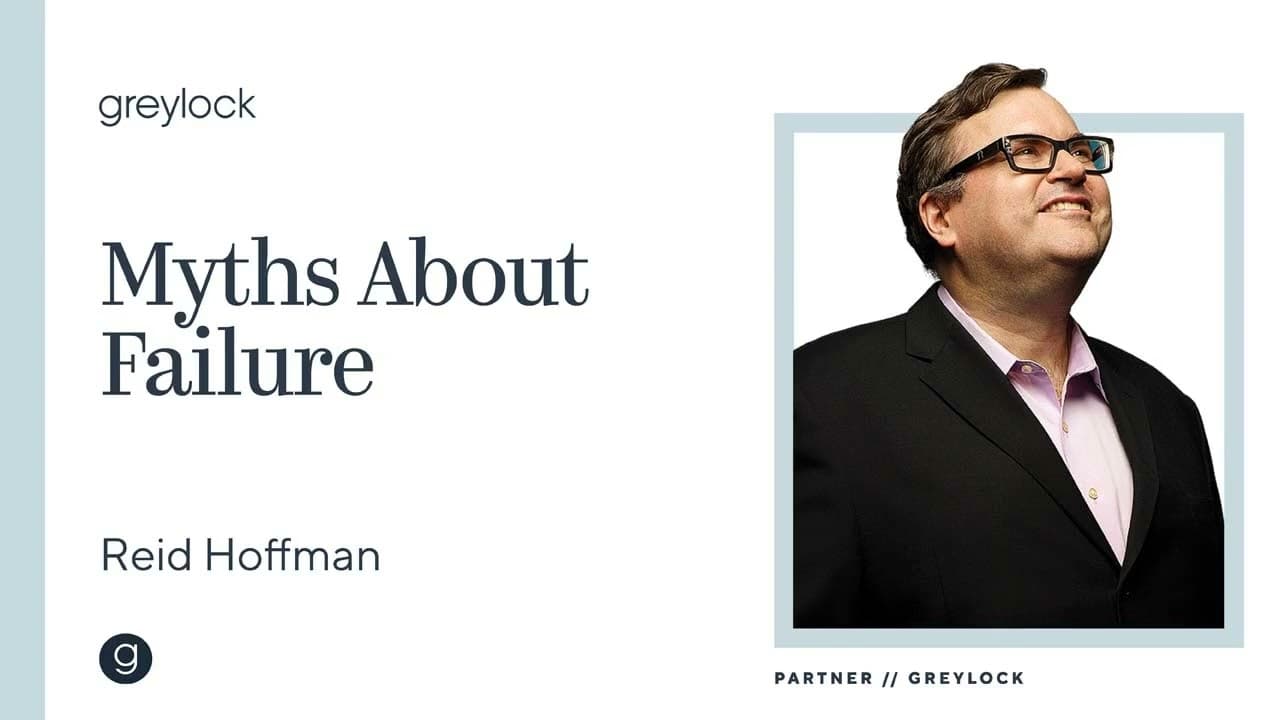
Reid Hoffman | Myths About Failure
TL;DR
Startups often fail due to insufficient capital, poor product-market fit, or founders hiding from market feedback instead of engaging with it. To improve their chances of success, entrepreneurs should learn from failure, adapt quickly, and leverage network intelligence to make informed decisions. Embracing a mindset of constant learning and agility can help navigate the challenges startups face.
Transcript
hi i'm chris yay the co-author of blitzscaling and i'm here with my co-author and old friend reed hoffman the co-founder of linkedin and investor at greylock partners we're here today to talk about failure it's a tough topic but it's one of great interest to entrepreneurs so reid let's just start with a basic one why do startups fail well one of th... Read More
Key Insights
- 😀 Startups face a high risk of failure and need to navigate various challenges to succeed.
- 👶 Failure can be a springboard to success if founders learn from their mistakes and pivot to new opportunities.
- 💪 Building a strong network and seeking network intelligence are crucial for navigating failure and making better decisions.
- 🤗 Founders should be open to constant learning, adaptability, and making smart decisions based on data and feedback.
- 🧑🏭 Managing failure requires maintaining integrity, acting with responsibility toward investors and employees, and facilitating a smooth transition if necessary.
- 🍵 Failure can be a valuable learning experience and can even enhance a founder's reputation if they handle it with integrity and grace.
- 🎙️ More videos with Reid Hoffman:
Install to Summarize YouTube Videos and Get Transcripts
Explore YouTube Video Summarizer or Get YouTube Transcript Extractor
Questions & Answers
Q: Why do startups fail?
Startups often fail due to a lack of funding, inability to test hypotheses, and spending too much time developing the product without engaging with the market to learn and adapt.
Q: What are some common failure modes in startups?
Common failure modes include unsuccessful fundraising, lack of traction or product-market fit, delays in taking action and learning, and dysfunctional board dynamics.
Q: How can founders manage failure?
Founders should embrace the constant learning curve, seek network intelligence, make data-driven decisions, and be willing to pivot or make necessary changes in their investment thesis.
Q: What are the potential career-ending failures for founders?
Career-ending failures can result from unethical behavior, embezzlement, lying, or other actions that violate integrity and trust.
Summary
In this video, Chris Yeh and Reid Hoffman discuss the topic of failure in startups. They explore the reasons why startups fail, the most common failure cases, and the importance of learning and pivoting. They also share lessons from their own experiences with startup failures, such as Reid's failed startup SocialNet. The conversation highlights the need for entrepreneurs to have a clear investment thesis, seek network intelligence, and make hard judgment calls in managing failure.
Questions & Answers
Q: Why do startups fail?
Startups have a high failure rate because their default state is one of being dead. The vast majority of startups fail, even if they have funding and a team. This is the normal default, and failure is a common outcome for most startups.
Q: What are the biggest causes of startup failure?
The most common causes of failure in startups are lack of financing, inability to test hypotheses and achieve product-market fit, and a failure to learn and adapt quickly. Startups often struggle to secure enough capital to test their ideas or spend too much time hiding from the market to prove their theories. It's important for entrepreneurs to be aware of these failure cases and actively work to address them.
Q: How did Reid's first startup, SocialNet, fail?
SocialNet failed due to several mistakes, such as building a perfect product without considering the go-to-market strategy, hiring people with too much experience who were resistant to change, and having investors who believed they knew better than the founders. The team didn't pivot quickly enough or listen to feedback, leading to the failure of the startup.
Q: What are the do's and don'ts for managing failure?
The key is to be clear-eyed about potential failure points and constantly evaluate whether you're on track to achieve your investment thesis. Seek network intelligence and feedback from smart and knowledgeable people to identify potential failure points and address them proactively. Embrace the idea of failing fast and changing course when necessary. Also, seek investors who are supportive and will work with you through both the ups and downs.
Q: How do you know when to hold them, fold them, walk away, or pivot?
It's important to have a clear investment thesis that outlines what needs to be true for your startup to succeed. Continually evaluate your confidence in your investment thesis and make judgments based on data, feedback, and changes in the market. Consider the size of the pivot or change needed and the overall market opportunity. Sometimes it's necessary to walk away or fold them, and handing back capital to investors can be the right decision in certain situations.
Q: How should startups respond to threats from larger companies like Amazon?
While it's important to pay attention to competition from large companies, it's also important to remember that their resources and priorities are limited. Unless your startup is in direct competition with a major strategic priority for the larger company, there is still a chance to outmaneuver them. Additionally, the competitors of large companies may have an interest in supporting your success, creating opportunities for collaboration or support.
Takeaways
Managing failure in startups requires entrepreneurs to have a clear investment thesis, seek network intelligence, and make hard judgment calls. Startups are inherently risky, and failure is the default state. It's important to embrace the concept of failing fast, seek evidence to address potential failure points, and be open to learning and pivoting. Entrepreneurs should evaluate their confidence in their investment thesis, consider the size of the pivot required, and make decisions proactively. And while competition from large companies is a consideration, startups still have opportunities to succeed by outmaneuvering them and finding support from competitors of those larger companies.
Summary & Key Takeaways
-
Startups often face failure due to a default state of being dead, requiring founders to assemble the right team, secure funding, and establish a go-to-market strategy to move from failure to success.
-
Most startups fail due to lack of capital, not being able to test their hypotheses, or spending too much time hiding from the market instead of engaging with it and learning.
-
Failure in startups can be attributed to challenges like unsuccessful fundraising, lack of traction or product-market fit, and delays in taking action and learning from the market.
-
Key principles for managing failure include fail fast, constantly learning and adapting, seeking network intelligence, and making data-driven decisions.
Read in Other Languages (beta)
Share This Summary 📚
Summarize YouTube Videos and Get Video Transcripts with 1-Click
Try YouTube Summary with ChatGPT & Claude or YouTube Transcript Generator
Explore More Summaries from Greymatter Podcast (Audio) 📚






Summarize YouTube Videos and Get Video Transcripts with 1-Click
Try YouTube Summary with ChatGPT & Claude or YouTube Transcript Generator