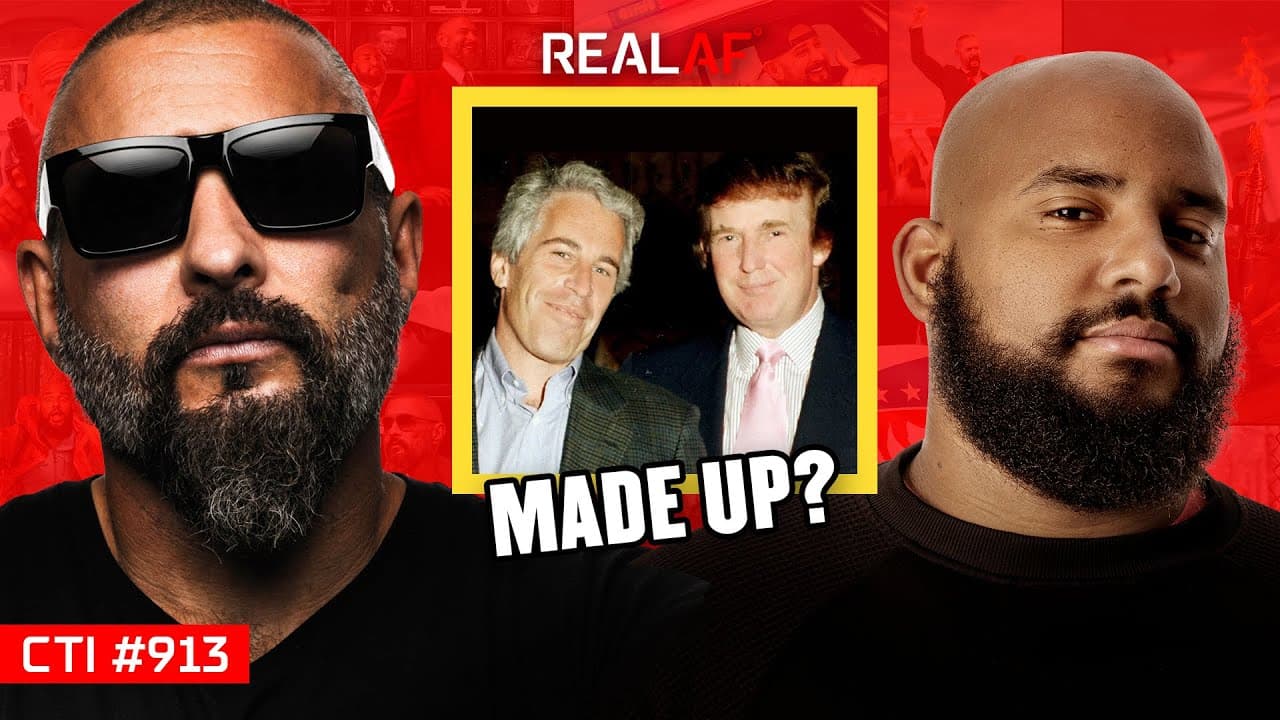
Trump Claims Obama and Comey Made Up Epstein Files - Ep 913 CTI
TL;DR
Trump accuses Obama and Comey of fabricating Epstein files.
Transcript
I would say that, you know, these files were made up by Comey. They were made up by Obama. The only motive to his story of they made this up would be to use it against him somehow. How are they using it against you? You mean like right now they're using against you, right? Then if they were using it against you right now, why didn't they use it aga... Read More
Key Insights
- Trump alleges that Obama and Comey fabricated Epstein files to use against him, questioning why they weren't used in previous elections.
- The show highlights skepticism about accountability for high-profile individuals connected to Epstein, suggesting no consequences will occur.
- Andy Purcella and DJ discuss the erosion of respect due to lack of consequences in society, linking it to modern societal issues.
- The conversation touches on the need for accountability to restore faith in governance, emphasizing the role of consequences in maintaining societal order.
- There is a critique of media narratives and their role in shaping public perception, particularly around controversial figures like Epstein.
- The discussion includes a philosophical segment, exploring hypothetical scenarios and their implications on societal norms.
- A segment on Missouri cities humorously stereotypes various locations, reflecting local cultural perceptions.
- The episode concludes with a reflection on the importance of critical thinking and the dangers of generalizing entire groups of people.
Install to Summarize YouTube Videos and Get Transcripts
Explore YouTube Video Summarizer or Get YouTube Transcript Extractor
Questions & Answers
Q: What does Trump claim about the Epstein files?
Trump alleges that the Epstein files were fabricated by Obama and Comey to use against him. He questions why these files weren't used in previous elections if they were indeed created to harm him, suggesting skepticism about their authenticity and the motives behind them.
Q: What is the main theme of Andy and DJ's discussion?
The main theme revolves around the erosion of respect due to the lack of consequences in society. Andy and DJ argue that accountability is essential for restoring faith in governance and maintaining societal order, linking this to broader societal issues.
Q: How do Andy and DJ view the media's role in shaping public perception?
Andy and DJ critique media narratives, particularly around controversial figures like Epstein. They suggest that media plays a significant role in shaping public perception and highlight the need for critical thinking to navigate these narratives effectively.
Q: What philosophical questions are explored in the episode?
The episode includes a segment on philosophical questions, exploring hypothetical scenarios such as the nature of beavers' instincts and the implications of a perfect credit score. These questions serve to provoke thought and discussion on societal norms and behaviors.
Q: What cultural perceptions are humorously explored in the episode?
A segment humorously stereotypes various Missouri cities, reflecting local cultural perceptions. This light-hearted exploration highlights the unique characteristics and reputations of different locations, adding a comedic element to the discussion.
Q: What is the episode's stance on generalizing groups of people?
The episode emphasizes the dangers of generalizing entire groups of people, advocating for a nuanced understanding. It stresses the importance of critical thinking and the need to avoid simplistic narratives that fail to capture the complexity of societal dynamics.
Q: What concerns are raised about high-profile individuals connected to Epstein?
There is skepticism about the accountability of high-profile individuals connected to Epstein, with a suggestion that no significant consequences will occur. This reflects broader concerns about justice and the influence of powerful figures in evading accountability.
Q: How does the episode conclude?
The episode concludes with a reflection on the importance of critical thinking and the dangers of generalizing entire groups of people. It emphasizes the need for accountability and nuanced understanding in addressing societal issues and restoring faith in governance.
Summary & Key Takeaways
-
Trump claims that the Epstein files were fabricated by Obama and Comey, questioning why they weren't used against him in past elections. This raises skepticism about the motives behind such claims and the lack of accountability for high-profile individuals.
-
Andy Purcella and DJ discuss the erosion of respect due to the absence of consequences in modern society. They argue that accountability is crucial for restoring faith in governance and maintaining societal order.
-
The episode includes segments on philosophical questions, humorous stereotypes of Missouri cities, and a reflection on the importance of critical thinking. It emphasizes the dangers of generalizing entire groups and the need for nuanced understanding.
Read in Other Languages (beta)
Share This Summary 📚
Summarize YouTube Videos and Get Video Transcripts with 1-Click
Try YouTube Summary with ChatGPT & Claude or YouTube Transcript Generator
Explore More Summaries from Andy Frisella 📚





Summarize YouTube Videos and Get Video Transcripts with 1-Click
Try YouTube Summary with ChatGPT & Claude or YouTube Transcript Generator