How to Become an Entrepreneur in a Crisis?
TL;DR
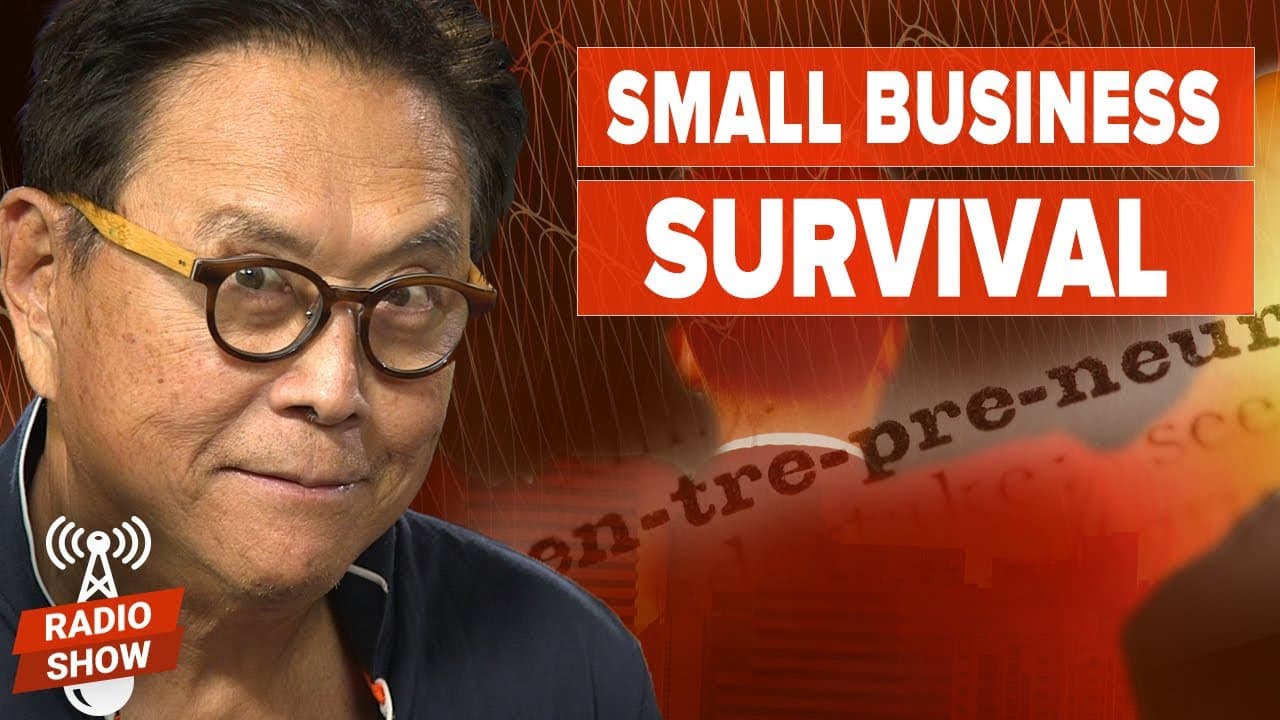
Entrepreneurship can persist through a crisis by focusing on real customer needs, delivering a simple and affordable product, and scaling through a careful growth model. The guest shares how failure and perseverance built Nekter from one store to a franchise network, highlighting resilience, learning from mistakes, and decisive execution during tough times.
Transcript
This is the rich dad radio show. The good news and bad news about money. Here's Robert. Oh, hello. Hello. Robert Kiyosaki at rich dad radio show the good news and bad news about money and we're broadcasting from cautious down old town, Scottsdale Arizona, whereas either having our hell and right now it's heaven, but a few months it'll be hell, but ... Read More
Key Insights
- Mistakes are a learning engine for entrepreneurs, not a signal of failure.
- A crisis can reveal market needs and shift consumer behavior toward healthier, simple products.
- Starting with a single, well-executed concept helps validate the business model before expansion.
- Franchising should be pursued only after solid systems and processes are proven locally.
- Affordability and accessibility can differentiate a brand in a crowded market.
- Entrepreneurial drive often grows after early career challenges, not before.
- A focus on community needs can sustain a business through economic turbulence.
- Continuous iteration and adaptation are essential when external conditions change.
Install to Summarize YouTube Videos and Get Transcripts
Explore YouTube Video Summarizer or Get YouTube Transcript Extractor
Questions & Answers
Q: What should someone consider first when starting a business in a crisis?
The first step is to focus on what the customers actually need and to validate a simple, affordable offering that can be delivered reliably. The approach should be hands on, testing in small steps, and ready to adapt based on real feedback rather than chasing flashy ideas. Building from a solid, repeatable model is essential.
Q: How did Nekter transition from a single store to a larger network during tough times?
Nekter grew by proving the concept locally first, ensuring the operations, menu, and supply chain were solid before expanding. Franchising was pursued after the core systems proved scalable, and the team stabilized costs and processes to support growth, even during a challenging economic climate.
Q: What role do failures play in entrepreneurial success according to the interview?
Failures are reframed as learning experiences that sharpen judgment and resilience. The guest explains that making mistakes builds practical knowledge, teaches what does not work, and ultimately guides better decision making. This mindset helps sustain momentum and reduces fear of taking calculated risks.
Q: Why is affordability important for a health-focused brand like Nekter?
Affordability broadens access to healthier options and prevents premium pricing from creating a barrier to entry. By keeping prices reasonable, the brand can attract a broader customer base and create repeat business, which supports sustainable growth and helps differentiate the model from more elitist competitors.
Q: What lessons can be learned about timing and expansion during a crisis?
Expansion should be data-driven and incremental, validating each new location before proceeding. Even in a crisis, signs of demand and franchise interest can emerge, but the decision to grow must be grounded in proven systems, trained staff, and reliable supply chains to ensure consistency across locations.
Q: How does a founder balance passion with business discipline?
Passion fuels perseverance, but discipline keeps a venture viable. This means aligning enthusiasm with clear cost controls, measurable goals, and process improvements. The interview shows that focusing on what works, rather than what sounds exciting, is key to turning passion into a scalable enterprise.
Q: What is the perceived value of a simple menu in a juice bar business?
A simple menu accelerates service, reduces waste, and strengthens brand clarity. It helps staff deliver consistent quality and allows customers to make quick, confident choices. Simplicity also lowers operational complexity and supports a reliable supply chain, enabling faster expansion and easier training.
Q: How did the founder view the crisis in relation to long-term goals?
The crisis was seen as a catalyst rather than a setback, pushing the business to rethink efficiency, accessibility, and growth strategy. By prioritizing sustainable practices and steady expansion, the founder positioned the brand to endure short-term volatility while pursuing a longer-term vision.
Summary & Key Takeaways
-
Steve Schulze built Nekter starting from one store in 2010 after exploring fit with a healthier juice bar concept, showing that passion and persistence can outlast early failures.
-
The model emphasized simplicity, authenticity, affordability, and accessibility, avoiding unnecessary complexity and focusing on core offerings like juices, smoothies, and bowls.
-
Growth came through franchising after proving systems and operations with multiple locations, demonstrating a cautious, tested expansion mindset even during a crisis.
Read in Other Languages (beta)
Share This Summary 📚
Summarize YouTube Videos and Get Video Transcripts with 1-Click
Try YouTube Summary with ChatGPT & Claude or YouTube Transcript Generator
Explore More Summaries from The Rich Dad Channel 📚





Summarize YouTube Videos and Get Video Transcripts with 1-Click
Try YouTube Summary with ChatGPT & Claude or YouTube Transcript Generator