How Does the Brain Construct Conscious Reality?
TL;DR
Consciousness is any subjective experience of the world or oneself, and it appears to depend intimately on processes in the brain and body. General anesthesia can temporarily remove experience by disrupting communication among brain regions, while near-death phenomena may reflect unusual brain activity rather than a soul leaving the body, although the experiences themselves can remain real and meaningful to those who have them.
Transcript
I thought we'd start off by talking about death because as I've done my research on you Anil one thing we have in common is that in 2013 both of our fathers died so for both of us it's around 10 years since we saw our dads at least in this realm and because of what you study the brain our subjective experiences of Life Consciousness I'm really fasc... Read More
Key Insights
- Consciousness is any form of subjective experience, including awareness of the surrounding world, the feeling of being a self, emotions, plans, and memories. When every kind of experience is absent, consciousness is absent even if the body's biological processes continue.
- The self is a process rather than a fixed essence. Seth applies this view to death by describing a person's personality and conscious identity as activities sustained by the brain and body, activities that naturally end when those supporting systems permanently stop.
- General anesthesia is different from sleep because sleep usually leaves a sense that some time has passed, whereas properly administered anesthesia can contain no experienced interval at all. The moments before losing consciousness and after returning can appear directly connected.
- General anesthesia works by selectively altering consciousness while preserving the living body's essential processes. Seth says researchers do not completely understand why anesthetics work, but observations indicate that brain regions stop communicating normally and separate into functional islands as consciousness disappears.
- Anesthesia awareness can result when the difficult balance of anesthetic dosage shifts and a patient becomes slightly aware. Reports may also arise from the confused recovery state, when hallucinated or confabulated memories can coincidentally resemble something that was actually said.
- Near-death experiences are real as experiences for the people who report them, but their interpretations are not automatically true. A vivid event can be psychologically meaningful while still arising from changes occurring within a brain approaching death.
- A tunnel of light may be produced when visual processing begins shutting down at the periphery before the center. This explanation accounts for the reported visual form without requiring the conclusion that a soul has left the body or traveled elsewhere.
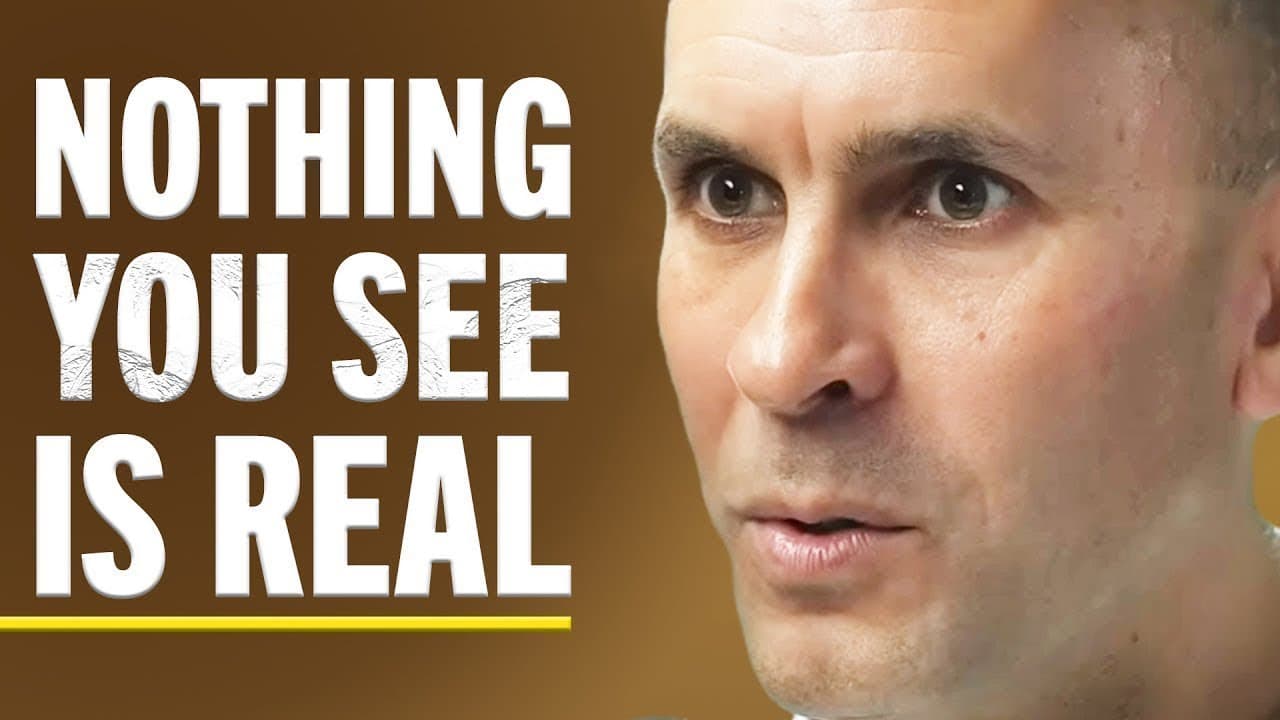
- Perception is the brain's interpretation of what is happening rather than a direct reflection of external events. Seth characterizes everyday reality as a controlled hallucination, with shared reality consisting of interpretations on which people broadly agree.
Install to Summarize YouTube Videos and Get Transcripts
Explore YouTube Video Summarizer or Get YouTube Transcript Extractor
Questions & Answers
Q: What is consciousness according to Anil Seth?
Consciousness is any kind of subjective experience whatsoever. It includes experiencing the world around you and experiencing yourself as a person within that world, together with emotions, plans, memories, and other felt states. Under this definition, consciousness does not require a special essence. It is a process closely dependent on the continuing activity of the brain and body.
Q: How is general anesthesia different from normal sleep?
General anesthesia differs from sleep in the way the missing interval is experienced. After sleeping, a person normally recognizes that some amount of time has passed, even when the exact duration is unclear. Under general anesthesia, there may be no experienced interval at all. The final moment before unconsciousness and the first moment after recovery seem joined together, with complete oblivion between them.
Q: What happens to consciousness under general anesthesia?
General anesthesia can selectively turn off conscious experience while the biological processes keeping the body alive continue. Seth describes the unconscious patient as temporarily and reversibly transformed into a biological object. Brain observations suggest that regions stop communicating in the coordinated ways associated with waking consciousness, causing the brain to separate into smaller functional islands as subjective experience disappears.
Q: Do scientists fully understand how anesthetics work?
Scientists do not fully understand the deep reasons why anesthetics eliminate consciousness, although anesthetics are reliable and safe when used properly. Researchers can observe relevant changes in the brain, particularly a breakdown in normal communication among different regions. Seth compares this uncertainty with other technologies and medical interventions that people trust because they demonstrably work, even when every underlying mechanism is not completely understood.
Q: Can people remember events that happened during anesthesia?
Some people report memories from periods when they were supposedly under general anesthesia. Seth offers several possible explanations: the carefully maintained anesthetic level may have slipped, allowing slight awareness, or the confused and dissociated recovery period may have produced hallucinated or confabulated memories. Coincidence can then make an invented memory resemble something actually said. Properly administered anesthesia should not normally leave such memories.
Q: Are near-death experiences real?
Near-death experiences are real in the sense that people genuinely undergo and report powerful subjective events. However, the reality of an experience does not establish the truth of a person's interpretation of it. Seeing light or feeling that the soul has traveled may result from unusual brain activity near death. A naturalistic explanation can coexist with the experience's lasting emotional and personal meaning.
Q: Why do people see a tunnel of light near death?
A tunnel of light may occur because the visual cortex begins shutting down unevenly when the brain is close to death. Seth suggests that visual processing can fail first at the edges of the visual field while remaining active near the center. That pattern could create a bright central area surrounded by darkness, producing the experience of moving through a tunnel without requiring a supernatural journey.
Q: Why does Anil Seth call reality a controlled hallucination?
Reality is described as a controlled hallucination because perception is the brain's interpretation of what is happening, not a direct and unfiltered copy of the world. Near-death visions make this especially clear, but the same principle applies to ordinary experience. What people call shared reality consists of perceptual constructions that are sufficiently aligned for different individuals to agree about them.
Summary & Key Takeaways
-
Consciousness is presented as an ongoing process rather than a permanent essence or independent thing. This view shaped Anil Seth's response to his father's death: when the brain and body cease functioning, the conscious process ends. He compares the resulting absence of experience with the oblivion preceding birth and finds reassurance in its lack of suffering.
-
General anesthesia differs from ordinary sleep because waking from sleep carries a sense that time has passed, while anesthesia can seem to join the moments before and after with nothing experienced between them. The body remains alive, but consciousness is selectively removed, temporarily transforming a person into what Seth calls a biological object.
-
Near-death experiences can be genuine experiences without proving that their supernatural interpretations are correct. A tunnel of light, for example, may occur as peripheral visual processing shuts down before central vision. This naturalistic account preserves the experience's personal meaning while illustrating that perception is the brain's interpretation of events, not a direct copy of reality.
Read in Other Languages (beta)
Share This Summary 📚
Summarize YouTube Videos and Get Video Transcripts with 1-Click
Try YouTube Summary with ChatGPT & Claude or YouTube Transcript Generator
Explore More Summaries from Dr Rangan Chatterjee 📚





Summarize YouTube Videos and Get Video Transcripts with 1-Click
Try YouTube Summary with ChatGPT & Claude or YouTube Transcript Generator