Why Silicon Valley Turned Against Defense and Is Returning
TL;DR
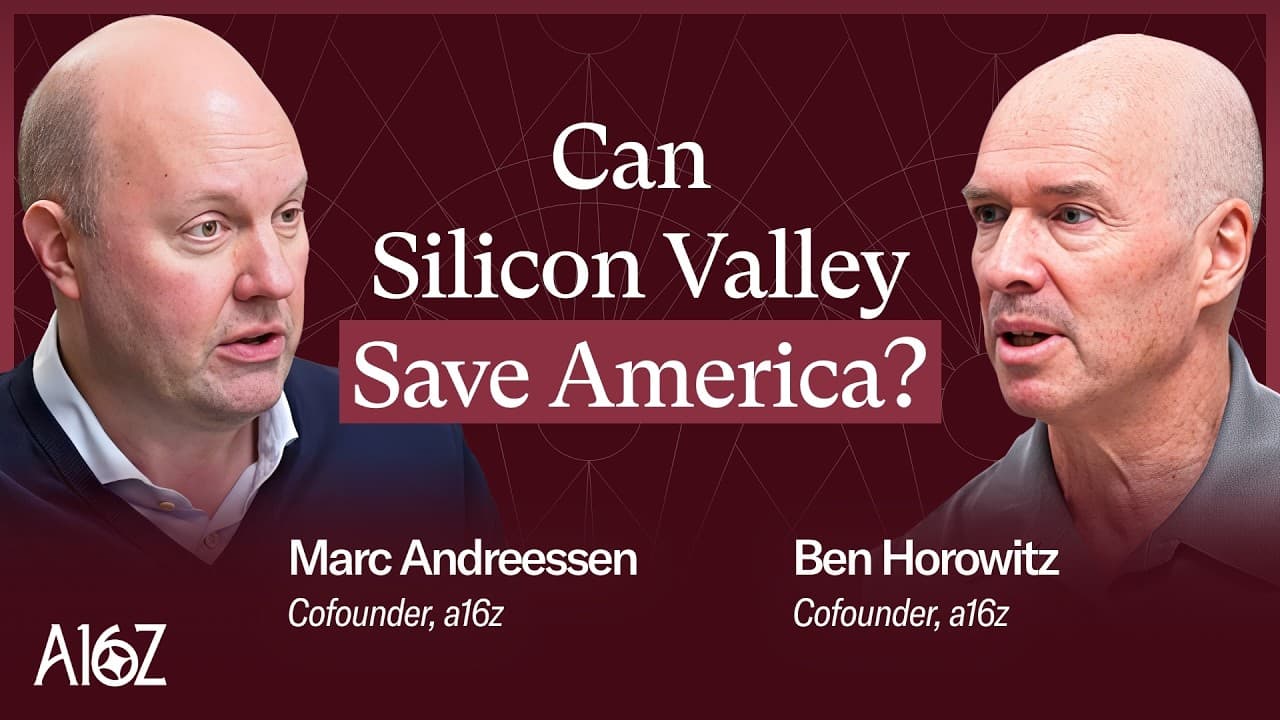
Silicon Valley and the US defense establishment were tightly integrated allies from before World War II through the 1990s, but roughly 15 to 20 years of escalating hostility peaked in the late 2010s. Andreessen Horowitz's American Dynamism thesis, named by Katherine Boyle, aims to reintegrate American business and defense to keep the country ahead on the technology curve.
Transcript
The capitalist approach is messy but you have you have dynamism on your side. Just come back to the big picture thing. Is America in aggregate a force for good in the world? Is it important for the world that America succeed? Is it important that American values, Western values are preeminent of the world? Is it important that the world not devolve... Read More
Key Insights
- American Dynamism is the category Andreessen Horowitz created after Katherine Boyle proposed the name and the idea of building it, framed around the question of how to build Silicon Valley within America's own defense and national mission.
- Silicon Valley and US defense were tightly integrated from before World War II through the 1990s, when great American tech companies from the '50s through the '90s all ran large government and defense businesses as part of the national mission.
- The relationship deteriorated over the last 15 to 20 years into contention and outright hostility flowing in most directions from large components of Silicon Valley toward Washington, a feeling Washington quickly reciprocated back.
- The Google Maven project was a watershed moment: Google won a government contract for AI used in drone technology, then pulled out after an emotional revolt from employees that Sundar Pichai described as a revolt from the international AI community.
- Silicon Valley's origins trace to universities, where professors Frank Terman and William Shockley encouraged students to skip PhDs and spin out companies to support the war effort, the same universities that later spawned the ideas behind the Google revolt.
- Google and Alphabet have since reversed their position and now work with the US government and Defense Department, which the speakers describe as a happy place after the earlier bottoming out.
- Marc Andreessen and Ben Horowitz both held top secret clearance for years through their company Netscape, which became a major technology supplier to the Pentagon; Andreessen made his first Pentagon sales call in 1994.
- The old World War II model of mass machinery and mass men to win wars is over, and America's strengths of flexibility, innovation, creativity, and dynamism applied to the battlefield of the future should play to its benefit.
Install to Summarize YouTube Videos and Get Transcripts
Explore YouTube Video Summarizer or Get YouTube Transcript Extractor
Questions & Answers
Q: What is American Dynamism?
American Dynamism is the category and mission that Andreessen Horowitz built after Katherine Boyle proposed the name and the idea. It centers on the question of how to build American dynamism and how to build Silicon Valley within America's own defense and national mission, reintegrating American business and American defense. Ben Horowitz and Marc Andreessen had long held the abstract view that the two needed to come back together because the country was falling behind on the technology curve, and they described the pitch as a very easy sale.
Q: Why did Silicon Valley turn against defense?
Over roughly the last 15 to 20 years, for a variety of reasons people feel strongly about, a much greater degree of contention developed, escalating in some cases to outright hostility flowing in most directions from large components of Silicon Valley toward DC and toward any sense of national mission or purpose. That feeling was quickly reciprocated by Washington, with plenty of people making a point of how much they disliked Silicon Valley, producing what Andreessen calls a deevolutionary spiral that peaked in the late 2010s and early 2020s.
Q: What was the Google Maven project and why did it matter?
The Google Maven project was described as a watershed moment where people had to take sides intellectually. Google won a government contract, understood to be for AI used in drone technology, then pulled out of the contract after a protest from a bunch of its employees. It was not a mild protest but a visceral emotional revolt that Sundar Pichai described to Ben Horowitz as a revolt from the international AI community, which the speakers call pretty wild and unprecedented.
Q: How were Silicon Valley and US defense historically connected?
If you trace Silicon Valley's history back before World War II, much of the original defense technology work happened in Northern California. From the 1950s through the 1990s it was taken as given that Silicon Valley and the US shared an inherent alliance and mission spanning economic, technological, military, and intelligence success. Many great American tech companies of that era ran very big government and defense businesses that were important to the national mission, making the relationship feel natural and non-controversial up until roughly the 2000s.
Q: What role did Netscape play in defense work?
Netscape, the company Ben Horowitz and Marc Andreessen built in the 1990s, kept government work front and center. Andreessen's first sales call to the Pentagon was in 1994, 31 years before this conversation, at a time when he did not think he owned a suit yet. Netscape ended up being a major supplier of technology to the Pentagon, and both Andreessen and Horowitz held top secret clearance for years because of those deals. The defense work turned out to be a very big part of their business and later extended to American allied governments outside the US.
Q: How did universities shape both Silicon Valley's founding and its later revolt?
Silicon Valley started with the universities. Professors Frank Terman and William Shockley, developing technologies to support the war effort, encouraged their students to not pursue PhDs and instead spin out and build companies to support the country. In an ironic turn, those same universities later spawned the ideas that led to the revolt at Google, where employees rejected defense work. This makes the American Dynamism effort both new and a return to the original values of Silicon Valley, a back to the future component.
Q: Has Google changed its position on defense work?
Yes. Since the Maven controversy, Google and Alphabet have definitely reversed their position and now do work with the US government and the Defense Department. The speakers describe this as being in a happy place. After hostility bottomed out around the Maven revolt, some founders including Ben Horowitz and Marc Andreessen, who were involved in the old days, took stock of how things had gotten that bad, what went wrong, and how to fix it, contributing to the recovery of the relationship.
Q: Why does the speaker say the old model of warfare is over?
The speaker states that the old World War II era model of mass machinery and mass men to win wars is long over. Geopolitically the world has entered a new era where both the need and the demand for new technologies is greater than ever. This should play greatly to America's benefit if the country unleashes its strengths of flexibility, innovation, creativity, and dynamism and applies them to the battlefield of the future. As the speaker puts it, America really ought to win if it is able to do that.
Summary & Key Takeaways
-
Andreessen Horowitz created the American Dynamism category after Katherine Boyle, recruited on David's suggestion, proposed calling it that and building the thing. Ben Horowitz and Marc Andreessen had long believed American business and defense needed to be reintegrated because the country was falling behind on the technology curve.
-
From before World War II through the 1990s, Silicon Valley and the US shared a tight alliance around economic, technological, military, and intelligence success. Netscape supplied technology to the Pentagon, and both founders held top secret clearance, considering defense work natural and a major part of their business.
-
Over the last 15 to 20 years, hostility escalated in most directions between Silicon Valley and Washington, peaking around the Google Maven revolt when employees protested a drone AI contract. Things have since recovered, with Google now working with the Defense Department again as founders flood into defense and related fields.
Read in Other Languages (beta)
Share This Summary 📚
Summarize YouTube Videos and Get Video Transcripts with 1-Click
Try YouTube Summary with ChatGPT & Claude or YouTube Transcript Generator
Explore More Summaries from a16z 📚






Summarize YouTube Videos and Get Video Transcripts with 1-Click
Try YouTube Summary with ChatGPT & Claude or YouTube Transcript Generator