How Are 1,000 Wild Animals Rescued and Saved?
TL;DR
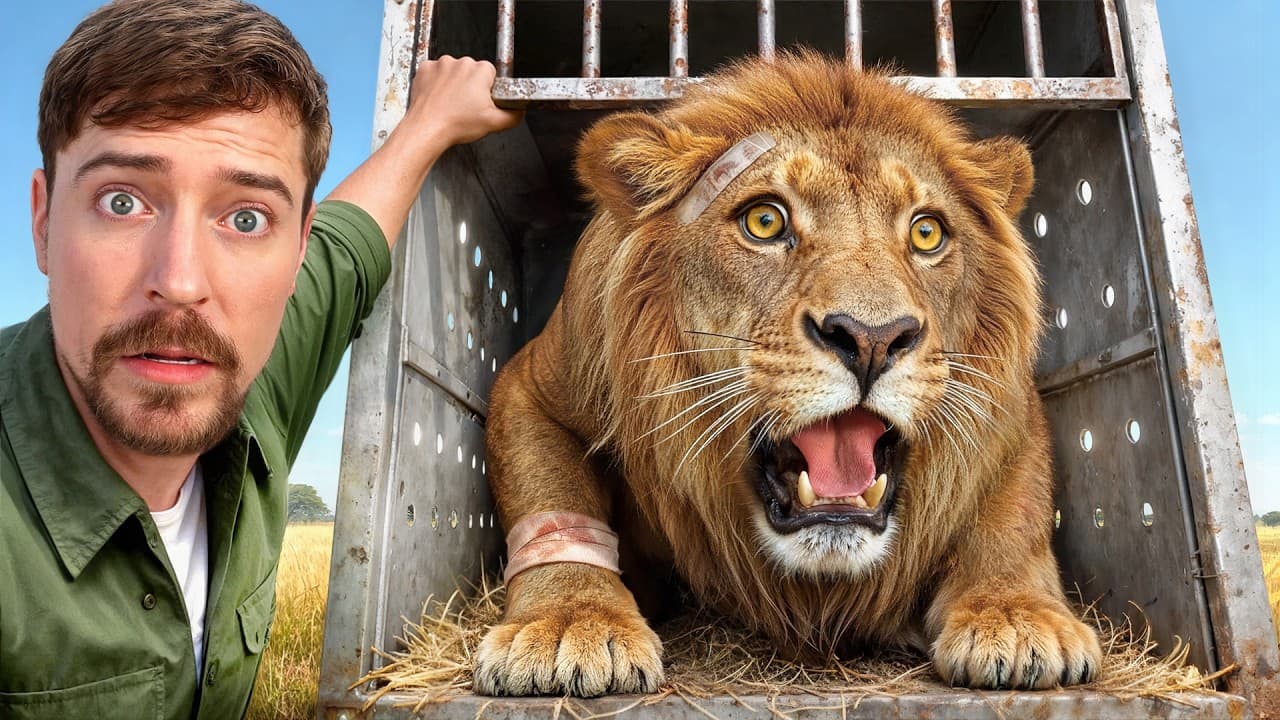
A rescue campaign covered over 1,000 animals: a root canal on a lion whose tooth infection could have reached its heart valves, 70 giraffes vaccinated by dart from a helicopter, rhinos tranquilized and relocated away from deadly territory fights, three lions flown 7,000 miles from war-damaged Ukrainian zoos to a South African sanctuary, and 100 shelter dogs adopted with all fees and medical bills covered.
Transcript
Sadly, this lion, if left untreated, would literally die. And it's the first of 1,000 animals we're gonna be saving in this video. Here's how. We'll be using a sniper to vaccinate giraffes from a helicopter. We ain’t leaving till all the giraffes are vaccinated! Rescuing lions from a zoo that was literally bombed. Be free! Relocating massive rhinos... Read More
Key Insights
- Untreated dental infections in lions can be fatal because the infected material can travel from the teeth to the heart valves. The team performs a root canal with Doctor Alex to remove the infection and then releases the lion healthy.
- Anti-poaching fences create a deadly side effect for rhinos: weaker animals cannot flee stronger ones, so they are bullied away from food and water and end up killed. Relocation to a separate plot gives them their own territory.
- Rhino anti-poaching collars work by tracking the animal's speed and its proximity to nearby wildlife. A rhino suddenly running in an open area with no other animals around signals that poachers are likely trying to kill it.
- A microchip inserted into a small hole in the rhino's horn and sealed with glue lets a killed rhino's horn be traced to the black market, which helps catch the poachers responsible for the illegal kill.
- Certain giraffe diseases have a 100% fatality rate according to the team on site, which is why vaccination darts are delivered by high-powered air rifle. A total of 70 giraffes were vaccinated during the operation.
- Helicopters solve the coverage problem in wildlife medicine. Because giraffe territory is so large and the animals run from people on the ground, shooting vaccine darts from the air became the easiest way to deliver the medication.
- Three lions left in makeshift shelters after war destroyed Ukrainian zoos were flown over 7,000 miles to South Africa in a stripped cargo plane with no seats, to Anthony Peniston's Lion Watch sanctuary with over 14 acres of open land.
- Overcrowded dog shelters kill animals to make room for new arrivals, with one dog killed every five minutes in shelters like the one visited. Older dogs such as ten-year-old Blue are at higher risk because puppies get adopted faster.
Install to Summarize YouTube Videos and Get Transcripts
Explore YouTube Video Summarizer or Get YouTube Transcript Extractor
Questions & Answers
Q: Why does a lion need a root canal?
The lion in the video had a tooth infection that could literally kill it. Doctor Alex explains that the gunk built up in the teeth would, if left untreated, end up in the lion's heart valves. The root canal removes the infection before it can spread. The lion is anesthetized during the procedure, since as the vet notes, if she woke up she would bite his finger off. Once the procedure was done, the lion was released happy and healthy.
Q: Why are rhinos relocated instead of left on the reservation?
On a reservation surrounded by anti-poaching fences, the weaker rhinos have nowhere to go when stronger rhinos try to scare them off. Normally the weaker animals would simply leave, but the fences trap them, so they end up killing each other. The rescue team tranquilizes the weaker rhinos and transports them to a plot of land that can be their own territory, where they are not bullied out of food and water and can grow big and strong. As the team puts it, this could add a lot of years to the rhino's life.
Q: How does an anti-poaching collar protect a rhino?
The collar tracks two things: the rhino's speed and its proximity to nearby wildlife. If the rhino suddenly starts running in an open area with no other animals around, that pattern likely indicates poachers are trying to kill it, and the monitoring team is alerted. Alongside the collar, a microchip is inserted into a tiny hole drilled in the horn and sealed with glue, so if a poacher does kill the rhino illegally, the horn can be traced to the black market and help catch the poachers.
Q: How do you vaccinate a wild giraffe?
Giraffes are vaccinated with high-powered air rifles that deliver a massive dart filled with life-saving medication. Unlike the tranquilizer darts used on the rhinos, these darts do not put the animal to sleep. Because giraffes run away and their territory is very large, ground vaccination proved difficult, so the team moved to a helicopter to reach them. In total, 70 giraffes were vaccinated, which brought the running count of animals saved in the video to 74.
Q: What happens to a giraffe that catches one of these diseases?
According to the expert on site, a giraffe that contracts one of the diseases being vaccinated against has a 100% chance of dying. There is no recovery. That is why the team pushed so hard to reach every animal, using high-powered air rifles from the ground and then escalating to a helicopter for the giraffes that were too far away, and stated they were not leaving until all the giraffes were vaccinated.
Q: Why were lions flown out of Ukraine?
Years of war destroyed the zoos in Ukraine, leaving rescued lions to survive in makeshift shelters. Because they were still threatened by the ongoing war, the team flew three lions out on a giant cargo plane that had been stripped of all its seats. They travelled over 7,000 miles to South Africa, to wildlife conservationist Anthony Peniston's animal sanctuary, Lion Watch, where the lions have over 14 acres of open land to roam free across their native African lands.
Q: Why are dogs killed in animal shelters?
Many dog shelters are overcrowded. If a dog goes too long without finding a home, it is killed to make room for new dogs arriving. In shelters like the one featured, one dog is killed every five minutes. Puppies have a higher adoption rate, so older dogs are less likely to survive, such as Blue, a ten-year-old dog still waiting for the right match. The team got 100 dogs adopted in a single push to interrupt that cycle.
Q: What was done to make dog adoption more affordable?
All adoption fees were covered so families could take a dog home for $0, and all the medical bills for the dogs were covered as well. The reasoning given is that taking care of a dog's health costs a bunch of money and some people unfortunately cannot afford it, which keeps dogs in shelters. Removing both the upfront fee and the medical costs helped 100 dogs find homes with families committed to giving them the best life possible.
Summary & Key Takeaways
-
The first rescue is a lion with a tooth infection that could kill it. Doctor Alex performs a root canal to remove the infection, explaining that untreated gunk in the teeth would end up in the lion's heart valves. The procedure is completed successfully and the lion is released healthy.
-
Rhinos on a fenced reservation are located by helicopter, tranquilized, fitted with anti-poaching collars that track speed and proximity to nearby wildlife, and microchipped in the horn. They are then relocated to their own plot of land so stronger rhinos cannot bully them away from food and water.
-
Giraffes are vaccinated using high-powered air rifles firing darts of medication, eventually from a helicopter because their territory is so large. Seventy giraffes are vaccinated, bringing the running total to 74 animals saved, against diseases that carry a 100% fatality rate.
Read in Other Languages (beta)
Share This Summary 📚
Summarize YouTube Videos and Get Video Transcripts with 1-Click
Try YouTube Summary with ChatGPT & Claude or YouTube Transcript Generator
Explore More Summaries from MrBeast 📚






Summarize YouTube Videos and Get Video Transcripts with 1-Click
Try YouTube Summary with ChatGPT & Claude or YouTube Transcript Generator