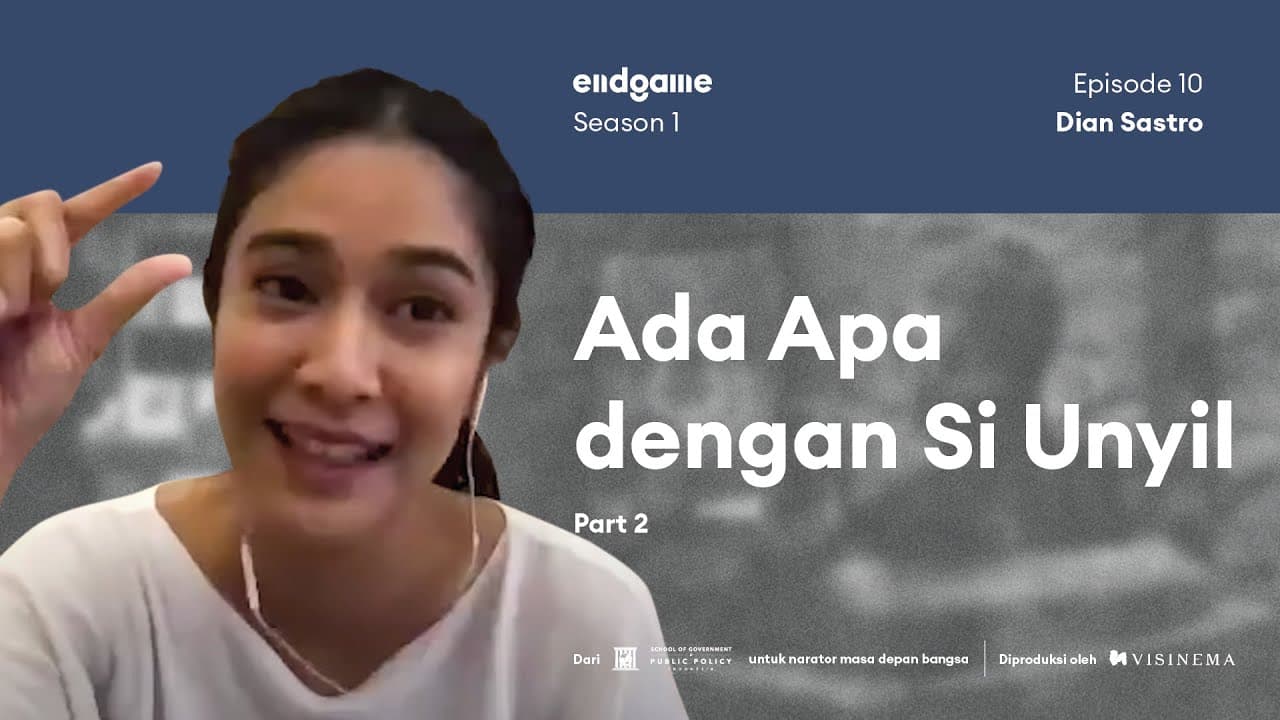
Mengapa Indonesia Sulit Membangun Identitas dan Soft Power? Endgame ft. Dian Sastrowardoyo Part 2
TL;DR
Indonesia can strengthen its soft power by defining a positive national identity, translating its ideas into a widely understood language, and sharing distinctive cultural stories internationally. Dian Sastrowardoyo points to Crazy Awesome Teachers, released on Netflix on August 17 and broadcast in 190 countries, as evidence that an Indonesian story can resonate beyond its original audience. Read on for her argument about content, education, creativity, technology, and the Indonesian Dream.
Transcript
But I think people in this country are more afraid of sin than of technology advancement. [Voiceover: This is Endgame] Do you know why? More so often, Indonesians aren’t able to project their soft power. It’s not because they don’t know, but it’s more to the ability to speak English.
- That is one. Secondly, they don’t have a good concept about bei... Read More
Key Insights
- Communication unlocks cultural influence: The speakers distinguish having strong content from successfully projecting it. Indonesia may already possess stories and ideas worth sharing, but those assets generate limited international influence if others cannot understand them. English matters in this argument because it functions as a language of international communication and validation, not because it is inherently cooler than Indonesian languages.
- Fluency changes the scale: Google Translate may help transfer literal meaning, but the discussion says relaxed, fluent speech produces a different effect. The contrast is between exponential and marginal soft-power generation. Being able to think through an idea, translate that thought into a universal language, and communicate it naturally can make Indonesian perspectives easier for people in other countries to receive and validate.
- Korean performers offer evidence: Korean LPGA players are described as trying to speak English after proving themselves on the golf course, while more K-pop artists are also making the effort. Their example supports the claim that skill or compelling content is not always sufficient by itself. International communication helps established achievement become legible, relatable, and legitimate to audiences beyond the creator’s home country.
- Colonial legacies shaped access: The speakers envy countries once colonized by the United Kingdom because English, bureaucracy, and education remained embedded in their systems. They contrast this with Dutch colonial rule, which they say restricted schooling to ambtenaar or priyayi children and excluded the poor. This historical comparison is used to explain unequal language foundations, rather than to deny Indonesia’s present responsibility to communicate internationally.
- Identity requires emotional confidence: A national label becomes difficult to project when citizens associate it primarily with things going badly at home. The proposed remedy is a concept of Indonesianness that feels affirmative without becoming aggressively superior. Such confidence would allow someone abroad to say, “I am Indonesian,” with conviction and then connect personal work, cultural expression, and public behavior to that shared identity.
- Chaos does not prevent projection: India is introduced as a challenge to the claim that Indonesia’s difficulties stem mainly from governmental shortcomings or domestic disorder. The speakers describe India as even more chaotic, yet capable of making people abroad perceive Indians as smart. Their comparison suggests that a recognizable national narrative can remain influential even when a country’s internal reality is complicated.
- Distribution revealed hidden universality: Crazy Awesome Teachers was created for Indonesian viewers, and its makers did not know Netflix would acquire it. Once broadcast in 190 countries, the film showed that its central concern could cross borders. Teachers elsewhere could relate to rediscovering the first reason they wanted to teach, demonstrating how a locally designed story can carry a broadly understandable human question.
- Translation widened the audience: International subtitles allowed Crazy Awesome Teachers to appear in languages including Korean and Thai, while viewers in Holland encountered a localized title, Prachtig Leraar. These examples make translation part of the content strategy rather than an afterthought. A story can remain Indonesian in origin while its language and presentation give distant audiences practical entry points.
- Entertainment influences self-understanding: Dian’s discussion with Nadiem treats films and television programs as forces that dictate how people think. Repeated stories provide models for interpreting citizenship, aspiration, and cultural values. If Indonesians lack a clear definition of themselves, content creators can help construct one by showing recognizable conduct, relationships, ambitions, and reasons for feeling pride in the country.
- Si Unyil illustrates shared storytelling: Dian cites the Si Unyil series from the New Order era as an example of content that once contributed to a common frame of reference. Her point is not simply that Indonesia needs another program with the same format. It needs contemporary stories capable of giving diverse viewers recognizable language, attributes, and feelings through which to understand Indonesian identity.
- Creativity offers distinct positioning: Dian favors artistic creativity when asked to choose an Indonesian attribute because the academic-intelligence field already contains countries portrayed as highly competitive or disciplined. This is framed through a blue ocean strategy, seeking a space where Indonesia can stand out. The choice does not reject intelligence, but identifies creativity as a more immediate and distinctive national association.
- Technology demands active participation: The broader discussion includes AI and genetic editing and argues that Indonesia should enter these conversations instead of being left behind. Fear of sin is described as stronger than fear of technological advancement, revealing a tension in public priorities. Engagement matters because Indonesians need the ability to imagine a future in which the country is recognized for creativity and intelligence.
Install to Summarize YouTube Videos and Get Transcripts
Explore YouTube Video Summarizer or Get YouTube Transcript Extractor
Questions & Answers
Q: Why does Indonesia struggle to project its soft power internationally?
The discussion identifies two central obstacles: limited ability to communicate in English and the absence of a clear, positive concept of being Indonesian. Indonesia already has good content, but international audiences cannot fully recognize it when its creators cannot present their ideas through a widely understood language. At the same time, citizens find it difficult to project confidence when national identity is associated with problems at home. Stronger communication and a constructive shared identity would allow Indonesian stories and achievements to travel together.
Q: Why is English important for Indonesian soft power?
English is presented as a practical language for communicating with the international community, not as a language that is inherently cooler. Korean LPGA players and K-pop artists are cited as people who make efforts to use English so their achievements can be understood and validated internationally. Translation tools can transfer words, but fluent and relaxed communication creates a stronger connection. That connection can turn existing Indonesian content into a much larger source of soft power.
Q: How can Indonesia build a stronger national identity through content?
Films and television can repeatedly show what being Indonesian means and which values deserve recognition. Dian argues that watched content shapes how people think, so stories can give citizens a clearer and more positive framework for understanding themselves. Si Unyil is mentioned as an earlier example of shared national content, while community and tolerance are identified as useful themes for Indonesian narratives. The aim is constructive pride and common identity, not an extreme belief in national superiority.
Q: What does Crazy Awesome Teachers show about Indonesian stories?
Crazy Awesome Teachers was designed for Indonesians, but Netflix distributed it to 190 countries after its August 17 launch. Subtitles and localized presentation allowed audiences in places such as Korea, Thailand, and Holland to encounter the film. Its concern with why people first wanted to become teachers proved relatable beyond Indonesia. The example shows that a locally rooted production can reach international viewers when its human theme is clear and its presentation is accessible.
Q: Should Indonesia emphasize intelligence or artistic creativity?
Dian initially selects artistic creativity as the more distinctive identity for Indonesia. She notes that academic competition already includes Indians, Chinese, Koreans, Japanese, and disciplined Singaporeans, making that field crowded. Creativity therefore functions as a blue ocean strategy through which Indonesia might establish a recognizable position. She does not call intelligence impossible, especially over a horizon of 25 or 50 years, but treats creativity as the clearer differentiator.
Q: What is the Indonesian Dream discussed in Endgame with Dian Sastrowardoyo?
The Indonesian Dream is presented as a shared national aspiration grounded in values, stories, and figures that make citizens proud of being Indonesian. It would give people a positive narrative around which they could organize ambition and identity. The discussion connects this need to Bung Karno’s mindset, which once encouraged belief that Indonesia could become a significant nation. Content can help make that aspiration visible by portraying Indonesians as creative, intelligent, communal, and tolerant.
Q: What potential does Indonesia’s younger generation have?
The existing discussion highlights Gen Z for its international exposure and social awareness. Familiarity with global languages and digital communication platforms can help younger Indonesians present local ideas to audiences outside the country. Their concern for sustainability and social impact can also influence how Indonesia defines progress and national values. This potential matters because a new generation can connect Indonesian identity with wider conversations without abandoning the stories and qualities rooted at home.
Q: Why should Indonesia engage with AI and genetic editing?
AI and genetic editing are presented as important advancements that Indonesia should discuss rather than ignore. The warning is that failing to participate could leave the country behind while other societies shape how these technologies develop and are understood. Active engagement would let Indonesians connect technological change with national development and future aspirations. It would also support the longer-term hope that Indonesia can be recognized for intelligence as well as artistic creativity.
Summary & Key Takeaways
-
Diagnosing Indonesia’s soft power: The discussion begins by arguing that Indonesians often struggle to project their knowledge and culture internationally because of limited English proficiency. The problem is not an absence of valuable content, but difficulty communicating that content through a language understood by the international community. India and Korea are raised as comparisons, including Korean golfers and K-pop artists who make deliberate efforts to speak English. Fluent communication is presented as a force that can multiply, rather than merely marginally increase, Indonesia’s soft power.
-
Defining a positive identity: A second obstacle is the absence of a clear and emotionally positive concept of what being Indonesian means. Bad conditions within the country can distract from national pride, yet the speakers reject the idea that governmental performance alone explains the problem. India is described as chaotic while still projecting confidence abroad. Indonesia therefore needs an identity that citizens can affirm with a good feeling, giving them a coherent basis for presenting themselves and their country to the world.
-
Taking local stories worldwide: Dian recounts returning to film as an actor and producing her first movie, Crazy Awesome Teachers, for which she served as showrunner. Released on Netflix on August 17, it was broadcast in 190 countries and presented with subtitles for international audiences. Although designed for Indonesians, the story proved relatable to teachers elsewhere because it returned to the reason people want to teach. Its international distribution revealed possibilities that the filmmakers had not anticipated when creating it.
-
Using content to shape citizens: A conversation with Nadiem, held one or two months before his inauguration as minister, reinforced Dian’s belief that films and television influence how Indonesians think. She argues that Indonesia needs content that develops a clearer understanding of national identity, much as Si Unyil did during the New Order era. The objective is not an extreme superiority complex, but a constructive feeling about being Indonesian. Stories can document and promote values such as community and tolerance while inspiring national pride.
-
Choosing a national aspiration: When asked whether Indonesians should be known as academically intelligent or artistically creative, Dian initially chooses artistic creativity. Academic competition already includes Indians, Chinese, Koreans, Japanese, and disciplined Singaporeans, so creativity appears to offer a less crowded direction. The longer view, however, leaves room for Indonesia to become known for intelligence as well. The discussion connects this aspiration to Bung Karno’s mindset and to the need for an Indonesian Dream embodied by figures and stories that encourage citizens to imagine greater possibilities.
Read in Other Languages (beta)
Share This Summary 📚
Summarize YouTube Videos and Get Video Transcripts with 1-Click
Try YouTube Summary with ChatGPT & Claude or YouTube Transcript Generator
Explore More Summaries from Gita Wirjawan 📚
Summarize YouTube Videos and Get Video Transcripts with 1-Click
Try YouTube Summary with ChatGPT & Claude or YouTube Transcript Generator