How Can Claude Code Automate 70% of a Business in 30 Days?
TL;DR
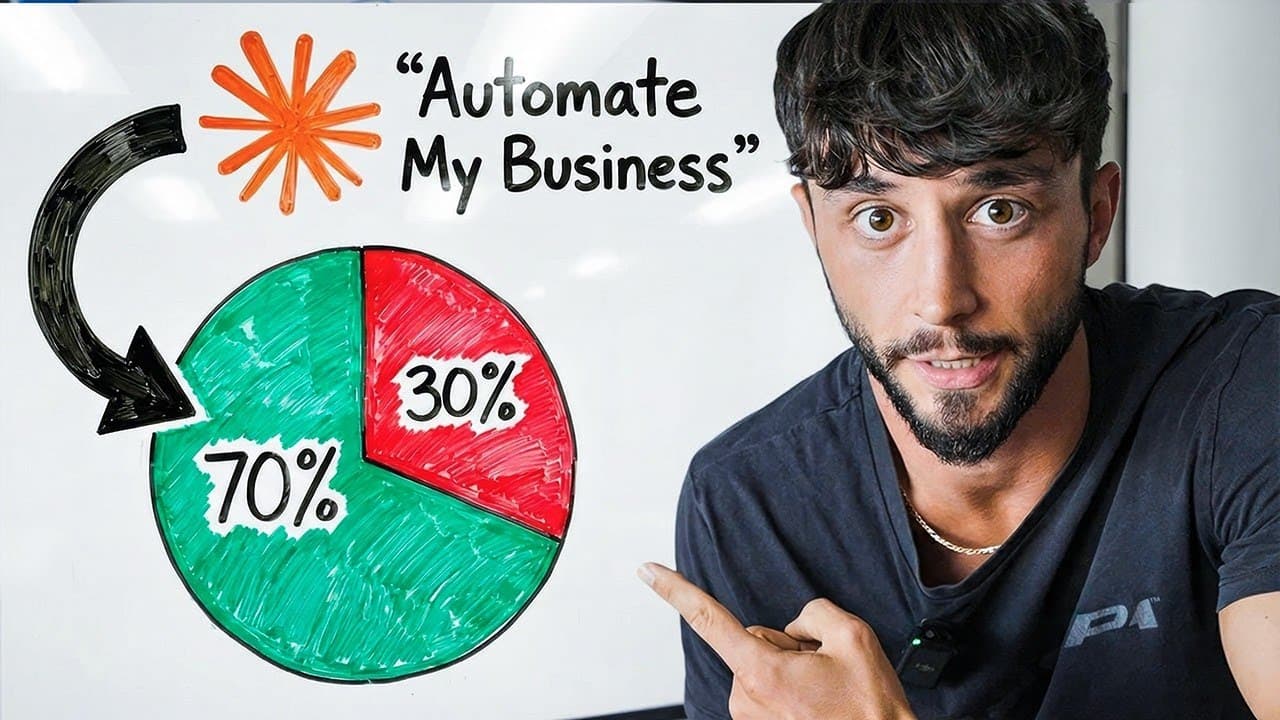
Claude Code can automate or heavily augment 60–70% of a business owner’s current tasks by combining a task inventory with structured business context, consolidated data, dashboards, tools, and automations. The plan covers responsibilities across content, Morningside AI, Morningside Education, and Morningside Ventures while keeping the existing business model intact. Read on for the system’s layers and a practical way to measure progress.
Transcript
All right, guys. So, you might have seen my recent video on me saying AGI is here. And my next steps after that is the sharing with you my plan on how I plan to implement this AGI into my business to automate 60 to 70% of the tasks that I currently do. And this video is going to be breaking down my kind of approach to it, what this model is, and an... Read More
Key Insights
- The automation target is 60–70% of the tasks the business owner currently performs, with the work focused on existing responsibilities rather than every possible future project. Each task is intended to be automated, heavily augmented, or delegated to the AI system.
- An AI operating system is an operating methodology built around a business model, not a replacement for the model itself. The core business must still create value and provide a mechanism for making money, while AI layers improve how its work is managed.
- Claude Code functions as a harness around an AI model, giving the model tools for actions such as reading files, deleting files, searching the web, and connecting with services. These capabilities can extend beyond software development into a general-purpose business workspace.
- Context OS is the proposed foundation of the system. It consists of an appropriate folder structure, documents containing information about the owner and business, rules for documenting the growing workspace, and a method for priming each new Claude Code session.
- Data OS works by bringing scattered operational information into a single local database within the Claude Code setup. The cited inputs include profit-and-loss statements, Google Analytics, YouTube data, marketing sheets, sales figures, and other business data sources.
- A mission-control dashboard can turn consolidated business data into a daily overview of important numbers. The creator uses this layer to review the state of the businesses in the morning instead of checking multiple disconnected files, sheets, and analytics services.
- The implementation plan begins with mapping responsibilities across four areas: content, Morningside AI, Morningside Education, and Morningside Ventures. This inventory provides a concrete checklist for measuring how much of the owner’s workload the AI system eventually handles.
- Telegram provides mobile access to the layered Claude Code workspace, allowing the owner to interact with business systems from a phone. The underlying approach still depends on Claude Code’s native harness and the business context, data, tools, and automations assembled around it.
Install to Summarize YouTube Videos and Get Transcripts
Explore YouTube Video Summarizer or Get YouTube Transcript Extractor
Questions & Answers
Q: How can Claude Code automate 70% of a business in 30 days?
Start by listing the tasks the owner currently performs across each business, then identify which can be automated, heavily augmented, or delegated to Claude Code. Build layers around the Claude Code workspace for business context, consolidated data, dashboards, software, and automations, then measure completed tasks against the full inventory to track progress toward 60–70%.
Q: What is an AI operating system for a business?
An AI operating system, or AIOS, is an operating methodology built around an existing business model. It does not replace how the company creates value or makes money; it adds layers that organize context, consolidate data, execute tasks, and support operations.
Q: How should a business owner begin building an AIOS with Claude Code?
Begin with an inventory of the responsibilities the owner currently handles and group them by business or operational area. Then create a structured Claude Code workspace with folders, documents about the owner and business, documentation rules, and a repeatable way to prime each new session.
Q: What is Context OS in the Claude Code setup?
Context OS is the foundation that gives Claude Code organized information about the owner, business, and workspace. It includes an appropriate folder structure, relevant business documents, rules for documenting new work, and a method for priming each Claude Code session.
Q: What business data can Data OS consolidate?
Data OS can combine profit-and-loss statements, Google Analytics, YouTube data, marketing sheets, sales numbers, and other scattered business sources. The information is brought into one local database within the Claude Code workspace and can feed operational dashboards.
Q: How does the mission-control dashboard help run the business?
The dashboard turns consolidated business data into a daily view of the most important numbers. It lets the owner review the state of the businesses in the morning without checking multiple disconnected files, spreadsheets, and analytics services.
Q: Can a non-technical business owner use Claude Code for this system?
The creator says the setup does not require an entire development team and reports seeing a completely non-technical person complete it. The initial process involves creating folders, adding business context, and opening the workspace in a coding environment, although that environment may look intimidating at first.
Q: Which businesses are included in the Claude Code automation plan?
The task inventory covers four areas: the creator’s content business, Morningside AI, Morningside Education, and Morningside Ventures. The plan focuses on the responsibilities the owner currently performs across those businesses rather than every possible future project.
Summary & Key Takeaways
-
The plan begins with a task inventory across the creator’s content, consulting, education, and ventures businesses. Each responsibility becomes a candidate for automation, augmentation, or delegation. Progress is measured against a target of handling 60–70% of the tasks the owner currently performs through an AI operating system.
-
The AI operating system is presented as an operating methodology surrounding an existing business model. Its base layer, Context OS, uses organized folders, business documents, workspace documentation, and session priming. Additional layers can then provide data consolidation, dashboards, software, automations, and access through a Telegram interface.
-
Data OS consolidates scattered sources such as profit-and-loss statements, Google Analytics, YouTube data, marketing sheets, and sales numbers into one local database inside the Claude Code workspace. Dashboards built from that database provide a morning mission-control view of the most important business metrics and support better operational visibility.
Read in Other Languages (beta)
Share This Summary 📚
Summarize YouTube Videos and Get Video Transcripts with 1-Click
Try YouTube Summary with ChatGPT & Claude or YouTube Transcript Generator
Explore More Summaries from Liam Ottley 📚




Summarize YouTube Videos and Get Video Transcripts with 1-Click
Try YouTube Summary with ChatGPT & Claude or YouTube Transcript Generator