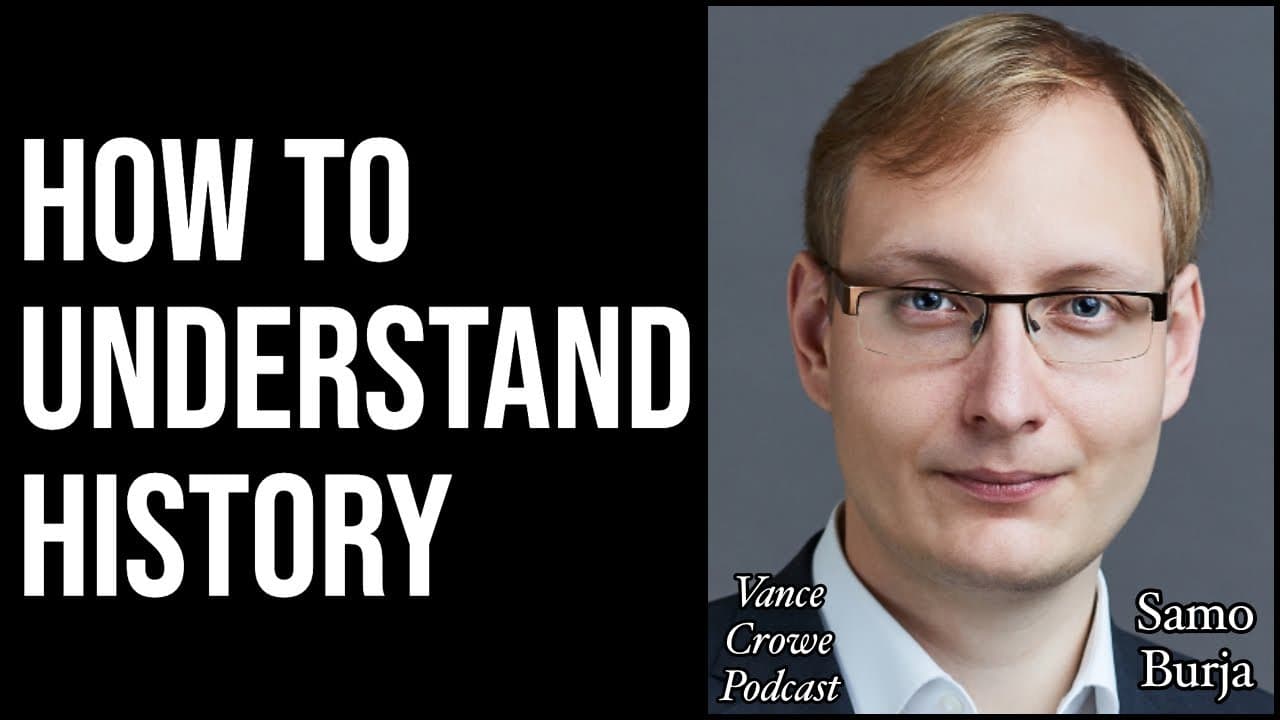
How to Understand History - Vance Crowe Podcast
TL;DR
To understand history, it is important to have both a deep specialization in one or two areas and a shallow knowledge of many others.
Transcript
that's that's worthwhile i mean it's an interesting it's an interesting challenge i would propose that you know the so-called t-shaped expert is the right way to do it so you have a very shallow knowledge of many many areas in a deep specialization in one of them maybe in two of them so what i would recommend for people who want to have this kind o... Read More
Key Insights
- 💠 The "T-shaped expert" approach recommends a shallow knowledge of many areas and a deep specialization in one or two.
- 🆘 Studying specific periods, countries, or institutions helps develop a comprehensive understanding of history.
- 💁 The Hundred Years War offers insights into state formation, religious movements, and population dynamics.
- 🦻 Understanding Quaker culture, puritan settlements, and classical references aids in comprehending the 19th-century U.S presidency.
Install to Summarize YouTube Videos and Get Transcripts
Explore YouTube Video Summarizer or Get YouTube Transcript Extractor
Questions & Answers
Q: What is the recommended approach to understanding history?
The recommended approach is to become a "T-shaped expert" with a broad knowledge base in history and a deep specialization in one or two specific areas.
Q: Why is it important to study specific periods, countries, or institutions?
Studying specific areas helps build a strong understanding of historical events, societal formations, political forces, and cultural references that shaped those areas.
Q: How does studying the Hundred Years War provide insights into state formation and population dynamics?
The Hundred Years War offers insights into topics like state formation, population sizes, taxation systems, and the power dynamics between the French and English monarchies.
Q: What is the significance of understanding Quaker culture, puritan settlements, and classical references in studying the U.S presidency in the 19th century?
Understanding these aspects helps comprehend the thinking, references, and influences of historical figures from that era, enabling a deeper understanding of primary sources.
Summary & Key Takeaways
-
The "T-shaped expert" approach suggests having a broad understanding of history with a deep specialization in one or two specific areas.
-
Studying specific periods, countries, or institutions helps build a foundational understanding of history.
-
Examples mentioned include the Medieval Catholic Church, Abraham Lincoln's presidency, and the Hundred Years War.
Read in Other Languages (beta)
Share This Summary 📚
Summarize YouTube Videos and Get Video Transcripts with 1-Click
Try YouTube Summary with ChatGPT & Claude or YouTube Transcript Generator
Explore More Summaries from Samo Burja 📚





Summarize YouTube Videos and Get Video Transcripts with 1-Click
Try YouTube Summary with ChatGPT & Claude or YouTube Transcript Generator