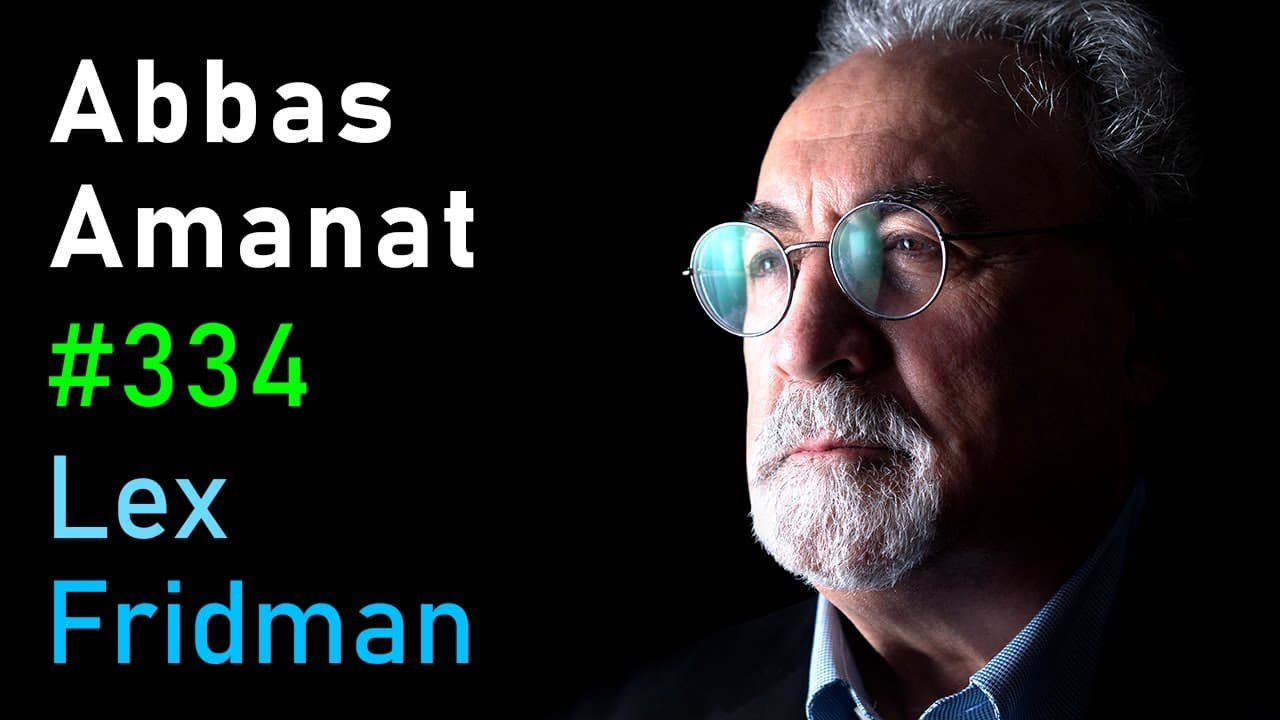
Abbas Amanat: Iran Protests, Mahsa Amini, History, CIA & Nuclear Weapons | Lex Fridman Podcast #334
TL;DR
The ongoing protests in Iran, sparked by the death of Mahsa Amini, signify a powerful youth movement striving for freedom and women's rights. Symbolizing a rejection of the oppressive regime, these protests are marked by a collective demand for choice and liberation from patriarchal control.
Transcript
this is not a nice Islamic fatherly regime clear signs of fascism clear sons of the state's control and pay any price to stay in power so even violence extreme violence the following is a conversation with Abbas Amana a historian at Yale University specializing in the modern history of Iran my love and my heart goes out to the Iranian people in the... Read More
Key Insights
- 💱 The protests in Iran have been fueled by the younger generation's desire for freedom and change.
- 🧕 The treatment of women, including the mandatory hijab, is a central issue in the protests.
- 🎛️ The education and access to information have empowered the youth and made them more resistant to the regime's control.
- ❓ The regime's oppressive tactics, violent suppression, and propaganda have only intensified the protesters' resolve.
- 🐦⬛ The protests have highlighted the regime's lack of accountability, inefficiency, and inability to modernize.
- 🥇 The protests have also exposed divisions between the older generations and the youth, with the latter rejecting the power and authority of their elders and demanding their own autonomy.
- ◾ The regime's attempts to suppress the protests and control the narrative have been largely futile due to the widespread use of social media and access to international news outlets.
Install to Summarize YouTube Videos and Get Transcripts
Explore YouTube Video Summarizer or Get YouTube Transcript Extractor
Questions & Answers
Q: What led to the beginning of the protests in Iran?
The protests began after the death of a young woman who was arrested and beaten by the morality police, sparking outrage among the younger generation.
Q: Who is leading the protests in Iran?
The protests are primarily led by the younger generation, who are demanding freedom, women's rights, and an end to the repressive regime.
Q: What are the key grievances of the protesters in Iran?
The protesters are fighting for women's rights, the freedom to choose, and an end to the patriarchal control imposed by the regime. They also seek greater political and civil freedoms.
Q: How has the Iranian regime responded to the protests?
The regime has responded with violence, employing riot police and suppression tactics to quell the protests. They have also attempted to portray the protests as the result of foreign interference.
Key Insights:
- The protests in Iran have been fueled by the younger generation's desire for freedom and change.
- The treatment of women, including the mandatory hijab, is a central issue in the protests.
- The education and access to information have empowered the youth and made them more resistant to the regime's control.
- The regime's oppressive tactics, violent suppression, and propaganda have only intensified the protesters' resolve.
- The protests have highlighted the regime's lack of accountability, inefficiency, and inability to modernize.
- The protests have also exposed divisions between the older generations and the youth, with the latter rejecting the power and authority of their elders and demanding their own autonomy.
- The regime's attempts to suppress the protests and control the narrative have been largely futile due to the widespread use of social media and access to international news outlets.
- The protests have demonstrated the resilience and determination of the Iranian people to fight for their rights and create a better future for their country.
Summary
This video features a conversation with Abbas Amanat, a historian at Yale University specializing in the modern history of Iran. They discuss the current situation in Iran, particularly the protests that have been ongoing for six weeks. The protests were sparked by the death of a 22-year-old woman who was arrested and beaten by the morality police. The protests have been significant because they involve the younger generation, particularly young women, and they are driven by a desire for freedom, particularly for women's rights. The protests also reflect a larger discontent with the regime and its authoritarian control over people's lives. The regime has responded to the protests with violence and propaganda, but the protests continue.
Questions & Answers
Q: What happened to the young woman that sparked the protests?
The young woman, named Maksa Amini, was arrested by the morality police in Tehran and was beaten to death while in custody. The circumstances surrounding her death are unclear, but it is believed that she was arrested for some altercation with the morality police. Her death caused a widespread outburst of sympathy and anger, with many seeing her as an innocent victim. Her image has become a symbol of the protest movement.
Q: What are the main motivations behind the protests?
The protests are driven by a desire for freedom, particularly for women's rights. The younger generation, who have grown up under the restrictions and discrimination of the Islamic regime, are demanding the right to make choices for themselves regarding their appearance, education, and personal lives. They reject the regime's imposition of religious values and want the freedom to live their lives as they choose, without being constantly monitored and controlled.
Q: Why are women at the forefront of the protests?
Women have been at the forefront of the protests because they have been the most affected by the regime's discriminatory and repressive policies. Women in Iran face various forms of discrimination and are treated as second-class citizens. They are required to wear the hijab, which is seen as a symbol of the regime's control over women's lives. By protesting against the mandatory hijab, women are rejecting the regime's attempt to dictate their appearance and assert their right to choose.
Q: What other issues are driving the protests?
In addition to women's rights, the protests are also driven by a desire for a more liberal and open society. The younger generation wants to live their lives free from constant surveillance and control. They want the freedom to pursue their own happiness, to have fun, to listen to music, and to have relationships without interference from the regime. They want to be able to express themselves and feel a sense of pride in their own culture and identity, without feeling isolated from the rest of the world.
Q: How has the regime responded to the protests?
The regime has responded to the protests with violence and propaganda. Riot police have been deployed to suppress the protests, and there have been reports of brutal crackdowns and killings. The regime has also tried to portray the protesters as agents of foreign powers and has used propaganda to delegitimize their demands. The regime has also attempted to restrict internet access in order to control the flow of information and prevent the protests from gaining momentum.
Q: How has the international community responded to the protests?
The international community has been largely supportive of the protesters and has condemned the regime's violent response. Many governments and organizations have called for the Iranian regime to respect human rights and allow for peaceful protests. The protests have received widespread attention and solidarity from Iranians living abroad, with mass demonstrations taking place in various countries.
Q: Is there hope for change in Iran?
There is hope for change in Iran, but it is uncertain how that change will come about. The protests have shown the strength and determination of the younger generation, and there is a desire for a more open and democratic society. However, the regime is deeply entrenched and has shown a willingness to use violence to maintain its power. The outcome will depend on various factors, including the response of the regime, the international community, and the ability of the protesters to sustain their movement.
Q: What role does social media play in the protests?
Social media has played a crucial role in the protests, allowing for the dissemination of information and the coordination of actions. Iranians are tech-savvy and have used platforms like WhatsApp to share news, videos, and updates about the protests. Social media has also allowed Iranians living abroad to show solidarity and support for the protesters. The regime has tried to restrict internet access to control the narrative, but Iranians have found ways to bypass these restrictions and continue to use social media to communicate and organize.
Q: What is the significance of the protests happening in smaller, decentralized groups?
The protests happening in smaller, decentralized groups make it more difficult for the regime to suppress them. By spreading out and protesting in various neighborhoods and cities, the protesters are able to avoid large-scale confrontation with security forces. This strategy also makes it easier for protesters to organically grow and sustain their movement over a longer period of time. It shows a level of resilience and determination among the younger generation.
Q: How has the Iranian diaspora been involved in the protests?
The Iranian diaspora has shown strong support for the protests, with mass demonstrations taking place in various countries around the world. Iranians living abroad have used their platforms and networks to raise awareness about the protests and share information from inside Iran. They have also organized solidarity events and campaigns and have been a crucial source of support for the protesters. The diaspora has been able to provide a voice and a platform for those who are unable to speak out within Iran.
Q: What are the hopes and concerns for the future of Iran?
The hopes for the future of Iran lie in the desire for a more open, democratic, and liberal society. The younger generation wants to see change and to be able to live their lives without the constant control and surveillance of the regime. They want to have the freedom to make choices for themselves and to express themselves without fear. However, there are concerns that the regime will respond with more violence and repression, and that the path to change will be difficult and uncertain. The outcome will depend on various factors, including the determination and resilience of the protesters and the response of the regime and the international community.
Takeaways
The protests in Iran are driven by a desire for freedom, particularly for women's rights, and a rejection of the regime's control and oppression. The protests involve the younger generation, who want to live their lives free from constant surveillance and control, and who demand the right to choose for themselves. The regime has responded with violence and propaganda, but the protests have continued and gained support. The outcome is uncertain, but there is hope for change. The international community has condemned the regime's response and shown solidarity with the protesters. Social media has played a crucial role in the protests, allowing for the dissemination of information and coordination of actions. The Iranian diaspora has also shown strong support for the protests. The hopes and concerns for the future of Iran lie in the desire for a more open and democratic society, but the path to change is difficult and uncertain.
Summary & Key Takeaways
-
Protests broke out in Iran after the death of a young woman who was arrested and beaten by the morality police.
-
The protests, now in their sixth week, are primarily driven by the younger generation's discontent with the repressive regime.
-
The movement symbolizes a fight for women's rights, freedom of choice, and a rejection of the patriarchal control imposed by the Islamic Republic.
Read in Other Languages (beta)
Share This Summary 📚
Summarize YouTube Videos and Get Video Transcripts with 1-Click
Try YouTube Summary with ChatGPT & Claude or YouTube Transcript Generator
Explore More Summaries from Lex Fridman Podcast 📚





Summarize YouTube Videos and Get Video Transcripts with 1-Click
Try YouTube Summary with ChatGPT & Claude or YouTube Transcript Generator