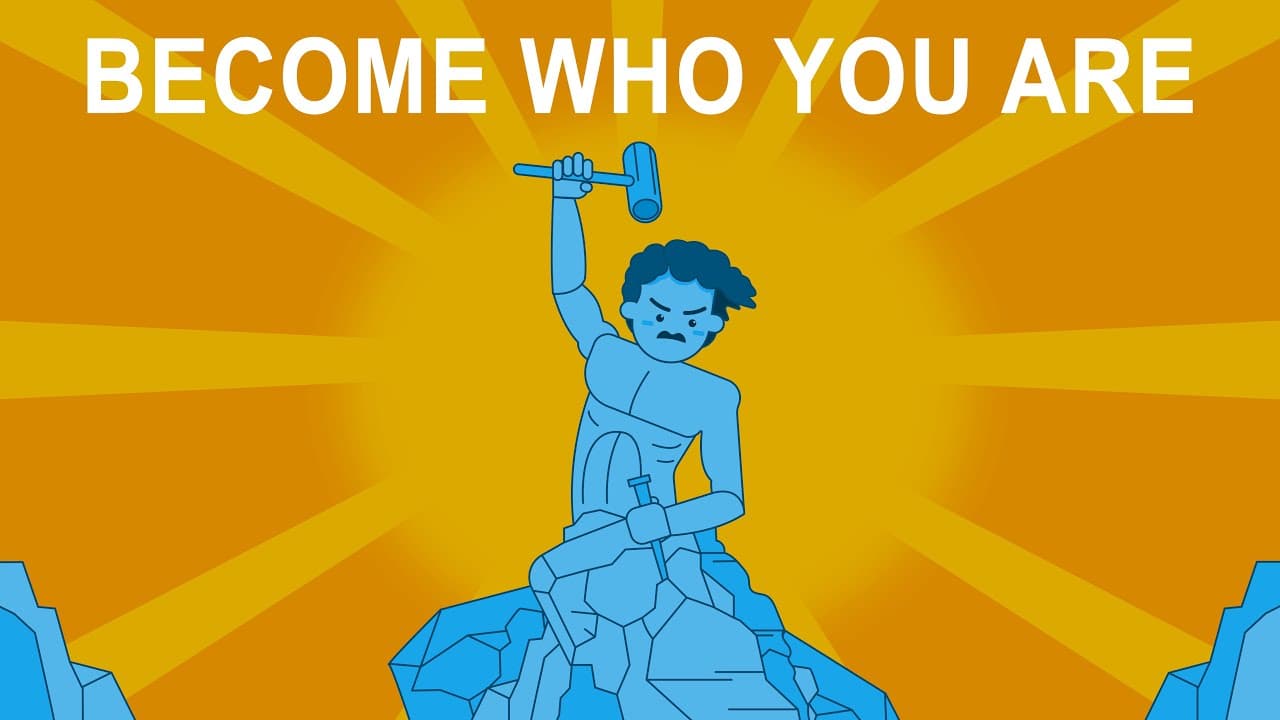
How to Become Who You Are According to Nietzsche
TL;DR
Becoming your true self starts with admitting you do not know what you are. You must follow your instincts, even if they seem corrupted, and be willing to suffer to recalibrate them. Through facing false beliefs and embracing lifelong self-discovery, you can attain personal greatness.
Transcript
For Nietzsche, becoming who you are leads to greatness. And in /Ecce Homo/, he wrote, “[that] one becomes what one is presupposes that one does not have the remotest idea what one is.” The question of how you become what you are begins with the idea that you don’t know what you are in the first place. You’re something that has to be discovered, and... Read More
Key Insights
- Becoming who you are begins with the admission that you do not know what you are.
- Instincts act as a compass guiding the journey toward self discovery.
- If instincts are corrupted by vanity, you must recalibrate them through suffering.
- Facing evidence that contradicts your self image is essential for growth.
- Suffering has meaning when it helps destroy false beliefs about the self.
- Greatness emerges from a disciplined process of self examination and adjustment.
- Those willing to endure discomfort are more likely to reclaim true instincts.
- The path to self is a solitary journey that requires inner honesty and persistence.
Install to Summarize YouTube Videos and Get Transcripts
Explore YouTube Video Summarizer or Get YouTube Transcript Extractor
Questions & Answers
Q: How does Nietzsche describe the starting point of becoming who you are?
Nietzsche argues that becoming who you are begins with the awareness that you do not know what you are. This implies a lifelong process of discovery where the individual must venture inward, question their assumptions, and accept that the true self is not immediately obvious. The journey frames greatness as the outcome of ongoing self discovery.
Q: What role do instincts play in self discovery according to the video?
Instincts are presented as the compass for the journey toward self discovery. One must follow the pull of natural interests to identify questions that guide the person toward themselves. However, instincts can be corrupted by vanity or fear, requiring conscious recalibration through honest self examination and willingness to endure discomfort.
Q: Why is suffering important in reclaiming one’s instincts?
Suffering is important because it reveals false beliefs that distort self understanding. By experiencing hardship and facing contradicting evidence about one’s self image, a person can destroy those false beliefs and recalibrate their instincts toward a more accurate sense of who they are. This process is essential for genuine growth.
Q: What example is used to illustrate how people respond to evidence against their self image?
The video tells the story of a young musician named Raphael who, after a setback, refuses to acknowledge that his self image as a great musician might be flawed. He dismisses criticism and waits for the right time, ultimately avoiding growth until he can honestly engage with the truth about his abilities.
Q: How does the concept of fate relate to self development in the video?
The video connects Nietzschean thought on fate with the idea that becoming who you are involves accepting reality as it is and pursuing greatness through honest self assessment. Fate becomes the arena in which one tests beliefs, endures what is necessary, and ultimately aligns actions with a truer self.
Q: What does reclaiming one’s instincts require according to the narrative?
Reclaiming instincts requires willingness to suffer, confront false beliefs, and adjust one’s internal compass. It means resisting the impulse to protect a fragile ego and instead embracing honest feedback and evidence. This process enables a more authentic alignment between beliefs, actions, and one’s true potential.
Q: How is the concept of self discovery framed in relation to greatness?
Self discovery is framed as the prerequisite to greatness. By uncovering who you truly are through persistent inquiry, honest evaluation, and disciplined effort, you move toward a state where your actions reflect a genuine inner truth. Greatness is presented as an outcome of this continuous personal realignment.
Q: What is the implied stance on following social validation in the video?
The video argues against relying on social validation as a guide to self. Instead, it emphasizes solitary exploration of one’s own instincts and beliefs. True self understanding comes from internal accountability and confronting evidence, rather than seeking outward approval from peers or critics. This internal path toward authenticity is valued.
Summary & Key Takeaways
-
Nietzsche links self discovery to greatness and claims you must acknowledge you do not know your true self currently. The path involves following inner questions and instincts, even if they seem dangerous or corrupted, in order to discover who you are and what you can become.
-
A key mechanism is willingness to suffer as evidence challenges self image. Those who endure this process may reinterpret beliefs and realign instincts toward authentic growth, leading to a more accurate self.
-
The story of the musician Raphael illustrates resisting evidence that contradicts self concept. Suffering can reveal false beliefs and motivate genuine improvement when one accepts truth over pride.
Read in Other Languages (beta)
Share This Summary 📚
Summarize YouTube Videos and Get Video Transcripts with 1-Click
Try YouTube Summary with ChatGPT & Claude or YouTube Transcript Generator
Explore More Summaries from Freedom in Thought 📚

Summarize YouTube Videos and Get Video Transcripts with 1-Click
Try YouTube Summary with ChatGPT & Claude or YouTube Transcript Generator