What Are the Implications of a Weakening Dollar?
TL;DR
A weakening dollar can lead to increased trade imbalances, making it easier for the U.S. to export but harder for imports. This situation may also threaten the dollar's status as the global reserve currency, as foreign capital appears to be losing trust in dollar-denominated markets. Ultimately, the Trump administration's strategies and geopolitical tensions could further exacerbate dollar debasement.
Transcript
hey guys before starting the show I just want to take a minute to talk about our good friends over at Bitwise the $10 billion global crypto asset manager on this show we talk a lot about all the big stories what's driving markets what does the data tell us what are you people missing and as you already know crypto is playing a much bigger role in m... Read More
Key Insights
- The Trump administration's potential strategies to influence Federal Reserve leadership could impact global market stability, with discussions around a 'shadow chairman' being a significant point of interest.
- The weakening dollar is a central theme, with implications for global trade balances and the potential for a shift in the dollar's status as a reserve currency.
- Gold is experiencing a surge as a safe haven asset, driven by fears of dollar debasement and geopolitical tensions, making it an attractive option for investors seeking stability.
- Bitcoin is showing signs of decoupling from technology stocks, positioning itself as a digital hedge against dollar debasement and offering a new layer of security for investors.
- The volatility in U.S. Treasury yields, alongside a weakening dollar, suggests foreign capital may be losing trust in dollar-denominated markets, raising concerns about the U.S.'s economic stability.
- The Mar-a-Lago Accord, a potential trade strategy linking currency weakness to geopolitical agreements, highlights the complexities of global trade negotiations under the Trump administration.
- The current geopolitical climate, including negotiations with Japan and other countries, is likely to lead to further dollar devaluation, impacting global financial markets.
- Upcoming economic indicators, such as PMI data, may prompt the Federal Reserve to adjust its monetary policy, potentially leading to further easing measures.
Install to Summarize YouTube Videos and Get Transcripts
Explore YouTube Video Summarizer or Get YouTube Transcript Extractor
Questions & Answers
Q: What is the significance of the Trump administration's potential strategies regarding Federal Reserve leadership?
The Trump administration's potential strategies, such as appointing a 'shadow chairman,' could significantly impact global market stability. By influencing Federal Reserve leadership, Trump might indirectly affect monetary policy, potentially leading to increased volatility in financial markets. This move could also alter the power dynamics within the Federal Reserve, affecting its decision-making processes.
Q: How does the weakening dollar impact global trade balances and reserve currency status?
A weakening dollar affects global trade balances by making U.S. exports cheaper and imports more expensive, potentially reducing trade deficits. However, it also raises questions about the dollar's status as the world's reserve currency. If foreign investors lose confidence in the dollar, they may diversify into other currencies or assets, which could lead to a shift in global economic power dynamics.
Q: Why are gold and Bitcoin considered safe haven assets in the current geopolitical climate?
Gold and Bitcoin are seen as safe haven assets due to their ability to preserve value amid economic uncertainty and geopolitical tensions. Gold's price surge is driven by fears of dollar debasement, while Bitcoin offers a digital hedge against currency devaluation. Both assets provide security for investors seeking stability in volatile markets, with Bitcoin also offering protection against potential confiscation.
Q: What does the volatility in U.S. Treasury yields indicate about foreign capital's trust in dollar markets?
The volatility in U.S. Treasury yields, alongside a weakening dollar, suggests that foreign capital may be losing trust in dollar-denominated markets. This could indicate a shift in investment preferences, with investors seeking alternatives such as euros or gold. Such a trend could have significant implications for the U.S. economy, affecting its ability to finance deficits and maintain economic stability.
Q: What is the Mar-a-Lago Accord, and how does it relate to Trump's trade strategies?
The Mar-a-Lago Accord is a potential trade strategy that links currency weakness to geopolitical agreements. Under this strategy, the U.S. might allow the dollar to weaken in exchange for foreign countries, like Japan, purchasing U.S. Treasuries and aligning with U.S. geopolitical interests. This approach reflects the complexities of global trade negotiations under the Trump administration, aiming to balance economic and strategic objectives.
Q: How might upcoming economic indicators influence Federal Reserve policy decisions?
Upcoming economic indicators, such as PMI data, could prompt the Federal Reserve to adjust its monetary policy. If indicators suggest a weakening economy, the Fed may implement easing measures to stimulate growth. This could include interest rate cuts or quantitative easing, which would further influence the dollar's value and impact global financial markets.
Q: What are the potential implications of a controlled versus extreme debasement of the dollar?
A controlled debasement of the dollar could help rebalance trade deficits and stimulate economic growth by making U.S. exports more competitive. However, an extreme debasement could lead to inflationary pressures, erode purchasing power, and undermine confidence in the dollar as a reserve currency. This scenario could destabilize global markets and prompt a shift towards alternative currencies or assets.
Q: How does the current geopolitical climate influence the likelihood of further dollar devaluation?
The current geopolitical climate, characterized by trade tensions and negotiations with countries like Japan, increases the likelihood of further dollar devaluation. The Trump administration's strategies aim to weaken the dollar to achieve trade balance and geopolitical objectives. As negotiations progress and economic indicators unfold, the dollar's value may continue to decline, impacting global financial markets and investor strategies.
Summary & Key Takeaways
-
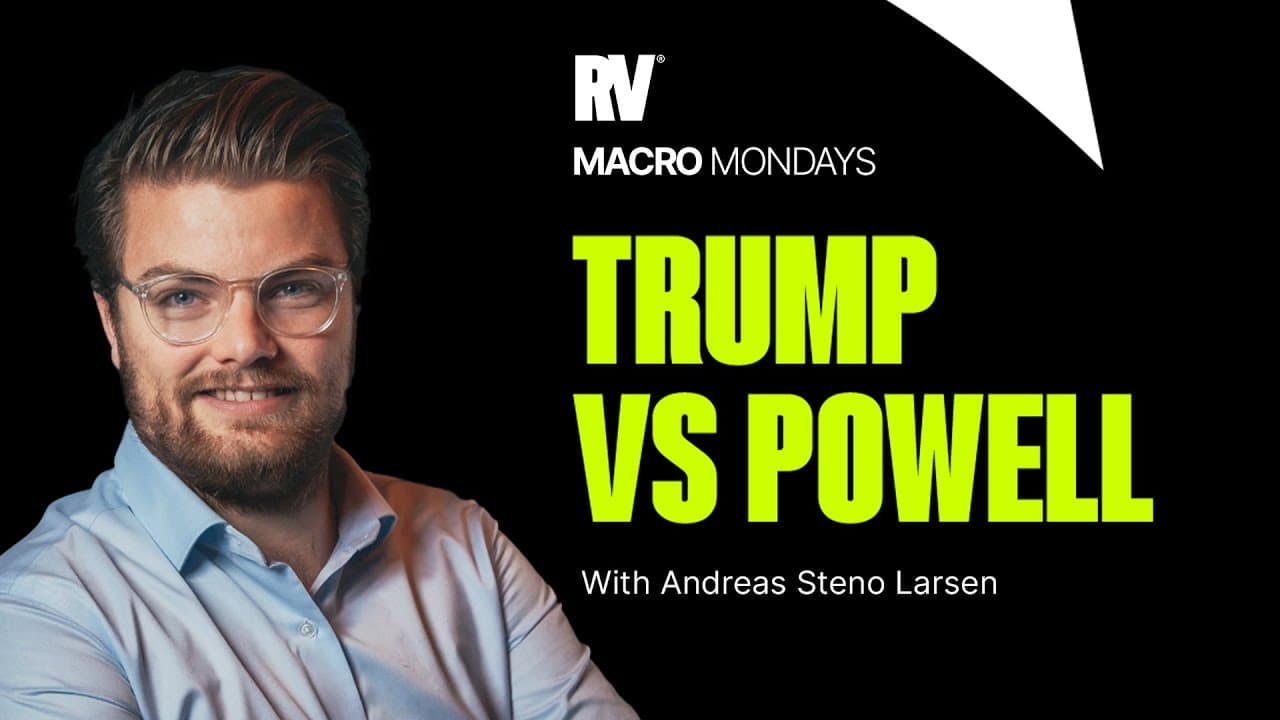
Andreas Steno Larsen discusses the potential impact of Trump's trade strategies and Federal Reserve leadership changes on global markets. The weakening dollar is a central theme, with implications for trade balances and the dollar's reserve currency status.
-
Gold and Bitcoin are highlighted as safe haven assets amid geopolitical tensions and fears of dollar debasement. The episode explores the potential decoupling of Bitcoin from tech stocks and its role as a hedge against currency devaluation.
-
Volatility in U.S. Treasury yields suggests foreign capital may be losing trust in dollar markets. The Mar-a-Lago Accord is discussed as a potential strategy linking currency weakness to geopolitical agreements, with upcoming economic data potentially prompting Fed policy changes.
Read in Other Languages (beta)
Share This Summary 📚
Summarize YouTube Videos and Get Video Transcripts with 1-Click
Try YouTube Summary with ChatGPT & Claude or YouTube Transcript Generator
Explore More Summaries from Real Vision 📚



Summarize YouTube Videos and Get Video Transcripts with 1-Click
Try YouTube Summary with ChatGPT & Claude or YouTube Transcript Generator