How Should You Measure Progress Toward Long-Term Goals? | E4 Bigger Plate
TL;DR
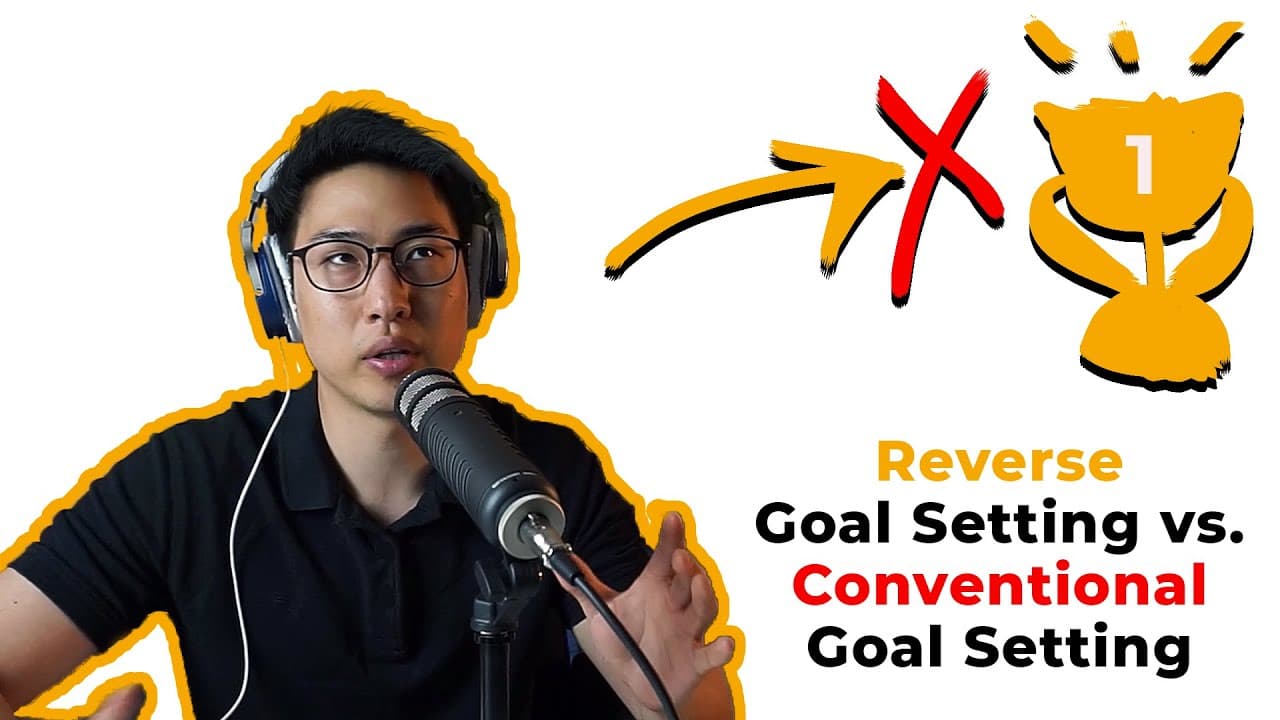
Measure progress by choosing a specific, challenging goal, identifying what reaching it requires, and breaking the path into yearly and monthly steps. Grace, a financial advisor finishing her second year of work, feels inadequate because she compares herself with more experienced colleagues and friends from university. The episode explains how better measurements can support improvement and help avoid burnout, making the full discussion worth reading.
Transcript
all right let me start off with the story the story goes like this i was having a conversation with one of my professional clients so they are a they're a financial advisor or something something something like that they their job involves going around and meeting people giving them sort of financial services advice or something along those lines a... Read More
Key Insights
- "the problem that we're talking about today is the idea of what you're measuring and how that determines how good you're going to become" (3:11)
- "break it down into yearly steps and then break that down into monthly" (5:26)
- "think about at the end of every month how would you know whether you are closer to that goal or not" (5:31)
- "she's comparing herself based on kind of what she hears through conversations with her friends from uni" (1:22)
- "it's really difficult to know exactly what the requirements are on to just small scale to reach that goal" (6:06)
Install to Summarize YouTube Videos and Get Transcripts
Explore YouTube Video Summarizer or Get YouTube Transcript Extractor
Questions & Answers
Q: How should you measure progress toward a long-term goal?
Start with a tangible, specific, and challenging goal, then identify what it would take to reach it. Break the path into yearly and monthly steps, and ask at the end of each month whether you are closer to the goal.
Q: Why can measuring the wrong things prevent improvement?
What you measure influences how good you can become. The wrong point of reference can make improvement difficult to recognize and may contribute to ongoing frustration, poor mental and emotional health, and burnout.
Q: Why does Grace feel that she is not good enough at her job?
Grace is finishing her second year of work and compares herself with friends from university and colleagues who have more experience and seniority. She also believes that barely studying at university left her less competent in content, information, and knowledge.
Q: Why is Grace's comparison with her colleagues difficult to calibrate?
Grace works in a small financial firm with few new graduates. Only one other person appears to be near her stage, and that person is still more senior, so the people around her do not provide a clear comparison.
Q: What kind of long-term goal should you use as a reference point?
Use the nearest version of an ultimate goal that is concrete and specific. Examples given include becoming a very good cardiologist, improving at your studies, or becoming an excellent museum curator.
Q: How can a long-term goal be broken into manageable steps?
First consider what reaching the goal would actually require. Break those requirements into yearly steps, then divide them into monthly steps that can be reviewed regularly.
Q: Can progress include both career and lifestyle goals?
Yes. The episode gives the example of becoming an excellent museum curator while also maintaining a lifestyle that prioritizes friends and family over work.
Q: Who is Justin Sung in E4 Bigger Plate?
Justin Sung is the host of episode four of Bigger Plate, a podcast about efficiency. He says he used to be a doctor and is now a social entrepreneur, educator, and performance, learning, and efficiency coach.
Summary & Key Takeaways
-
Grace, a financial advisor, feels inadequate compared to her colleagues and lacks confidence in her abilities due to her past academic performance.
-
The fundamental issue that Grace faces is the way she measures her progress, which can hinder her improvement and lead to burnout.
-
The key is to focus on the skills and attributes needed to achieve your goal and create metrics to measure your progress in those areas.
Read in Other Languages (beta)
Share This Summary 📚
Summarize YouTube Videos and Get Video Transcripts with 1-Click
Try YouTube Summary with ChatGPT & Claude or YouTube Transcript Generator
Explore More Summaries from Justin Sung 📚
Summarize YouTube Videos and Get Video Transcripts with 1-Click
Try YouTube Summary with ChatGPT & Claude or YouTube Transcript Generator