SHOULD YOU GO TO COLLEGE? - Motivational Video Every Student Really Needs to Hear | Study Motivation
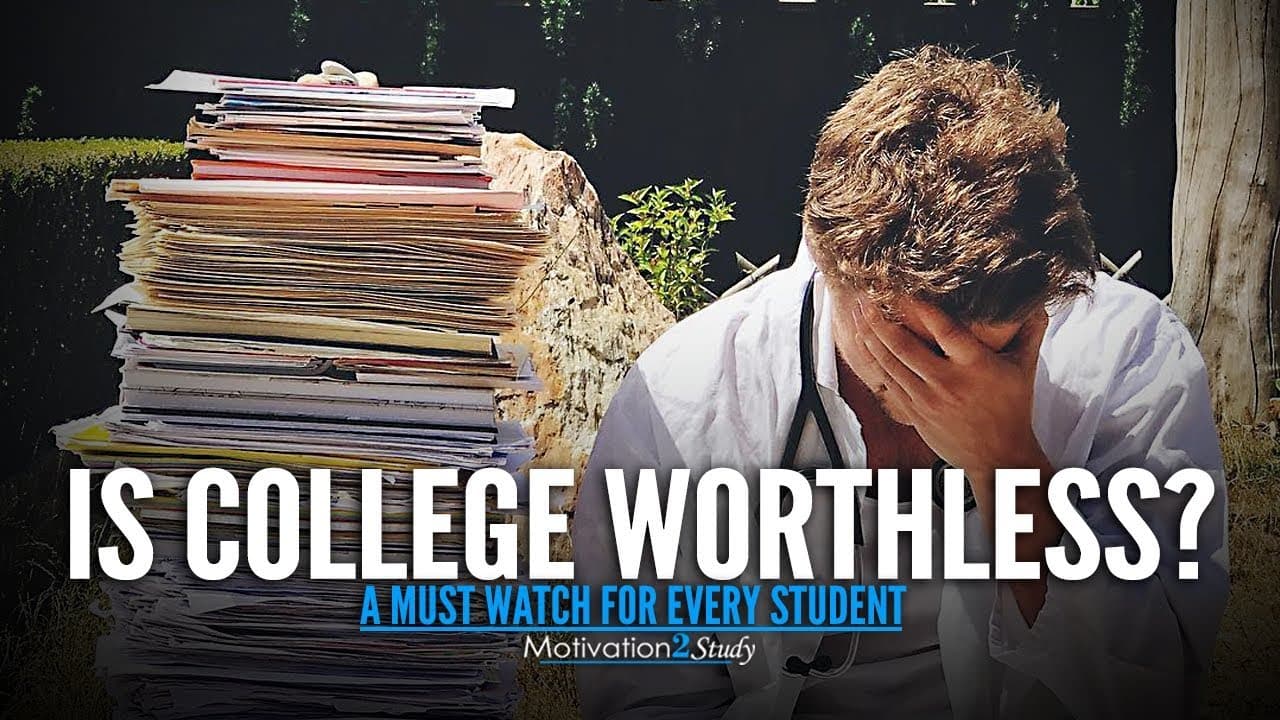
TL;DR
College may be worth attending because it can improve earning potential, broaden opportunities, and provide a foundation for navigating an unpredictable career, though only you can decide whether it fits your goals. The speaker cites studies associating college with hundreds of thousands of dollars in additional lifetime earnings and living seven years longer on average. Read on for a practical approach that combines college with pursuing your larger dream.
Transcript
should you go to college it's one of those life decisions that makes a huge difference over time and the reality is that I don't know other than you nobody does but here's what we do know school has found a way to lift people up it always have us as far back as we look college has a way of lifting people up of course there is the financial part sta... Read More
Key Insights
- 🎓 College education has a significant impact on financial stability and earning potential.
- 🛟 Attending college is associated with longer life expectancy and improved overall well-being.
- 🎓 While a college education might not guarantee a direct career path, it provides valuable skills for problem-solving and critical thinking.
- 🤗 College can open doors to various opportunities and connections.
- 🎓 The perception of college as outdated or unnecessary overlooks the valuable personal growth and skills development it offers.
- 👔 Successful entrepreneurs often combine their formal education with pursuing other interests.
- 👮 College can serve as a foundation for pursuing careers in fields such as medicine, law, engineering, and architecture.
Install to Summarize YouTube Videos and Get Transcripts
Explore YouTube Video Summarizer or Get YouTube Transcript Extractor
Questions & Answers
Q: Should you go to college?
The speaker says nobody other than you can make that decision, but argues that college matters financially, personally, and professionally. If you are torn between school and another ambition, the suggested approach is to pursue both until one clearly becomes the better option for your life.
Q: Is college worth it financially?
According to the transcript, studies say people with a college education earn hundreds of thousands of dollars more over their lives than people who do not graduate from college. The difference is described as six, seven, or eight hundred thousand dollars over a lifetime.
Q: What benefits of college go beyond earning more money?
The speaker says college graduates live seven years longer on average and are less likely to smoke, go to prison, or get divorced. They are also described as more likely to be happy and give back to their communities.
Q: Is college still valuable if the system is expensive or imperfect?
The transcript acknowledges that college is expensive, its content may not always feel relevant, and the post-secondary system is somewhat broken. However, the speaker argues that these shortcomings do not erase its opportunities, educational impact, or value.
Q: What should you do if your dream does not require a college degree?
The speaker recommends going to college while also starting the business, project, or pursuit you dream about. By committing to both, you may learn something in college that helps the dream unfold, while allowing the better path to emerge over time.
Q: Does college guarantee a direct path to the job or business you want?
No, the transcript emphasizes that neither education nor life follows a straight line. College can still prepare you for twists, missteps, turns, and false starts by helping you learn to read between the lines and stay focused on your ultimate goal.
Q: Did Elon Musk, Mark Zuckerberg, and Bill Gates attend college?
Yes. The transcript says Elon Musk earned two bachelor’s degrees and was working on a PhD at Stanford, Mark Zuckerberg launched Facebook from his Harvard dorm, and Bill Gates attended Harvard, where he met Steve Ballmer.
Q: Which careers clearly require or often favor a college degree?
The speaker says rapidly growing technology companies such as SpaceX, Microsoft, and Facebook require a degree more often than not. A formal education is also presented as the clear path for becoming a doctor, surgeon, lawyer, engineer, or architect.
Summary & Key Takeaways
-
College education leads to higher earning potential, with statistics showing a significant financial difference over a person's lifetime.
-
Going to college is associated with longer life expectancy, decreased risk of smoking, imprisonment, and divorce, and increased happiness and community engagement.
-
While college may not guarantee a direct path to one's desired career or business, it provides valuable opportunities for personal growth, problem-solving skills, and learning to navigate through life's twists and turns.
Read in Other Languages (beta)
Share This Summary 📚
Summarize YouTube Videos and Get Video Transcripts with 1-Click
Try YouTube Summary with ChatGPT & Claude or YouTube Transcript Generator
Explore More Summaries from Motivation2Study 📚





Summarize YouTube Videos and Get Video Transcripts with 1-Click
Try YouTube Summary with ChatGPT & Claude or YouTube Transcript Generator