How to Invest During an Oil Price Shock
TL;DR
Oil price shocks affect energy businesses differently, so investors should distinguish upstream producers, midstream operators, downstream refiners, and oil-field service providers before selecting stocks. The approach presented favors large companies with strong U.S. operations, sound finances, and favorable chart momentum, while emphasizing predetermined profit-taking and exit rules instead of relying on ticker recommendations alone.
Transcript
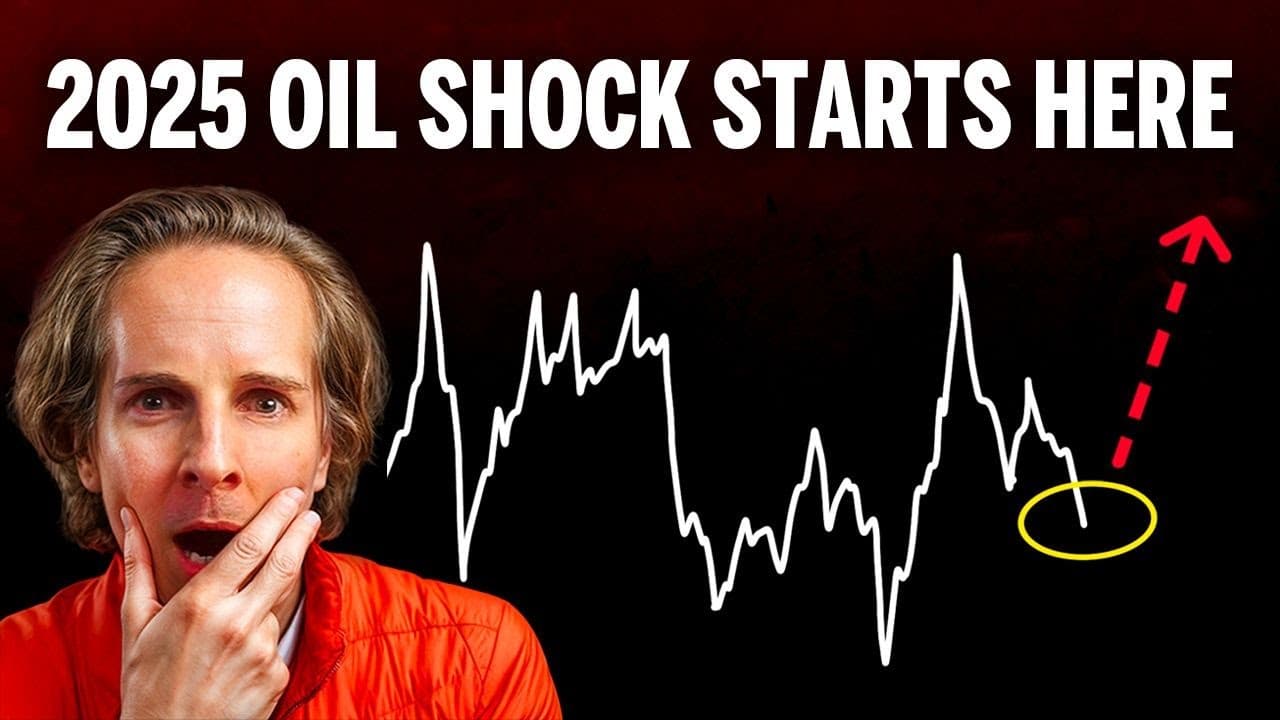
With oil prices up over 3% over the weekend, I convened my oil research team here. It is these three guys and the dad who's running around there in the background. But in all seriousness, there is a huge opportunity here or a huge pain depending on which side of the trade you aim to be on. I'm going to have to put these guys down, I think. Um, Hugh... Read More
Key Insights
- Oil companies fall into four relevant segments: upstream producers, midstream operators, downstream refiners, and oil-field service providers. Investors need to understand how each segment earns money because rising crude prices do not produce the same financial effect across every part of the industry.
- Upstream producers benefit when oil prices rise because they receive more money for oil they are already pumping. The analysis therefore favors large producers with diversified assets, strong balance sheets, and major U.S. operations that can remain resilient during overseas disruptions.
- Midstream operators make money from transporting and storing crude oil and natural gas. Higher U.S. production can increase throughput, storage demand, capacity utilization, revenue, and profits, making production volume more important to these businesses than the crude price alone.
- Downstream refiners can earn better margins when high crude prices coincide with strong demand for gasoline, diesel, petrochemicals, and other refined products. Their performance depends on the relationship between input costs, product demand, processing capacity, and the prices received for finished products.
- Oil-field service providers can benefit when higher oil prices encourage producers to spend more on drilling, extraction, and related investment. Their opportunity comes indirectly from increased industry activity rather than simply receiving a higher price for each barrel of crude.
- Risk management is essential because a stock ticker alone does not tell an investor when to sell. The method described locks in some gains while allowing strong positions to rise further, then exits weakening holdings at small gains rather than waiting for momentum to deteriorate substantially.
- Exxon Mobil is presented as a large, diversified U.S. producer with Permian Basin, Guyana, and Middle East assets, a strong balance sheet, healthy cash flow, and reasonable valuation. Its chart showed strong volume and price action above the 50-day and 150-day moving averages.
- MPLX LP is presented as a midstream watch-list candidate with strong profits, healthy cash flow, attractive valuation, and U.S. exposure. Its chart appeared close to a breakout, but the falling 50-day moving average and the separate tax-filing consequences associated with an LP required additional consideration.
Install to Summarize YouTube Videos and Get Transcripts
Explore YouTube Video Summarizer or Get YouTube Transcript Extractor
Questions & Answers
Q: How do oil price shocks affect different energy companies?
Oil price shocks affect energy companies according to where they operate in the supply chain. Upstream producers can receive more money for oil already being pumped. Midstream operators benefit when greater production increases transportation, storage, and capacity utilization. Downstream refiners may gain when strong refined-product demand supports margins. Oil-field service companies can benefit when producers increase spending on drilling and extraction.
Q: What should investors look for in oil stocks?
The framework favors oil companies with high market share, resilience, cost advantages, strong finances, and substantial U.S. operations. Large domestic exposure can help a company benefit from strong U.S. demand while limiting its dependence on Middle East operations. The analysis also considers valuation, profitability, cash flow, trading volume, moving averages, resistance levels, and whether the chart shows credible breakout momentum.
Q: Why is risk management important when buying oil stocks?
Risk management is important because knowing a ticker does not establish when to take profits or exit a weakening position. The method presented aims to lock in gains from rising oil and defense stocks while preserving some exposure if they continue higher. Positions that begin losing momentum can be closed at small gains, reducing the risk that an initially successful trade turns into a larger disappointment.
Q: Why was Exxon Mobil considered during the oil shock?
Exxon Mobil was considered because it is described as the largest U.S. oil producer, with a vast Permian Basin asset base and diversified operations in the United States, Guyana, and the Middle East. The company was also presented as profitable, financially strong, healthy in cash flow, and not particularly expensive. Higher oil prices could increase revenue from production already underway.
Q: What chart signals supported the Exxon Mobil setup?
Exxon Mobil showed strong volume, a large upward move, and a price above both its 50-day and 150-day moving averages. The stock also moved to or above a resistance zone that had constrained it for some time. The remaining concern was that the 50-day moving average was still pointing downward, although sustained higher prices could eventually flatten that trend line.
Q: Why was Occidental Petroleum viewed as a breakout candidate?
Occidental Petroleum was viewed as a breakout candidate because its price moved above the 150-day moving average with a large gap and heavy volume. The company was described as heavily focused on the Permian Basin, with quarterly revenue up 14%, reduced debt, and improved profit margins. The institutional positioning shown for the last trading day was bullish, including call-option purchases totaling 1.3 million.
Q: How does MPLX LP benefit from higher U.S. oil production?
MPLX LP transports and stores crude oil and natural gas, so greater U.S. production can create more throughput and storage demand. That activity can translate into higher revenue and profits, particularly through its exposure to areas such as the Permian Basin and Marcellus Shale. Its chart looked close to a breakout, although the declining 50-day moving average suggested the setup might still be early.
Q: What risks or cautions were identified for these oil investments?
Several cautions were identified. A rising oil price does not benefit every industry segment in the same way, and chart momentum can weaken after an initial move. Exxon Mobil and MPLX still had downward-sloping 50-day moving averages. MPLX LP may also require separate tax filings because of its LP structure. The material is educational, not personalized investment advice, and investing can result in losses.
Summary & Key Takeaways
-
The oil sector includes upstream exploration and production, midstream transportation and storage, downstream refining, and oil-field services. Each segment benefits through a different mechanism, including higher selling prices, greater throughput, stronger refining margins, or increased spending on drilling and extraction support.
-
The stock-selection framework favors companies with high market share, resilience, cost advantages, and substantial U.S. operations. Domestic exposure, particularly in the Permian Basin, is presented as a way to benefit from strong U.S. demand while reducing dependence on disruptions occurring in the Middle East.
-
The companies discussed are Exxon Mobil, Occidental Petroleum, MPLX LP, and Marathon Petroleum. The analysis combines business fundamentals with volume, resistance levels, moving averages, breakouts, and institutional options positioning. Risk management remains central because investors need rules for taking profits and exiting weakening positions.
Read in Other Languages (beta)
Share This Summary 📚
Summarize YouTube Videos and Get Video Transcripts with 1-Click
Try YouTube Summary with ChatGPT & Claude or YouTube Transcript Generator
Explore More Summaries from Felix & Friends (Goat Academy) 📚






Summarize YouTube Videos and Get Video Transcripts with 1-Click
Try YouTube Summary with ChatGPT & Claude or YouTube Transcript Generator