How Can Beliefs Cause Real Pain and Illness?
TL;DR
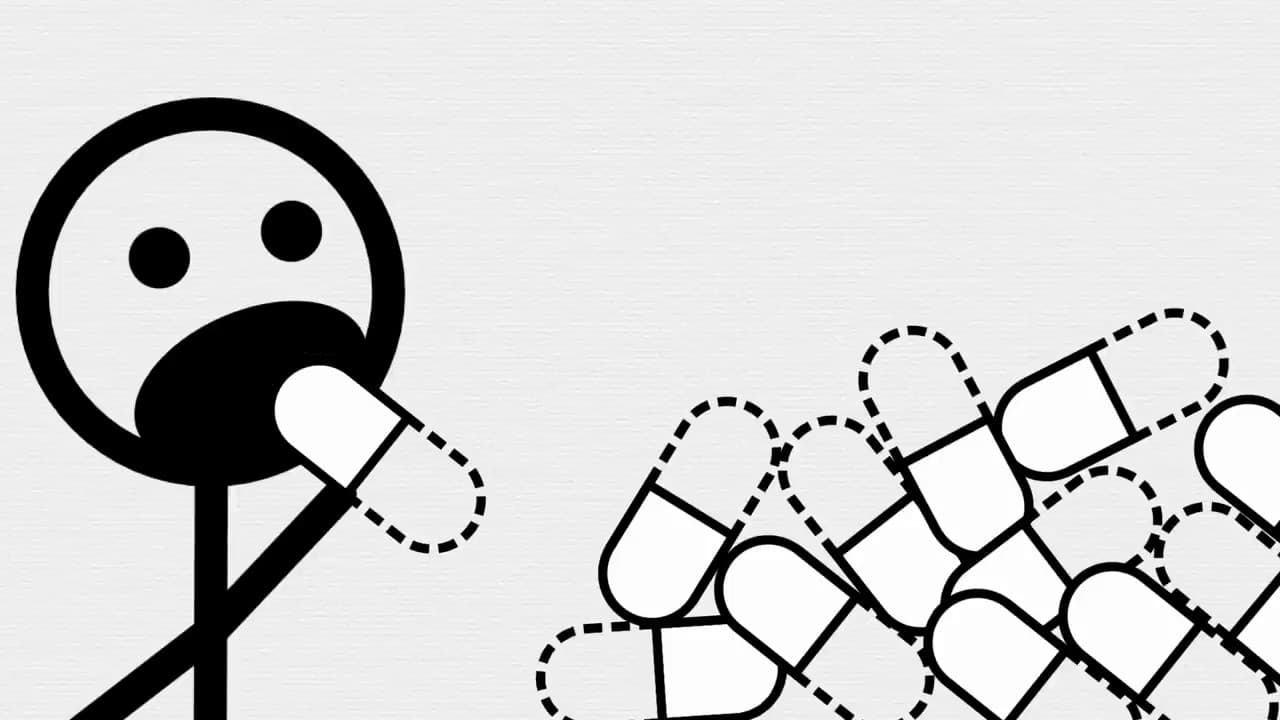
The nocebo effect demonstrates that belief in harmless things can lead to real physical symptoms, such as headaches or nausea. In medical trials, patients often report side effects from fake treatments simply because they believe they are real. Mass psychogenic illness showcases how these beliefs can spread, causing symptoms across populations without any actual harm.
Transcript
This Video Will Hurt Please, put on your headphones -- I promise
that there won't be any loud sounds, but this video is going to hurt. There's a study about hypersounds and how they cause headaches: these sounds are too high-pitched to hear -- like the one added to this video, playing right now -- but cause headaches they still do. The hypersoun... Read More
Key Insights
- ❓ The nocebo effect illustrates that beliefs can have tangible effects on our physical well-being.
- 😷 Medical experiments demonstrate how the power of belief can lead to the experience of side effects even when no actual treatment is administered.
- 💆 Mass psychogenic illness shows how the spread of beliefs and symptoms can create widespread physical symptoms without a clear cause.
- 👨⚕️ The nocebo effect highlights the importance of trust and communication between doctors and patients.
- ❓ It is essential to approach the topic of nocebic illnesses with empathy and understanding, as individuals experiencing symptoms may genuinely believe in their cause.
- 🧑🏭 The nocebo effect challenges the traditional understanding of objective reality and emphasizes the significance of psychological factors in our experiences.
- 🤯 Belief in electrosensitivity and similar conditions spreads through media coverage, creating a mind virus of misplaced beliefs.
Install to Summarize YouTube Videos and Get Transcripts
Explore YouTube Video Summarizer or Get YouTube Transcript Extractor
Questions & Answers
Q: What is the nocebo effect?
The nocebo effect refers to the phenomenon where harmless things can cause harm because people believe they are harmful. This can result in physical symptoms or side effects due to the power of belief.
Q: How does the nocebo effect impact medical experiments?
In medical experiments, patients on placebo or fake drugs can experience side effects because they believe they are on the real drug. This can complicate the evaluation of a drug's effectiveness and lead to dropouts from the experiment.
Q: What is mass psychogenic illness?
Mass psychogenic illness is when physical symptoms spread among a group of people due to belief. It can occur in situations where people think they have been exposed to something toxic, even if there is no actual harmful substance present.
Q: Can allergies and asthma be influenced by the nocebo effect?
There is evidence that some cases of allergies and asthma can be influenced by the nocebo effect. Beliefs and expectations can contribute to the severity and perception of symptoms.
Summary & Key Takeaways
-
The nocebo effect is when a harmless thing, like a video with fake sounds, causes harm, such as headaches, because people believe it's harmful.
-
In medical experiments, patients on fake drugs have reported experiencing side effects because they believed they were on the real drug.
-
Mass psychogenic illness can spread from mind to mind, causing physical symptoms even when there is no actual harmful substance present.
Read in Other Languages (beta)
Share This Summary 📚
Summarize YouTube Videos and Get Video Transcripts with 1-Click
Try YouTube Summary with ChatGPT & Claude or YouTube Transcript Generator
Explore More Summaries from CGP Grey 📚




Summarize YouTube Videos and Get Video Transcripts with 1-Click
Try YouTube Summary with ChatGPT & Claude or YouTube Transcript Generator