What is the caiman's role in the Pantanal food chain?
TL;DR
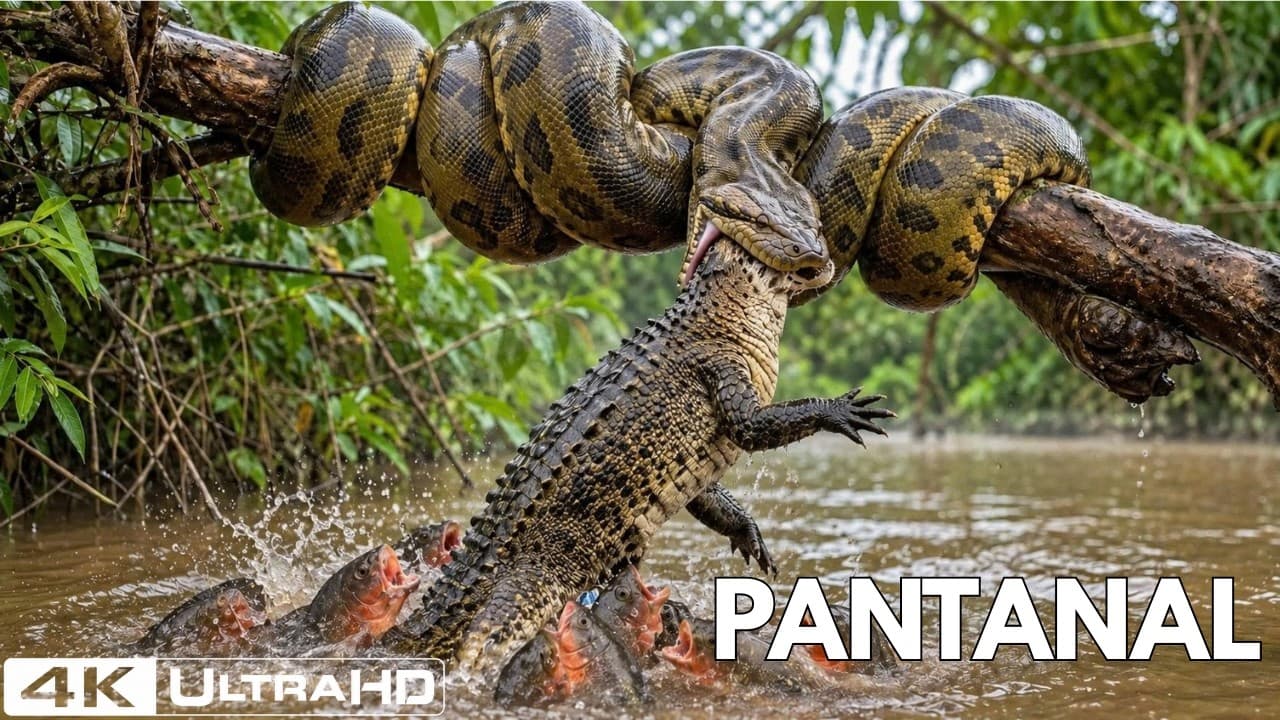
The caiman is both a predator and its own prey in a crowded swamp ecosystem. It survives through patience, fierce defense, and by occupying a middle position where it is worth more alive than the fight is worth. Predators like jaguars and snakes target it, while abundance of water and fish supports its life during dry periods.
Transcript
[music] One of the fiercest hunters in the swamp. Jaws that crush bone patients that NEVER And there are 10 million of them. But here is the twist. This fearsome hunter is also the hunted. The anaconda squeezes him. The jaguar stalks him. He is the meal every top predator wants. On land, in the water, from the trees, [music] something is always hun... Read More
Key Insights
- The Pantanal hosts up to 10 million caiman, forming the largest crocodilian population ever and creating a dense, interdependent predator environment.
- Caimans are both hunter and hunted, facing dangers from jaguars on land, anacondas in water, and other larger caiman during crowded dry season pools.
- Rio the caiman survives by remaining too costly to finish, proving that value in an ecosystem can come from resilience and defensive strategy rather than sheer size.
- During the dry season, shrinking water concentrates predators and prey, forcing risky encounters and highlighting the fragile balance of the food chain.
- Jaguars hunt caiman specifically for skull bites, showing a specialized predation strategy that undercuts the caiman's armor in critical areas.
- Anacondas attack caiman in water, illustrating how different habitats create overlapping death zones that test adaptive behavior across environments.
- The return of the rains resets the balance, expanding the pool and allowing caiman populations to scatter and recover, underscoring the importance of seasonal cycles.
- The narrator suggests the creator’s design that no single predator sits at the top, emphasizing a chain where every hunter is also someone else’s meal.
Install to Summarize YouTube Videos and Get Transcripts
Explore YouTube Video Summarizer or Get YouTube Transcript Extractor
Questions & Answers
Q: What is the main ecological role of the caiman in the Pantanal?
The caiman acts as both predator and prey in the Pantanal, supporting a dynamic food web where fish, birds, and smaller creatures fall into its hunting reach while it itself becomes prey to jaguars, anacondas, and larger caiman. This middle position helps regulate fish populations and maintain ecosystem balance during varying water levels, especially as dry and wet seasons shift habitats and opportunities.
Q: How does the dry season affect caiman survival strategies?
During the dry season, waters recede, forcing caimans into smaller pools where encounters with predators increase. Caimans rely on patience, ambush tactics, and the ability to withstand heat and crowding. They also leverage their armored bodies and strong jaws to withstand attacks and to capture drifting fish as the pools shrink, maintaining energy for the flood return.
Q: Why do jaguars target caimans, and how do they do it?
Jaguars target caimans as a high reward, skull-crushing prey. They stalk along the banks, use stealth to approach behind, and aim for a precise bite to the back of the skull, delivering a quick, lethal strike that ends the caiman’s life with a single well-timed leap and bite.
Q: What role does the anaconda play in the caiman’s life cycle?
Anacondas pressure caimans by ambushing them in water, using coils to constrict and immobilize. This predator creates a constant risk in aquatic habitats, especially as waters shrink and caimans are forced into deeper, more confined pools where ambush opportunities increase and the caiman must fight or be swallowed.
Q: How does water level influence predator-prey encounters in the Pantanal?
Water level directly shapes where predators and prey can move and hunt. High water provides cover for caimans and mobility for predatory forms, while shrinking water concentrates animals into fewer spaces, intensifying encounters with jaguars, anacondas, and larger caiman, and creating a perilous bottleneck for survival.
Q: What makes the caiman valuable to the ecosystem when it is hunted?
The caiman helps control fish and other aquatic populations, contributing to nutrient cycling and habitat structure in the Pantanal. Its presence as a prey item also supports predators and maintains the diversity and stability of the wetland, ensuring the ecosystem can rebound when the rains return.
Q: What does the film suggest about the concept of a true top predator?
The documentary suggests that no single species sits at the very top of the food chain. Instead, all top hunters are ultimately vulnerable to other predators or environmental factors, creating a balanced system where even the fiercest hunters must consider the costs of predation and the risks of becoming prey themselves.
Q: How does Rio exemplify the caiman’s strategy for surviving extreme conditions?
Rio demonstrates persistence, armored resilience, and effective use of the environment. He escapes from multiple threats by leveraging the water to hide, using brute force when necessary, and waiting for the right moment to strike or retreat. His endurance shows that survival hinges on being too costly to finish rather than simply being the strongest.
Summary & Key Takeaways
-
In the Pantanal, caimans form a dense population that supports a complex web of interactions among predators and prey. The dry season tightens this web by shrinking water and forcing encounters that test the caiman’s resilience. Through endurance and strategic use of water, caimans persist.
-
The documentary follows Rio, a yacare caiman, showing how a middle position in the food chain can be perilous yet essential for ecosystem balance. Surviving means staying costly to finish, not simply being the strongest.
-
As waters return, caimans disperse and thrive in the reconnected wetlands, illustrating how seasonal cycles shape predator prey dynamics and sustain one of the world’s richest wetland ecosystems.
Read in Other Languages (beta)
Share This Summary 📚
Summarize YouTube Videos and Get Video Transcripts with 1-Click
Try YouTube Summary with ChatGPT & Claude or YouTube Transcript Generator
Explore More Summaries from Nature's Tether 📚
Summarize YouTube Videos and Get Video Transcripts with 1-Click
Try YouTube Summary with ChatGPT & Claude or YouTube Transcript Generator