How Could Witkoff’s Putin Talks Shape Ukraine Peace?
TL;DR
Steve Witkoff is expected to meet Vladimir Putin in Moscow to promote a revised Ukraine peace proposal, while the Trump administration says there is no longer a Thanksgiving deadline. The central obstacles remain territorial concessions, limits on Ukraine’s military, NATO membership, and whether Russia will compromise on its objective of gaining political control over Ukraine.
Transcript
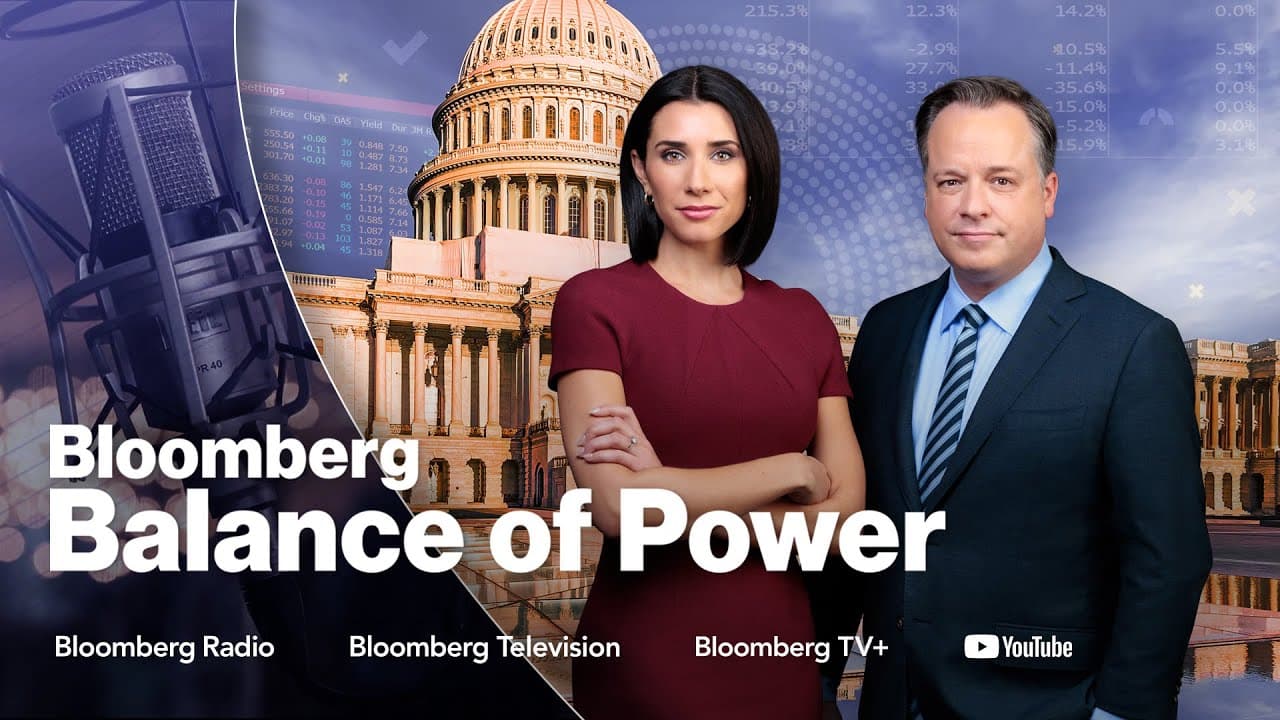
Live from Washington, D.C. This is balance of power with Joe Matthew. Boy once again to Moscow. Welcome to the Wednesday edition. With Peace in Ukraine in the Balance on this Thanksgiving eve and word that President Trump is sending Steve Whitcomb back to Russia to sell a peace plan that's been revised over the course of this week. We're going to g... Read More
Key Insights
- Steve Witkoff’s next mission is to present a revised Ukraine peace proposal directly to Vladimir Putin in Moscow. His challenge is finding terms acceptable to Russia after Ukrainian and European concerns led negotiators to modify the administration’s original 28-point framework.
- The Thanksgiving deadline is no longer binding because the administration signaled that Ukraine would receive additional time to consider the proposal. President Trump had previously suggested Thanksgiving as a decisive date, but later reporting said he was dispatching aides for further talks without a deadline.
- Marco Rubio is acting as a bridge among Russian, Ukrainian, and European positions. After meetings in Geneva, he described the discussions as among the most productive since the Trump administration took office while acknowledging that major issues still required further negotiation.
- Territorial concessions remain a central obstacle because Ukrainian and European governments are concerned about voluntarily transferring Ukrainian-controlled territory in Donetsk to Russia. The transcript indicates that final territorial questions will probably need to be decided by presidents rather than settled solely by lower-level negotiators.
- Military and alliance restrictions are disputed elements of the proposal, including possible caps on the size of Ukraine’s army and a prohibition on additional NATO membership. Negotiators discussed these points in Geneva, but the transcript does not establish whether they remained in the revised 19-point plan.
- A workable agreement requires a common landing zone because adding Ukrainian and European demands can move the proposal away from Russia’s position, while incorporating Russian demands can make it less acceptable to Ukraine. The negotiations therefore resemble a repeated exchange between incompatible priorities.
- Russia’s willingness to compromise is the unresolved test because Russia invaded Ukraine and Ukraine’s potential concessions are clearer than Moscow’s. Former U.S. Ambassador to Ukraine John Herbst identified political control of Ukraine as Putin’s longstanding primary goal, which Ukraine would not accept.
- Witkoff’s negotiating method includes advising Russian officials on how to communicate effectively with Trump. In a disclosed conversation, he suggested praising Trump’s Gaza cease-fire achievement and describing him as a man of peace before a call that preceded Zelensky’s White House visit.
Install to Summarize YouTube Videos and Get Transcripts
Explore YouTube Video Summarizer or Get YouTube Transcript Extractor
Questions & Answers
Q: Why is Steve Witkoff meeting Vladimir Putin in Moscow?
Steve Witkoff is expected to meet Vladimir Putin to promote a revised Ukraine peace proposal and determine whether Russia will accept terms changed after negotiations in Geneva. The original framework contained 28 points and was later narrowed to 19. Witkoff must test whether changes addressing Ukrainian and European concerns have moved the proposal too far from Russia’s demands.
Q: What changed in the proposed Ukraine peace plan?
The framework was reduced from 28 points to 19 after Secretary of State Marco Rubio met Ukrainian and European counterparts in Geneva. Negotiators discussed territorial concessions, possible caps on the Ukrainian army, and restrictions on future NATO membership. The transcript does not specify which provisions were removed, retained, or rewritten, and says territorial questions remain for national leaders.
Q: Does Ukraine face a Thanksgiving deadline to accept the peace proposal?
Ukraine no longer appears to face a final Thanksgiving deadline. President Trump had suggested that Thanksgiving could be a decisive date for Ukraine to accept or reject the proposal, but Secretary of State Marco Rubio signaled that more time was necessary. The administration subsequently dispatched negotiators for additional talks and said there was no deadline for completing an agreement.
Q: What role is Marco Rubio playing in the Ukraine negotiations?
Marco Rubio is serving as a bridge among the Russian, Ukrainian, and European positions. He met counterparts from Ukraine and several European countries in Geneva and called that Sunday one of the most productive days of the process since the Trump administration took office. He also acknowledged unresolved issues and indicated that Ukraine would receive additional time to consider the proposal.
Q: Why are territorial concessions a major obstacle to peace?
Territorial concessions are difficult because the proposal has included ideas affecting Donetsk territory that Ukraine still controls. Ukrainian and European governments are concerned about voluntarily ceding that land to Russia as part of a settlement. The transcript says territory will ultimately require decisions at the presidential level, and it does not establish what territorial language remains in the revised proposal.
Q: What restrictions on Ukraine were discussed in the negotiations?
Negotiators discussed possible limits on the size of Ukraine’s armed forces and a prohibition on NATO expansion involving Ukrainian or other new membership. These issues were described as some of the proposal’s most difficult elements. However, the transcript says it remains unclear whether those restrictions survived the transition from the original 28-point framework to the revised 19-point version.
Q: Why is Russia’s willingness to compromise still uncertain?
Russia’s willingness to compromise is uncertain because its concessions are less clearly defined than Ukraine’s potential sacrifices. Ukraine could be asked to surrender territory, restrict its military, or accept alliance limitations. The discussion identifies political control of Ukraine as Putin’s longstanding main goal and asks what Russia would relinquish beyond abandoning that objective after having invaded Ukraine.
Q: Why did Steve Witkoff’s conversation with Yuri Ushakov attract criticism?
The conversation drew scrutiny because Witkoff advised Yuri Ushakov, Putin’s senior foreign policy adviser, on how Russia could present its position favorably to President Trump. He suggested congratulating Trump for achieving a Gaza cease-fire and emphasizing respect for him as a man of peace. Trump defended the exchange as standard dealmaking intended to persuade both parties during negotiations.
Summary & Key Takeaways
-
President Trump is sending special envoy Steve Witkoff to Moscow for further negotiations with Vladimir Putin. The proposed Ukraine peace framework was reduced from 28 points to 19 after discussions in Geneva, and the administration withdrew its suggested Thanksgiving deadline, allowing more time to resolve difficult disagreements between Russia and Ukraine.
-
Secretary of State Marco Rubio has served as a bridge among Ukrainian, Russian, and European positions. Ukraine is described as broadly supportive of the revised framework, but unresolved questions involve territory in Donetsk, possible limits on Ukraine’s armed forces, and restrictions on NATO expansion. Territorial decisions may require direct negotiations between national leaders.
-
A disclosed conversation showed Witkoff advising Putin’s senior foreign policy adviser, Yuri Ushakov, on how to present Russia’s position favorably to President Trump. Trump defended this as standard negotiation, arguing that a dealmaker must persuade both parties. Critics question whether the approach favors Russia and whether Moscow will make meaningful compromises.
Read in Other Languages (beta)
Share This Summary 📚
Summarize YouTube Videos and Get Video Transcripts with 1-Click
Try YouTube Summary with ChatGPT & Claude or YouTube Transcript Generator
Explore More Summaries from Bloomberg Television 📚


Summarize YouTube Videos and Get Video Transcripts with 1-Click
Try YouTube Summary with ChatGPT & Claude or YouTube Transcript Generator