Why Startup Founders Should Launch Companies Sooner Than They Think
TL;DR
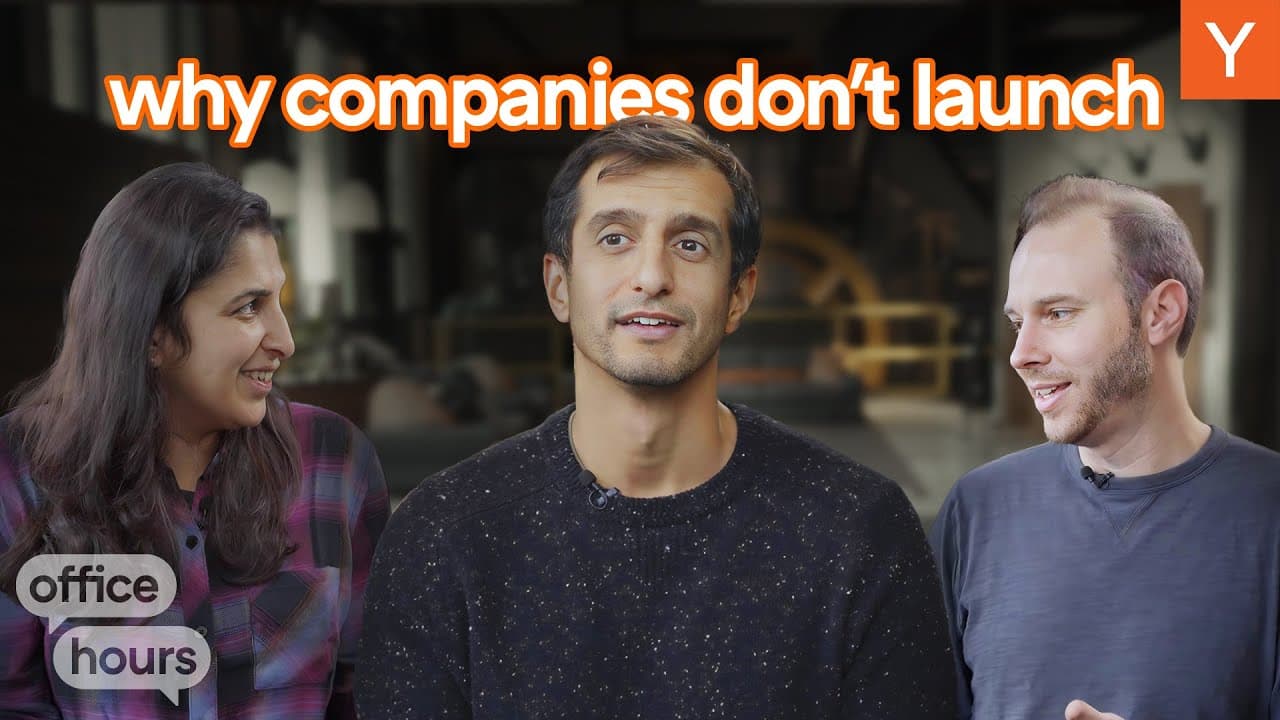
Startup founders should launch sooner because real customer reactions create the learning needed to improve the product and move in the right direction. First-time founders may spend three, six, or 12 months building while fearing that nobody will show up, but a disappointing launch is not final: Airbnb launched three times before gaining attention. Read on to understand the myths, fears, and peer pressure surrounding startup launches.
Transcript
what's going on is that Founders are just they're embarrassed about the state of their own product they've come from companies that have mature polished products and they compare their launch to like an apple launch if Apple fumbles a launch the world's media is going to write about it but if some small startup fumbles a launch no one cares we don'... Read More
Key Insights
- 😨 Founders often compare their launches to those of larger, established companies, creating unnecessary pressure and fear.
- 👻 Launching early allows for valuable feedback and learning from real customers.
- 🥶 It is essential to break free from the fear of criticism and rejection and focus on the goal of learning and improving the product.
- 🚀 Launching does not have to be a grand, polished event; even a simple, early launch can provide valuable insights.
- 🚀 Waiting too long to launch delays learning and hinders the startup's progress.
- ⚾ Entrepreneurs should focus on finding their early adopters and iterating based on their feedback.
- 🚀 Launching early, even with a janky product, can demonstrate demand and solve a real problem.
Install to Summarize YouTube Videos and Get Transcripts
Explore YouTube Video Summarizer or Get YouTube Transcript Extractor
Questions & Answers
Q: Why should startup founders launch their companies sooner?
Launching gives founders real customer reactions that help them learn, improve the product, and continue in the right direction. Waiting delays that learning and leaves founders trying to optimize for a single big debut.
Q: Why are first-time founders afraid to launch?
They may fear that nobody will visit their website, watch their video, or try their product. After spending three, six, or 12 months building, they can interpret a quiet launch as evidence that they are dumb or wrong.
Q: What happens if a startup's first launch fails?
A poor first launch does not have to be final. Founders can learn from the result, improve the product, and launch again, even one week later.
Q: How does launching help founders learn from customers?
Launching puts the product in front of real people whose reactions reveal what needs improvement. That feedback lets founders make changes and move forward instead of guessing how to create an optimal first launch.
Q: What does Airbnb's launch story teach startup founders?
Airbnb launched three times before anyone started paying attention. Each launch produced new learning, helped improve the product, and allowed the founders to keep going.
Q: What myths cause founders to delay launching?
One myth is that a launch is critically important, happens only once, and will be remembered. Another is that people who dislike the product on their first try will never try it again.
Q: Why shouldn't startups model their launches on Apple or other large companies?
Large companies can stage polished launches where reporters pay attention and a mistake attracts coverage. Small startups usually do not face that level of scrutiny, so the big-company launch model does not apply to them.
Q: How can peer pressure encourage founders to launch?
In a YC batch, founders see peers around them launching and making progress. That comparison creates pressure to stop waiting and launch their own products, even though YC partners are advisers rather than bosses.
Summary & Key Takeaways
-
Founders often hesitate to launch their products due to fear of failure and comparison to larger companies with polished launches.
-
Launching early allows for real customer feedback and learning opportunities that can lead to product improvements.
-
Waiting too long to launch delays the learning process and can hinder the startup's progress.
Read in Other Languages (beta)
Share This Summary 📚
Summarize YouTube Videos and Get Video Transcripts with 1-Click
Try YouTube Summary with ChatGPT & Claude or YouTube Transcript Generator
Explore More Summaries from Y Combinator 📚




Summarize YouTube Videos and Get Video Transcripts with 1-Click
Try YouTube Summary with ChatGPT & Claude or YouTube Transcript Generator