What Are Engineered Devices for Treating Compulsive Eating?
TL;DR
Engineered devices, particularly deep brain stimulation targeting the nucleus accumbens, are being used to treat compulsive eating and obsessive-compulsive behaviors. This approach aims to restore normal brain function related to dopamine release and control loss of control eating. It offers an alternative to traditional pharmacologic therapies, providing a direct method to alleviate these conditions.
Transcript
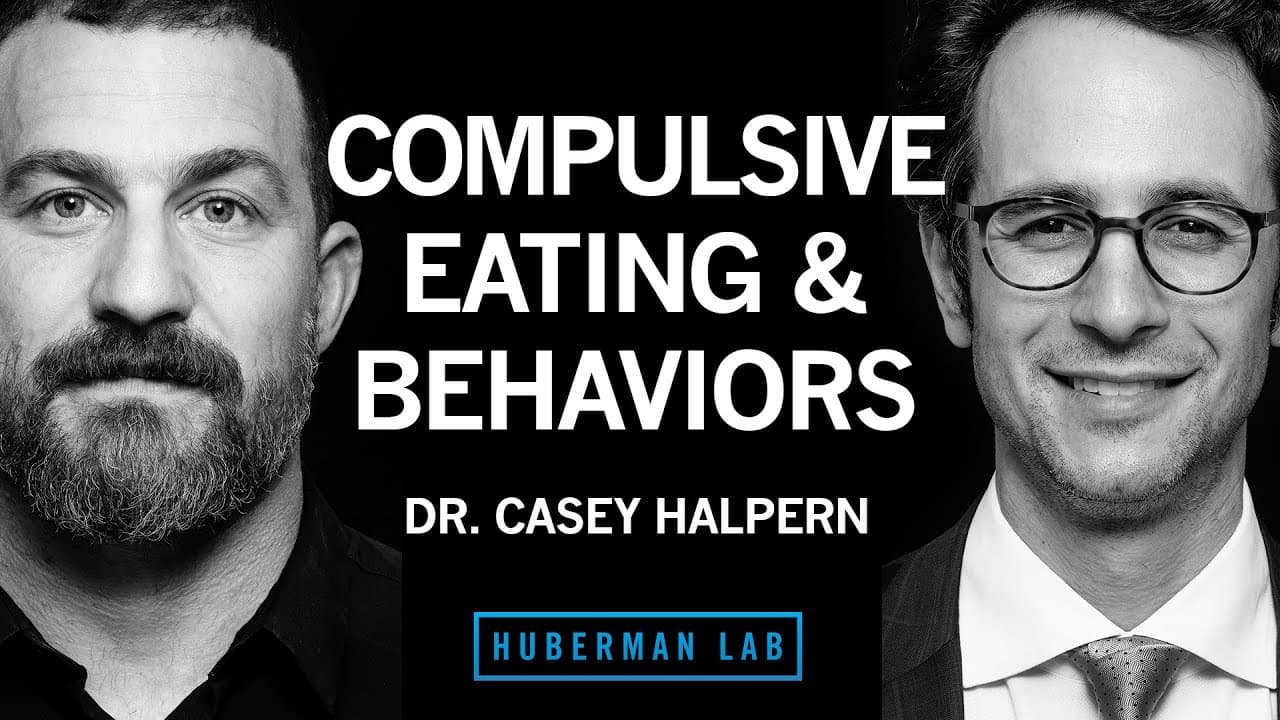
welcome to the huberman Lab podcast where we discuss science and science-based tools for everyday life I'm Andrew huberman and I'm a professor of neurobiology and Ophthalmology at Stanford school of medicine today my guest is Dr Casey Halpern Dr Halpern is the chief of neurosurgery at the University of Pennsylvania School of Medicine his laboratory... Read More
Key Insights
- 🤢 The Halpern laboratory focuses on the use of engineered devices and deep brain stimulation to treat eating disorders and obsessive-compulsive behaviors.
- 🤩 The nucleus accumbens, a key component of the brain's reward system, is targeted to alleviate loss of control eating and other compulsions.
- 🎚️ Medications like SSRIs and tricyclics can be effective in treating OCD by modulating serotonin levels.
- 😅 Animal models suggest that exposure to high-fat food can dysregulate the nucleus accumbens and contribute to binge eating disorder.
Install to Summarize YouTube Videos and Get Transcripts
Explore YouTube Video Summarizer or Get YouTube Transcript Extractor
Questions & Answers
Q: How does deep brain stimulation work to alleviate eating disorders and obsessive-compulsive behaviors?
Deep brain stimulation involves delivering electrical stimulation through electrodes placed in specific areas of the brain, such as the nucleus accumbens. This stimulation aims to disrupt aberrant signaling and restore normal functioning, reducing compulsions and alleviating symptoms.
Q: How do medications like SSRIs and tricyclics help in the treatment of OCD?
Medications like SSRIs and tricyclics target the serotonin system in the brain, which is involved in mood regulation and the control of compulsive behaviors. By modulating serotonin levels, these medications can help reduce obsessive thoughts and compulsions in patients with OCD.
Q: What are some insights from animal models and imaging studies that shed light on the dysfunction in the nucleus accumbens in eating disorders and OCD?
Animal models have shown that exposure to high-fat food can dysregulate the nucleus accumbens, leading to compulsive eating behaviors. Imaging studies also suggest dysfunction in cortical areas, such as the prefrontal and orbital frontal cortex, and their connections to the nucleus accumbens in patients with these disorders.
Q: How does binge eating disorder develop, and what role does anxiety play in its onset?
Binge eating disorder can develop from a combination of genetic predisposition and environmental factors, such as exposure to high-fat or highly palatable food. Anxiety can also play a role, as heightened autonomic arousal or decreased arousal can both lead to a loss of control over eating behaviors.
Summary & Key Takeaways
-
Dr. Casey Halpern and his team focus on the development and application of engineered devices to stimulate neurons in the brain and alleviate eating disorders and obsessive-compulsive behaviors.
-
Their main focus is on the nucleus accumbens, an area of the brain that is involved in the release of dopamine for motivated behaviors and can be targeted to control loss of control eating and other compulsions.
-
By delivering electrical stimulation through electrodes placed in the brain, they aim to restore normal functioning to these areas and provide relief for patients.
Read in Other Languages (beta)
Share This Summary 📚
Summarize YouTube Videos and Get Video Transcripts with 1-Click
Try YouTube Summary with ChatGPT & Claude or YouTube Transcript Generator
Explore More Summaries from Andrew Huberman 📚
Summarize YouTube Videos and Get Video Transcripts with 1-Click
Try YouTube Summary with ChatGPT & Claude or YouTube Transcript Generator