How Is the Taj Mahal Cleaned Without Damage?
TL;DR
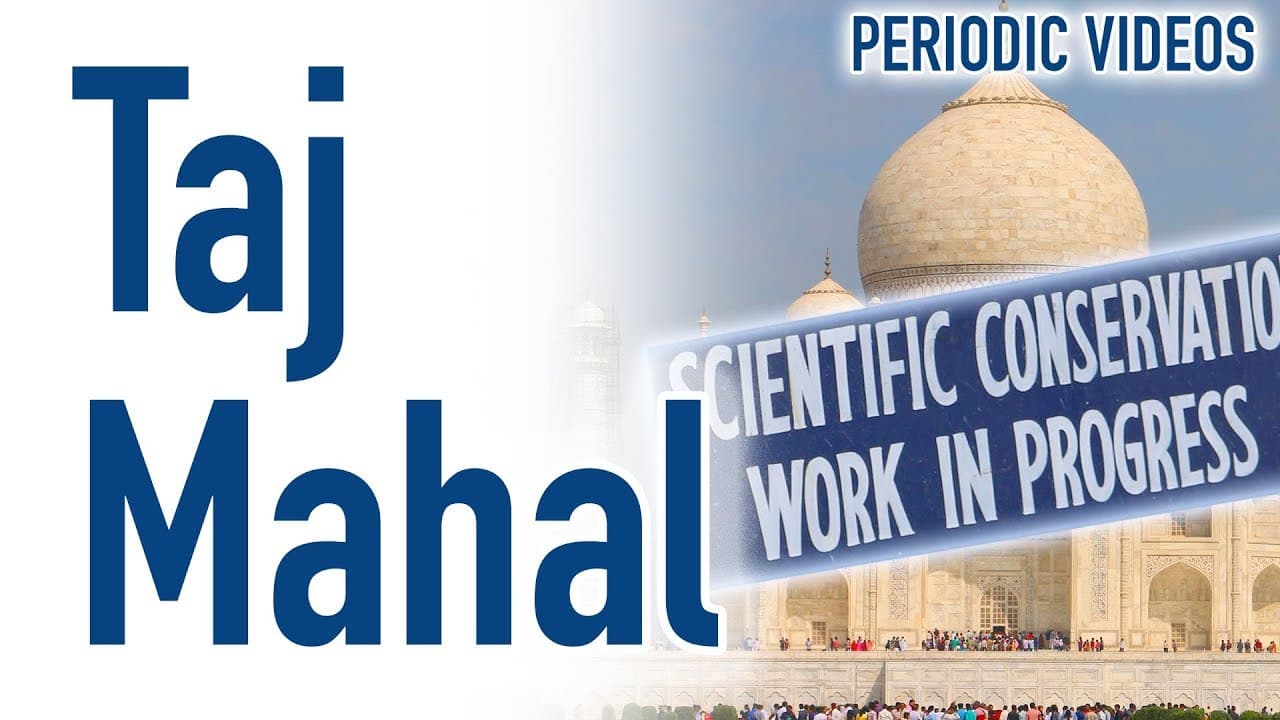
The Taj Mahal's white marble is cleaned using a Fuller's earth paste, which gently removes carbon particles from air pollution without damaging the marble's surface. This method is effective due to the ionic nature of Fuller's earth, which attracts dirt while maintaining the integrity of the marble, showcasing the importance of chemistry in preservation.
Transcript
brady's just been to India on holiday and he's shown me some terrific pictures and video of the Taj Mahal I never been there immediately when he showed me that I could see that the building is being cleaned and when you think about cleaning you think about chemistry the Taj Mahal is famous because it's white and it's white because it's made of whit... Read More
Key Insights
- 👨🦳 Carbon particles from air pollution contribute to the discoloration of the Taj Mahal's white marble.
- 🌍 Fuller's earth clay paste gently removes dirt from the marble surface without causing damage.
- 🙂 Use of neutral or slightly alkaline cleaning methods is crucial to preserve the sensitive nature of marble.
- 🕰️ Scientific experiments with marble pieces help in understanding the composition of dirt on the Taj Mahal.
- 🌍 Traditional cleaning methods like Fuller's earth have been identified over centuries for their effectiveness.
- 🌍 Ionic compounds in Fuller's earth attract carbon particles off the marble surface during cleaning.
- 🇹🇯 The Taj Mahal's cleaning process showcases the intersection of chemistry, history, and preservation.
Install to Summarize YouTube Videos and Get Transcripts
Explore YouTube Video Summarizer or Get YouTube Transcript Extractor
Questions & Answers
Q: Why does the Taj Mahal's white marble get dirty?
The white marble of the Taj Mahal accumulates dirt from carbon particles in the air, causing it to change color over time due to pollution.
Q: How is Fuller's earth used to clean the Taj Mahal?
Fuller's earth, a clay-based material, is made into a paste, applied to the marble's surface, and left to dry, effectively absorbing carbon particles and dirt upon removal.
Q: Why is using chemicals to clean marble surfaces challenging?
Marble is sensitive to acids, so traditional cleaning methods that use neutral or slightly alkaline substances like Fuller's earth are preferred to avoid damaging the marble.
Q: How do experiments with marble pieces help in understanding Taj Mahal's dirt?
Researchers glue marble pieces to the Taj Mahal walls, observe color changes due to carbon particles, and analyze the particles to determine cleaning methods effectively.
Summary & Key Takeaways
-
The Taj Mahal's white marble gets dirty due to carbon particles from air pollution.
-
Traditional cleaning method using Fuller's earth paste removes dirt gently without damaging the marble.
-
Chemistry of marble and Fuller's earth interaction helps in cleaning the Taj Mahal effectively.
Read in Other Languages (beta)
Share This Summary 📚
Summarize YouTube Videos and Get Video Transcripts with 1-Click
Try YouTube Summary with ChatGPT & Claude or YouTube Transcript Generator
Explore More Summaries from Periodic Videos 📚

Summarize YouTube Videos and Get Video Transcripts with 1-Click
Try YouTube Summary with ChatGPT & Claude or YouTube Transcript Generator