How to Pray with Faith Against Fear and Storms
TL;DR
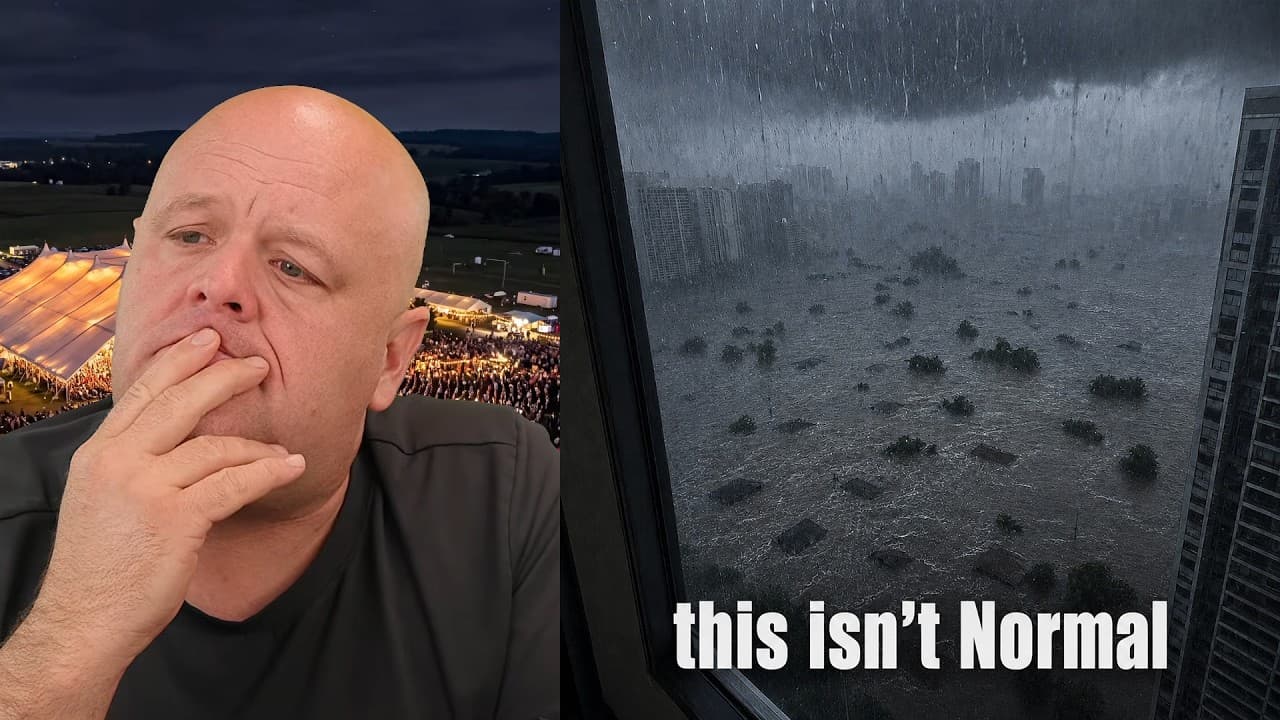
Respond to fear by praying, trusting Jesus, and speaking with confidence over personal and community concerns. The speaker urges believers to pray for their towns, schools, churches, families, homes, and vehicles, while grounding their confidence in Scripture, the blood of Jesus, communion, anointing oil, and the Holy Spirit rather than alarming media or online speculation.
Transcript
He wants out our dog. is good. And to all you that are joining us now, thank you for being here tonight. Let's pray tonight. We really are just going to uh show you a couple little things and we're going to pray. I'm late tonight. Um and so we're going to just jump right in the river and pray tonight. I'm going to do things a little different and u... Read More
Key Insights
- The speaker believes some catastrophic weather events may be manipulated by governments or human-made devices, but he admits that he does not know the mechanism and cautions against adding claims gathered from conspiracy content or social media.
- Fear is presented as the enemy's intended response to catastrophic events and alarming media. The speaker urges believers to interpret warnings as reasons for prayer, not panic, and to ground their response in their relationship with Jesus.
- Christian authority is described as flowing from Jesus' death and resurrection, the indwelling Holy Spirit, and believers' identity with Christ. The speaker uses Jesus calming the waves as a model for confronting natural, spiritual, and personal storms through faith.
- Local prayer is described as an assigned responsibility for every believer. Whether someone lives in a small town or a large city, the speaker says that person should pray over nearby schools, churches, residents, and the wider area.
- Anointing oil is presented as a symbolic representation of the blood of Jesus. The speaker recommends using it while praying over children, spouses, oneself, homes, and vehicles as an expression of faith in divine covering and authority.
- Communion is described as a regular act of relationship rather than merely a religious ritual. The speaker says he takes communion every day to remember Jesus, honor His sacrifice, and reinforce his confidence in the authority associated with Christ's blood.
- Persistent prayer is presented as necessary even when earlier prayers appear unanswered. The speaker urges believers to continue praying for healing, casting out evil, and standing on Scripture so that biblical teaching becomes deeply rooted in their hearts.
- Speech is described as spiritually consequential because life and death are said to be in the tongue's power. The speaker urges believers to prioritize what God has said, reject hostile words from others, and speak in agreement with their faith.
Install to Summarize YouTube Videos and Get Transcripts
Explore YouTube Video Summarizer or Get YouTube Transcript Extractor
Questions & Answers
Q: How should Christians pray when frightening events occur?
Christians should respond by praying from a position of faith rather than allowing fear to control them, according to the speaker. He recommends remembering that Christ and the Holy Spirit dwell within believers, resisting the devil, standing on Scripture, and speaking peace over both external dangers and personal spiritual storms. He also urges prayer for affected communities and protection from catastrophic events.
Q: What does the speaker claim about weather manipulation?
The speaker says he believes some floods, fires, earthquakes, or other catastrophic events may involve governments, weapons, devices, or other human-made intervention. However, he repeatedly acknowledges that he does not know exactly how such manipulation would work. He also says he does not want to become a conspiracy theorist or add claims gathered through social media and online speculation.
Q: How can believers overcome fear according to the message?
Believers can overcome fear by focusing on Christ within them, the Holy Spirit, Scripture, and the authority they believe Jesus provided through His death and resurrection. The speaker says warnings about troubling events should lead to prayer rather than panic. He encourages believers to stand their ground, resist the devil, reject fear-driven interpretations, and maintain confidence in God's protection and promised abundant life.
Q: What areas should Christians pray over in their communities?
Christians should pray over the places where they have been positioned, including their towns, cities, schools, churches, and local residents. The speaker compares this responsibility to being stationed in the army. He argues that a believer's location, whether a small town or a large city, gives that person a particular area of responsibility in which to intercede and exercise spiritual authority.
Q: Why does the speaker recommend using anointing oil?
The speaker treats anointing oil as a representation of the blood of Jesus and recommends applying it while praying for protection. He specifically mentions anointing children, a spouse, oneself, a house, and a car. In his teaching, the physical oil expresses faith in what Jesus accomplished and accompanies prayers that place people and possessions under the covering associated with Christ's blood.
Q: Why does the speaker take communion every day?
The speaker says daily communion helps him approach Jesus through relationship rather than empty religious practice. He regards communion as holy and honorable, but also as a personal act of love, friendship, remembrance, and confidence. By regularly remembering Jesus and the blood shed at Calvary, he says he reinforces his understanding of the power and authority available to believers through Christ.
Q: What should someone do when a prayer for healing seems unanswered?
The speaker urges the person to keep praying, believing, standing on Scripture, and placing biblical teaching deeply within the heart. He acknowledges that someone may pray for a sick person who later dies, but he does not treat that outcome as a reason to abandon faith. He also says conflicting desires matter, giving the example of a sick person who says that they are ready to go home.
Q: What does the speaker teach about the power of words?
The speaker teaches that life and death are in the power of the tongue and that people will have what they say. He therefore urges believers to speak in agreement with Scripture rather than accept curses, criticism, fear, or hostile statements from other people. His emphasis is on knowing what God has said, declaring that belief, and refusing to let opposing voices determine one's spiritual confidence.
Summary & Key Takeaways
-
The speaker invites viewers to pray and shares concerns that catastrophic weather, fires, floods, or earthquakes may involve human manipulation. He repeatedly acknowledges uncertainty about the mechanisms and says he does not want to add internet conspiracy theories to what he believes he has perceived during prayer.
-
The central message is that believers should answer threatening events with faith rather than fear. The speaker says Jesus gives Christians authority over spiritual and personal storms through the Holy Spirit, urging them to resist the devil, stand on Scripture, and remain conscious of Christ living within them.
-
Prayer is presented as a local responsibility as well as a personal practice. Believers are encouraged to intercede for their towns, schools, churches, families, homes, and vehicles. The speaker also advocates anointing with oil, remembering the blood of Jesus, taking communion regularly, and persistently praying for healing.
Read in Other Languages (beta)
Share This Summary 📚
Summarize YouTube Videos and Get Video Transcripts with 1-Click
Try YouTube Summary with ChatGPT & Claude or YouTube Transcript Generator
Explore More Summaries from Last Days 📚

Summarize YouTube Videos and Get Video Transcripts with 1-Click
Try YouTube Summary with ChatGPT & Claude or YouTube Transcript Generator