NEW Gravitational Wave Discovery!
TL;DR
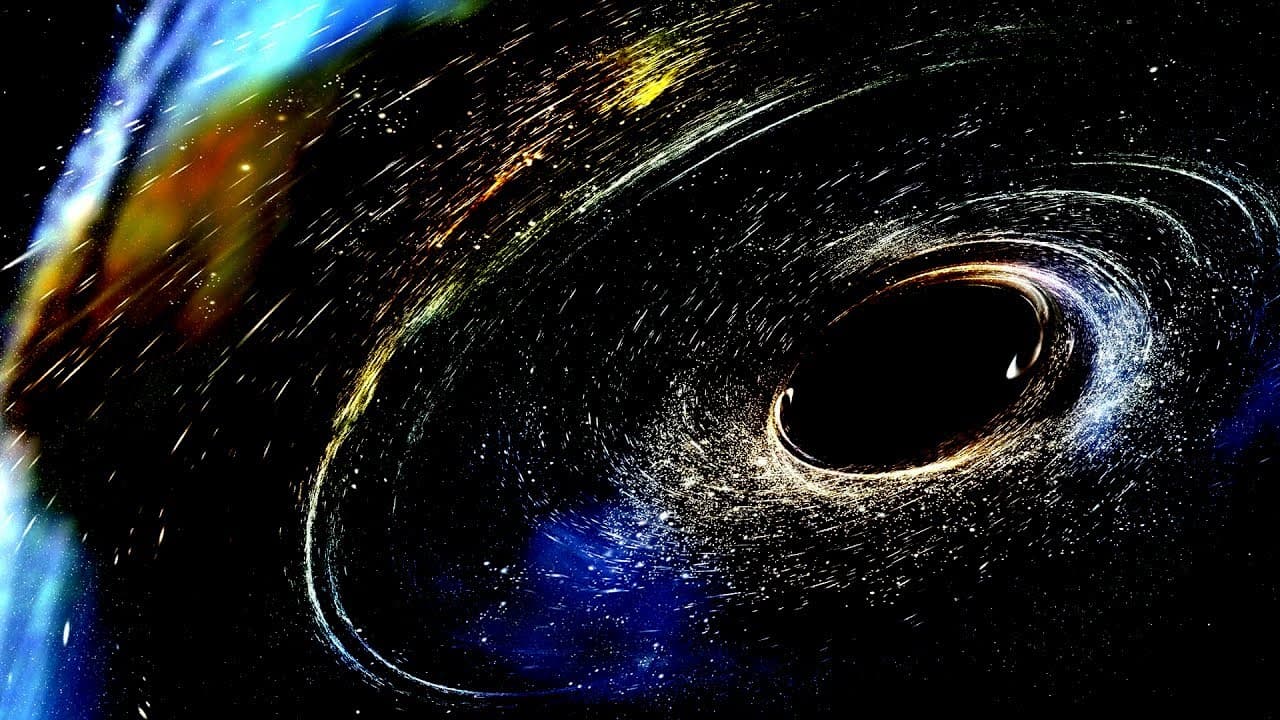
The new gravitational-wave discovery is a black hole merger detected on January 4 from about three billion light-years away. The two black holes had masses of roughly 30 and 20 solar masses, and their differing spin orientations suggest they formed separately before becoming entwined. The signal strengthens expectations that many more mergers will be found and may eventually illuminate dark matter. Read on for the evidence and implications.
Transcript
I've come to Caltech because there is a brand new gravitational wave discovery. Let's go find out what it is. Can we talk about the discovery, Rana? -Yeah. Can I-- I want to sit on one of my black holes. -Alright. If you notice, this one's a big one and that one's a little one. -This one is a little one. -Yeah. I-I always feel like I'm the most exc... Read More
Key Insights
- 🖤 The new gravitational wave discovery provides further evidence for the existence and frequency of black hole mergers.
- 🖤 The detection of separate orientations and entwining indicates diverse formation processes for black holes involved in the merger.
- 🥺 The discovery offers insights into the potential connection between black holes and dark matter, leading to a better understanding of cosmological mysteries.
- 🥺 Further improvements in detector sensitivity could lead to more frequent detections of gravitational waves.
- 🖤 The unexpected source of binary black hole mergers challenges previous assumptions and highlights the need to explore alternative explanations.
- 🙂 The study of gravitational waves has the potential to shed light on the nature and origins of black holes.
- 👨🔬 The research conducted at Caltech contributes to expanding our knowledge of the cosmos and the workings of the universe.
Install to Summarize YouTube Videos and Get Transcripts
Explore YouTube Video Summarizer or Get YouTube Transcript Extractor
Questions & Answers
Q: What was the new gravitational-wave discovery?
A signal detected on January 4 indicated the merger of two black holes with masses of about 30 and 20 solar masses. It resembled the first signal found in September 2015 but lasted longer and came from farther away.
Q: How far away was the detected black hole merger?
The merger was about three billion light-years away, making it the farthest black hole merger the researchers had detected. That means the merger occurred three billion years ago and its signal traveled for three billion years before reaching the detectors.
Q: Why did the new gravitational-wave signal last longer than the first one?
The signal lasted longer partly because the detectors had improved performance at the lowest frequencies. The black holes were also smaller, which produced a longer signal; the first detected signal had been audible for only about a tenth of a second.
Q: What do the black holes’ spin orientations suggest about their formation?
There were hints that the two black holes were not spinning in the same orientation as each other or as their orbit. This suggests they formed separately rather than from binary stars and later became entwined through orbital dynamics.
Q: Why was detecting another black hole merger important?
Another signal supported the expectation that researchers will see many such events. It also provided reassurance that the universe is not populated only by tiny black holes, or by no black holes.
Q: How could improved detector sensitivity change gravitational-wave detection rates?
The researcher estimated that improving detector sensitivity by a factor of two or three could greatly increase detection rates. Instead of seeing one event every month or two, researchers might detect one every day or every week.
Q: Could these black holes be connected to dark matter?
An exotic working theory proposes that some detected black holes may be primordial, formed during the Big Bang rather than through conventional supernova explosions. If researchers gather statistics from many mergers, they may find a hint that such black holes are a component of dark matter.
Q: Why would a lack of binary neutron-star signals be interesting?
Researchers expected to detect many binary neutron stars because radio astronomy shows that neutron stars exist and form binaries. If their gravitational waves remain undetected, something unexpected may happen shortly before the final merger or divert their evolution from the anticipated path.
Summary & Key Takeaways
-
On January 4th, a signal indicating a black hole merger was detected, similar to a previous signal found in 2015.
-
The new signal suggests that the black holes involved in the merger were not spinning with the same orientation, indicating separate formation and later entwining through orbital dynamics.
-
This discovery provides relief, as it confirms that the universe is not only populated by tiny black holes or no black holes, and suggests a potential link to dark matter.
Read in Other Languages (beta)
Share This Summary 📚
Summarize YouTube Videos and Get Video Transcripts with 1-Click
Try YouTube Summary with ChatGPT & Claude or YouTube Transcript Generator
Explore More Summaries from Veritasium 📚



Summarize YouTube Videos and Get Video Transcripts with 1-Click
Try YouTube Summary with ChatGPT & Claude or YouTube Transcript Generator