Why Did OpenAI Fire Sam Altman and Appoint Mira Morati as Interim CEO?
TL;DR
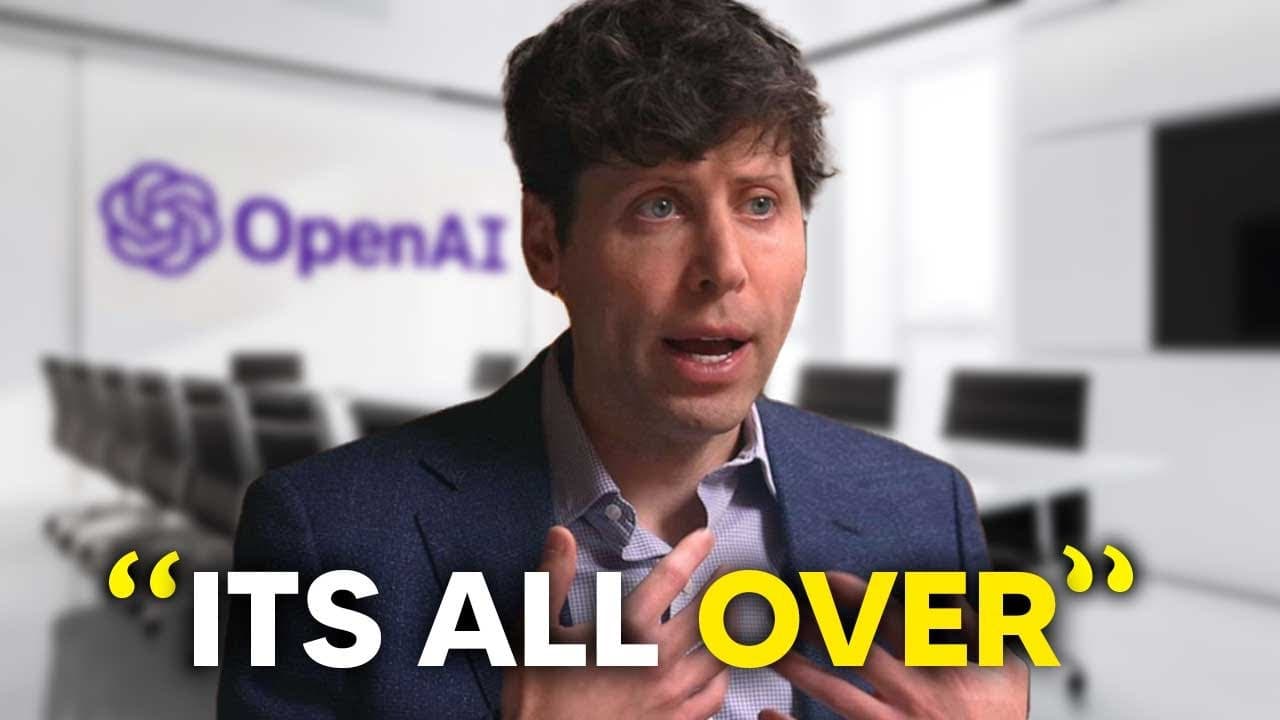
OpenAI fired Sam Altman because its board concluded that he had not been consistently candid in his communications, hindering the board’s responsibilities and eroding its confidence in his leadership. Announced on November 17, 2023, the change took effect immediately, with Mira Morati becoming interim CEO while OpenAI searched for a permanent successor. Read on for the stated reason, unresolved questions, and expected impact on OpenAI.
Transcript
so we have a very interesting announcement open aai announces a leadership transition or AKA Sam ultman was just fired from open AI this is largely one of the most unexpected developments that we've heard over the last couple of months especially with the AI space moving quickly and dynamically this was something that we did not expect whatsoever t... Read More
Key Insights
- The timing amplified the shock: Altman’s dismissal came only around two weeks after OpenAI’s Dev Day, where he appeared onstage with Satya Nadella. Their interaction seemed positive and forward-looking, particularly regarding OpenAI’s movement toward AGI. That recent public appearance gave observers little reason to expect an immediate leadership rupture.
- Immediate effect signaled urgency: OpenAI said the leadership change was effective immediately. The narrator viewed that language as evidence of a rapid decision rather than a transition prepared publicly over several months. Although the board described its review as deliberative, the immediate removal and temporary appointment created the impression of an abrupt operational change.
- Candor was the central issue: The board’s only stated criticism was that Altman had not been consistently candid in his communications with it. According to OpenAI’s announcement, this hindered the board’s ability to exercise its responsibilities. The board connected that communication problem directly to its loss of confidence in Altman’s continued leadership.
- The precise cause stayed unknown: The account does not identify a specific undisclosed statement, incident, or disagreement that caused the dismissal. It suggests that an internal conflict or another event may have forced the board to act, but clearly labels that as uncertainty. The narrator explicitly cautions against turning the vague announcement into rumors or fake news.
- Interim means temporary leadership: Mira Morati became CEO for the transition period, but OpenAI simultaneously began searching for a permanent successor. Those two details distinguish immediate operational continuity from the unresolved long-term appointment. Morati was positioned to lead the company at once while the board considered who should replace Altman permanently.
- Morati brought broad oversight: OpenAI identified Morati as the leader of its research, product, and safety functions. That combination gave her direct experience across several core parts of the organization before she became interim CEO. The board cited this background when expressing confidence that she was exceptionally qualified to lead during the transition.
- The mission formally remained intact: OpenAI said it had been deliberately structured to ensure that artificial general intelligence benefits all humanity. The board stated that it remained fully committed to serving that mission after removing Altman. Based on that statement, the narrator saw no clear indication that OpenAI intended to abandon its movement toward AGI.
- Leadership changed, direction did not: The narrator separated uncertainty about Altman’s influence from the company’s declared strategy. It was unclear how instrumental he had been in individual product and organizational decisions. Even so, OpenAI’s public statement suggested continued pursuit of its existing AGI goal rather than an immediate redirection of its products or research.
- Altman shaped OpenAI’s origins: Altman co-founded OpenAI in 2015 with other prominent figures, including Elon Musk. The organization was initially envisioned as a research body focused on ensuring that AGI would be developed safely and distributed globally. The narrator raises, but does not answer, whether a change involving that original vision contributed to his dismissal.
- The capped-profit shift mattered: Altman played a crucial role in transitioning OpenAI from a nonprofit into a capped-profit model. The account says this structure enabled OpenAI to scale its research while adhering to its core ethical principles. This organizational contribution is part of the reason the narrator regards Altman’s record as unusually substantial and difficult to replace.
- His influence extended beyond OpenAI: Before discussing succession difficulty, the narrator emphasizes Altman’s standing across the technology industry. He is described as an influential thinker and leader with insight into technology’s future. His work mentoring entrepreneurs at Y Combinator also helped nurture several successful startups that affected the broader technology landscape.
- Governance overrode founder status: OpenAI acknowledged Altman’s contributions to both its founding and growth, yet the board still concluded that new leadership was necessary. This contrast shows how the announcement framed appreciation and removal at the same time. His achievements did not overcome the board’s stated concern about communication or restore its confidence in his leadership.
Install to Summarize YouTube Videos and Get Transcripts
Explore YouTube Video Summarizer or Get YouTube Transcript Extractor
Questions & Answers
Q: Why did OpenAI fire Sam Altman?
OpenAI’s board said Altman had not been consistently candid in his communications with it. The board said this problem hindered its ability to exercise its responsibilities. Following a deliberative review, it concluded that it no longer had confidence in his ability to continue leading OpenAI. The exact incident or internal issue behind that conclusion was not disclosed, so the account warns against presenting speculation as fact.
Q: When was Sam Altman removed from OpenAI?
OpenAI announced the leadership transition on November 17, 2023. The announcement said that the change was effective immediately. The narrator interpreted this immediate effect as showing how abrupt the transition was, even though the board described its review process as deliberative. The timing was particularly unexpected because Altman had appeared at OpenAI’s Dev Day only around two weeks earlier.
Q: Who replaced Sam Altman as OpenAI CEO?
OpenAI appointed chief technology officer Mira Morati as interim CEO. She had led the company’s research, product, and safety functions, which the board cited as relevant preparation for the role. OpenAI expressed confidence that she was exceptionally qualified to guide the company through the transition. Her appointment was temporary because a search for a permanent successor was already underway.
Q: Was Mira Morati appointed permanent CEO of OpenAI?
No, the announcement identified Mira Morati specifically as interim CEO. OpenAI also said that it had started a search process to identify a permanent successor to Sam Altman. Morati’s immediate role was therefore to provide leadership during the transition. The simultaneous search made clear that the final, long-term choice had not yet been announced in the material presented.
Q: Did Sam Altman’s firing change OpenAI’s AGI mission?
The account found no clear sign that OpenAI was changing its stated direction. The board said it remained fully committed to the mission of ensuring that artificial general intelligence benefits all humanity. The narrator therefore expected the company to continue moving toward its AGI goal. However, the precise impact of Altman’s absence on future decisions and products was still uncertain.
Q: Why was replacing Sam Altman considered difficult?
The narrator describes Altman as an influential thinker and technology leader with an extensive record. He mentored entrepreneurs at Y Combinator, co-founded OpenAI in 2015, and advocated for responsible AI development that benefits humanity. He also played a crucial role in OpenAI’s transition from a nonprofit to a capped-profit model. Those contributions gave him a distinctive position within both OpenAI and the wider technology industry, making a direct replacement difficult.
Q: What role did Sam Altman play in founding and developing OpenAI?
Altman co-founded OpenAI in 2015 alongside other prominent figures, including Elon Musk. The initial vision was a research organization dedicated to ensuring that AGI would be developed safely and distributed globally. He later helped transition OpenAI from a nonprofit to a capped-profit model so it could scale its research while maintaining its core ethical principles. OpenAI’s board also thanked him for his contributions to the company’s founding and growth.
Q: What remained unknown after OpenAI’s announcement?
The exact reason behind the board’s loss of confidence remained unknown beyond its statement about inconsistent candor. The announcement did not identify a particular communication, disagreement, or internal event that triggered Altman’s dismissal. It also did not name the person who would become permanent CEO, because the search had only been announced. Finally, the extent to which Altman’s departure would affect OpenAI’s future products and decisions was still unclear.
Summary & Key Takeaways
-
A startling leadership announcement: OpenAI announced that Sam Altman was leaving the company and described the change as a leadership transition. The narrator considered it one of the most unexpected recent developments in the rapidly changing AI industry. Only around two weeks earlier, Altman had appeared at OpenAI’s Dev Day with Satya Nadella. They seemed to have a strong relationship and appeared focused on moving OpenAI toward artificial general intelligence, making the subsequent dismissal especially surprising.
-
The immediate succession plan: The November 17, 2023 announcement named chief technology officer Mira Morati as OpenAI’s interim CEO. OpenAI also said that a search was underway for a permanent successor, indicating that Morati’s appointment was intended to guide the company through the transition rather than settle the long-term leadership question. The change was effective immediately. The narrator interpreted that timing as evidence that the decision happened quickly rather than emerging through a publicly visible, months-long transition process.
-
The board’s stated reason: OpenAI said Altman’s departure followed a deliberative review by the board. That review concluded that he had not been consistently candid in his communications with the board, which hindered its ability to exercise its responsibilities. The board therefore no longer had confidence in his ability to continue leading OpenAI. The narrator stressed that this explanation remained deliberately vague and warned against spreading rumors because the exact underlying event or internal conflict was not publicly known.
-
Altman’s difficult-to-replace role: The account presents Altman as an influential technology leader with an unusually substantial record. He mentored emerging entrepreneurs at Y Combinator, co-founded OpenAI in 2015 with figures including Elon Musk, and advocated for responsible AI that benefits humanity. He also helped move OpenAI from a nonprofit structure to a capped-profit model, allowing the organization to scale its research while retaining its stated ethical principles. These contributions made replacing him a difficult leadership challenge.
-
OpenAI’s mission after Altman: The leadership change did not appear to signal a new organizational direction. OpenAI reiterated that it was structured to ensure artificial general intelligence benefits all humanity, and the board said it remained fully committed to that mission. The company credited Altman’s contributions to OpenAI’s founding and growth while arguing that new leadership was necessary. It described Morati, who led research, product, and safety functions, as exceptionally qualified to guide OpenAI during the transition.
Read in Other Languages (beta)
Share This Summary 📚
Summarize YouTube Videos and Get Video Transcripts with 1-Click
Try YouTube Summary with ChatGPT & Claude or YouTube Transcript Generator
Explore More Summaries from TheAIGRID 📚
![What’s New in AI? Snapchat AI, Elon Musk’s Truth GPT, GPT-4, AutoGPT, and Facebook’s Segment Anything [Weekly Dose of AI #1] thumbnail](/_next/image?url=https%3A%2F%2Fi.ytimg.com%2Fvi%2F0vuDxEh79Uc%2Fhqdefault.jpg&w=750&q=75)
Summarize YouTube Videos and Get Video Transcripts with 1-Click
Try YouTube Summary with ChatGPT & Claude or YouTube Transcript Generator