Robert Greene’s 5 Rules for Becoming the Best at What You Do
TL;DR
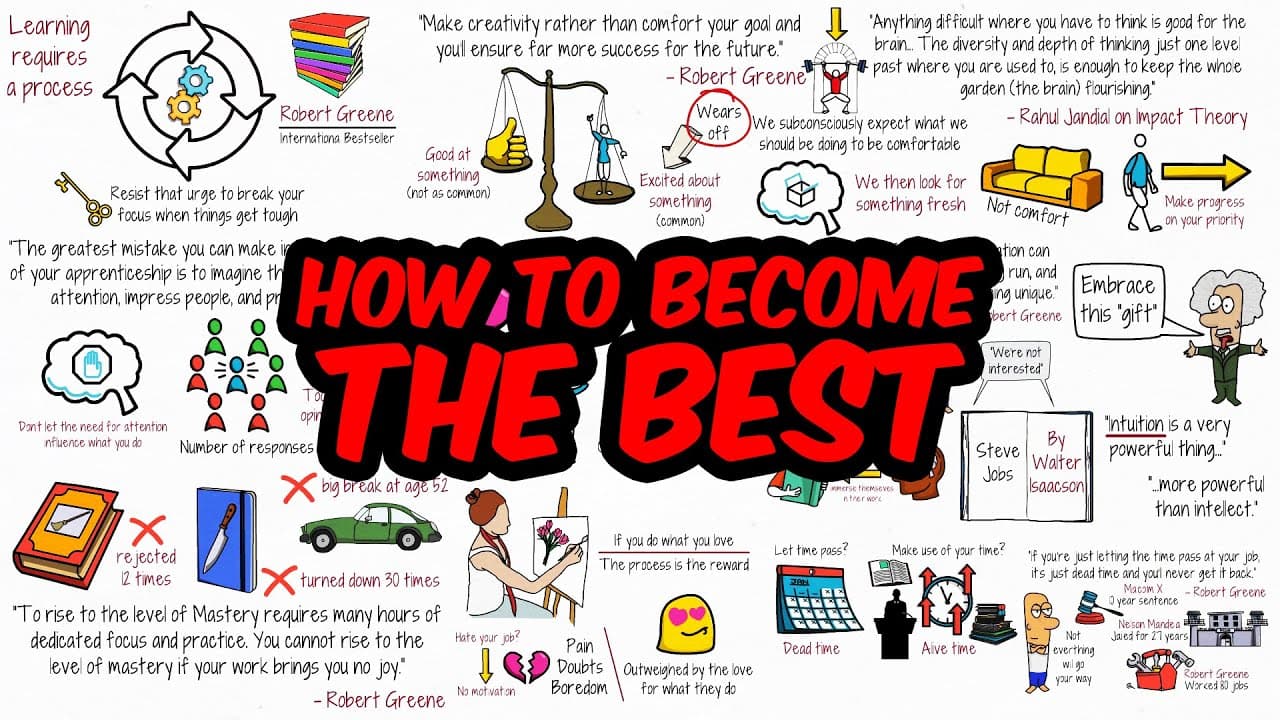
Robert Greene’s path to becoming the best is to choose creativity over comfort, accumulate knowledge before seeking attention, trust your inclinations, and pursue work whose process brings joy. Mastery requires patience, dedicated focus, practice, and a willingness to continue through boredom and discomfort; J.K. Rowling’s Harry Potter was rejected 12 times. Read on for practical ways to apply these principles.
Transcript
Learning requires a process. It demands patience. Love and dedication. An ability to endure drudge work that may feel unpleasant and boring sometimes. The key is to resist that urge to break our focus when things get tough. To keep our head down and do the work because we love the process. Robert Greene has written six international best... Read More
Key Insights
- ❓ Enduring discomfort and drudgery is essential for mastering creativity.
- ❓ Progress should be valued over seeking comfort to achieve creative excellence.
- 💦 Prioritizing creativity, knowledge, intuition, and joyful work enhances creative abilities.
- 🤳 Embracing intuition and personal touches fosters self-trust and unique perspectives.
- ❓ Valuing knowledge over seeking attention sharpens focus and improves creative outcomes.
- ❓ The process of mastering creativity requires perseverance and resilience.
- 🪤 Creativity is strengthened by embracing challenges and avoiding the comfort-seeking trap.
Install to Summarize YouTube Videos and Get Transcripts
Explore YouTube Video Summarizer or Get YouTube Transcript Extractor
Questions & Answers
Q: What are Robert Greene’s rules for becoming the best at what you do?
Choose creativity over comfort, focus on knowledge instead of early attention, follow your inclinations, develop intuition through immersed work, and pursue work that brings joy. These principles support the patience, dedicated focus, and practice required for mastery.
Q: Why should creativity be the goal rather than comfort?
Initial excitement eventually fades, leaving boring tasks, difficult challenges, and discomfort. Greene says exceptional people keep working at that point, treating discomfort as a sign that they are becoming stronger.
Q: How can you keep going when learning becomes boring or difficult?
Resist the urge to break your focus and actively make progress on your priority instead of seeking comfort. Love for the process helps you endure unpleasant drudge work and continue when harder tasks appear complicated.
Q: Why should apprentices focus on knowledge instead of attention?
Seeking attention too early can create frustration, weaken passion, and make unfavorable opinions feel like judgments of your ability. Accumulating knowledge builds competence and prepares you to handle attention if it eventually comes.
Q: What does Robert Greene say about following your inclinations?
Alienating yourself from your inclination can lead to long-term disappointment and the feeling that you wasted something unique. Following it may feel risky because an idea might be unpopular, misunderstood, or dismissed as stupid.
Q: How can you develop and use intuition?
Listen to your intuition, add your personal touch to your work, and treat the process as practice in trusting yourself. Intuition is not passive inspiration; it develops when you immerse yourself in the work and exercise your intelligence.
Q: Why does joy matter for achieving mastery?
Greene says mastery requires many hours of dedicated focus and practice, which is difficult to sustain when the work brings no joy. Enjoying the process helps people continue through pain, doubt, boredom, rejection, and other downtimes.
Q: What examples show the persistence required to master a craft?
J.K. Rowling’s Harry Potter was rejected 12 times, while Stephen King’s Carrie was turned down 30 times. Morgan Freeman received his big acting break through Driving Miss Daisy at age 52, illustrating how long the path can take.
Summary & Key Takeaways
-
Robert Greene stresses the importance of embracing discomfort and drudgery in the process of mastering creativity.
-
He highlights the significance of valuing progress over comfort and not seeking immediate validation.
-
Greene advocates for prioritizing creativity, knowledge, intuition, and joyful work over security and conventional norms.
Read in Other Languages (beta)
Share This Summary 📚
Summarize YouTube Videos and Get Video Transcripts with 1-Click
Try YouTube Summary with ChatGPT & Claude or YouTube Transcript Generator
Explore More Summaries from The Art of Improvement 📚


Summarize YouTube Videos and Get Video Transcripts with 1-Click
Try YouTube Summary with ChatGPT & Claude or YouTube Transcript Generator