Getting to Know Cities with Citymapper's Azmat Yusuf at Disrupt London 2016

TL;DR
Citymapper began as Bus Mapper, a focused app solving how to navigate London's buses, before expanding into a comprehensive multimodal transit tool. Founder Azmat Yusuf built it after struggling to get home by bus at 3am, and grew it by relying on open government data plus proprietary tools his team built to fix and even create transit data from scratch.
Transcript
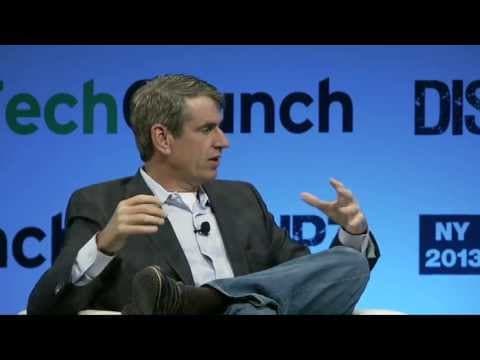
ladies and Gentlemen please welcome back your disrupt MC and special projects editor Tech crunch Jordan crook yeah we're feeling it now right we're getting close to the end everybody's amped we're going to find out who won the battlefield finals but not yet right now we are going to speak with City mappers Asmat Yousef and moderator Mike Butcher pl... Read More
Key Insights
- Citymapper started as Bus Mapper, a deliberately narrow app that only answered what a bus does and where it goes, because starting with no resources meant solving a smaller, focused problem before tackling a bigger one.
- The founder's personal frustration drove the product: he wanted to figure out how to take buses home around 3am in London, initially assuming he was the only person confused about how the transport network worked.
- Open data was the enabling force behind Citymapper, and the founder credits roughly a decade of pressure on governments to open transport data as the benefit the company was built upon.
- Real-time transport data transformed bus usage, making buses far easier to use compared to the earlier era when riders would simply board and ask the driver where the bus went.
- Citymapper redesigned how tube routing works and is now doing multimodal routing that combines options like taxis with trains, making previously disconnected parts of a city accessible to people without car ownership.
- A lot of open transit data is a mess, and since bad data does not work for commuters who know their cities well, Citymapper built engineering tools to fix data and abstract that work so anyone could do it.
- Citymapper's tools became powerful enough that the company can now create transit data from scratch when entering a city, going beyond just designing experiences on top of existing open data.
- Investors in Europe backed the app partly because some of them personally used public transport and the app, making it easy to show it was a home-screen app people used all the time.
Install to Summarize YouTube Videos and Get Transcripts
Explore YouTube Video Summarizer or Get YouTube Transcript Extractor
Questions & Answers
Q: What was Citymapper's first app before it became Citymapper?
Citymapper began as Bus Mapper, a much more focused app. Azmat Yusuf explains he built the buses-only version first because when you start with no resources you want a focused app that solves a smaller problem. Bus Mapper simply answered what a bus does and where it goes, since back then people would board a bus and ask the driver where it went. Once there was an opportunity to fundraise, he expanded it into the comprehensive Citymapper.
Q: Why did Azmat Yusuf create Citymapper?
The idea came from personal frustration navigating London. Yusuf wanted to be a mobile entrepreneur and moved to East London, living a low-cost life while wandering the city. His specific problem was figuring out how to get back home by bus at around 3am after being out at clubs, bars, and shawarma shops. He initially thought he was the only person confused about the buses, but Bus Mapper revealed that many people wanted help understanding the transport network.
Q: How does Citymapper handle bad or missing transit data in new cities?
A lot of open data from cities and agencies is a mess, and bad data does not work for commuters who know their cities very well. So Citymapper shifted from being purely a design company that took open data and made good experiences to building engineering tools that fix data. The team then abstracted those tools so anybody could use them, and eventually the tools became capable enough that Citymapper can create transit data from scratch when entering a city if needed.
Q: How did open data enable Citymapper's growth?
Open data was the foundational enabler. Yusuf credits roughly a decade of pressure on governments to open up their data, a concept he says is now almost universally understood. Once governments opened transport data, Citymapper could focus on designing the routing experiences rather than gathering raw information. Mike Butcher notes that when he was on the mayor's digital advisory board, they advised London transport to release the data rather than buy a system from IBM, which helped make that data available.
Q: What is multimodal routing in Citymapper?
Multimodal routing combines different transport options into single journey suggestions. Yusuf explains Citymapper is now combining modes like cars and taxis with trains. The significance is that parts of a city that seemed disconnected for someone without car ownership suddenly become accessible when these options are combined. This reflects Citymapper's broader idea that generating multimodal options can change the way people move around and experience mobility in a city.
Q: How many cities does Citymapper operate in?
During the conversation Yusuf estimates Citymapper covers around 35 to 40 cities, correcting Mike Butcher's suggestion of about 29. He mentions the company had recently added Moscow, roughly three weeks before the talk, and describes it as fairly hard to do. He notes many cities are unique and different in their own way, though there is an element of scale where the company can copy and paste its approach across locations.
Q: Why did investors decide to back Citymapper?
Yusuf says he never thought European investors would be interested, but the app's usage made the story easy to tell. Some investors actually used public transport and the app themselves, so it was easy to show that Citymapper was a home-screen app people used all the time, which is something investors care about. He also credits the fact that investors were attracted by the ambition to cover not just London but cities all around the world.
Q: How do government agencies view working with Citymapper?
Yusuf says most agencies have been great to work with. While open data was still a debate three or four years earlier, agencies now understand that Citymapper helps enable their services. Because apps are complicated and require constant updates across multiple platforms and variables, agencies realize that building their own apps is not their job. Instead, they see themselves as infrastructure companies that should simply provide data, and Citymapper no longer even has to make the argument that this economically enriches the city.
Summary:
In this video, Mike Butcher interviews As Matt Youssef, the founder of Citymapper. They discuss how As Matt came up with the idea for Citymapper, his experiences at Google, the challenges of working with open data, and the potential monetization strategies for the app. As Matt also shares his vision for the future of cities and how Citymapper can help improve mobility and infrastructure.
Questions & Answers:
Q: How did As Matt come up with the idea for Citymapper?
As Matt explains that he was personally frustrated with getting around London and wanted to create a useful mobile app. He initially started with a bus app called Busmapper before expanding it to become Citymapper.
Q: What was the inspiration behind creating a comprehensive transportation app?
As Matt wanted to solve the problem of navigating a complex and spread-out city like London. He believed that by integrating different modes of transportation, such as buses and trains, into one app, he could change the way people move around the city.
Q: How did Citymapper deal with the lack of real-time data for buses?
Initially, Citymapper focused on providing information about bus routes and schedules. As real-time data became available, the app was able to integrate this feature, making it even more useful for commuters.
Q: How did Citymapper's relationship with London Transport and the mayor's digital advisory board help in its development?
As Matt explains that the board received pitches from companies like IBM to build the transport system, but they advocated for releasing the data instead. This decision allowed Citymapper to access and utilize the open data to improve their app.
Q: Were there other apps similar to Citymapper at the time?
As Matt mentions that there were other bus and tube apps available, but Citymapper set itself apart by focusing on creating a comprehensive app that considered multimodal options and incorporated real-time data.
Q: What motivated investors to fund Citymapper?
As Matt shares that investors were attracted to the fact that the app had a significant user base and was constantly being used by commuters. This demonstrated the app's value and potential for growth.
Q: How does Citymapper plan to monetize the app?
As Matt states that there are multiple ways to monetize the app, including taking a cut of transactions made through the app, partnering with businesses for targeted offers, and potentially selling data or tools to cities and government agencies for urban planning.
Q: How has Citymapper been able to expand to different cities worldwide?
As Matt explains that Citymapper has developed tools to create and fix data in cities, which allows them to expand to different locations. They can utilize open data and their own tools to provide accurate and useful information for commuters.
Q: What challenges does Citymapper face when it comes to working with government agencies and open data?
As Matt mentions that in the past, open data was a debated topic. However, now many cities and agencies understand the value of partnering with app developers like Citymapper to improve their services. Citymapper also helps cities with fixing and updating their data, which can be a complex and ongoing process.
Q: How does Citymapper plan to help cities plan and improve their infrastructure?
As Matt believes that Citymapper's data and tools can be used to help cities better utilize their infrastructure and plan for the future. They want to empower cities to make informed decisions about urban planning and transportation by providing valuable insights and data.
Takeaways:
Citymapper is a comprehensive transportation app that aims to improve mobility and infrastructure in cities. By integrating different modes of transportation and leveraging open data, Citymapper provides users with real-time information and routes. The app has a significant user base and investors are interested in its potential for growth and monetization. Citymapper's vision is not only to provide a useful app but also to help cities plan and improve their infrastructure for a better future.
Summary & Key Takeaways
-
Azmat Yusuf decided he wanted to be a mobile entrepreneur and moved to East London around the time the iPhone launched and open data was emerging. His personal problem was figuring out how to get home by bus at 3am, which inspired Bus Mapper, an app focused solely on what buses do and where they go.
-
Bus Mapper revealed that many people, not just the founder, needed help understanding transport. When real-time data arrived, bus usage became dramatically easier. Recognizing the opportunity to fundraise, the team expanded to the comprehensive Citymapper, redesigning routing and pursuing multimodal options that combine taxis with trains to connect previously inaccessible parts of cities.
-
Citymapper now operates in roughly 35 to 40 cities, recently adding Moscow. Because much open data is messy and commuters demand accuracy, the company built tools to fix and even create transit data from scratch. Agencies increasingly accept that they are infrastructure providers who should supply data while Citymapper builds and maintains the apps.
Read in Other Languages (beta)
Share This Summary 📚
Summarize YouTube Videos and Get Video Transcripts with 1-Click
Try YouTube Summary with ChatGPT & Claude or YouTube Transcript Generator
Explore More Summaries from TechCrunch 📚





Summarize YouTube Videos and Get Video Transcripts with 1-Click
Try YouTube Summary with ChatGPT & Claude or YouTube Transcript Generator