How to run Claude Dispatch on mobile for autonomous tasks
TL;DR
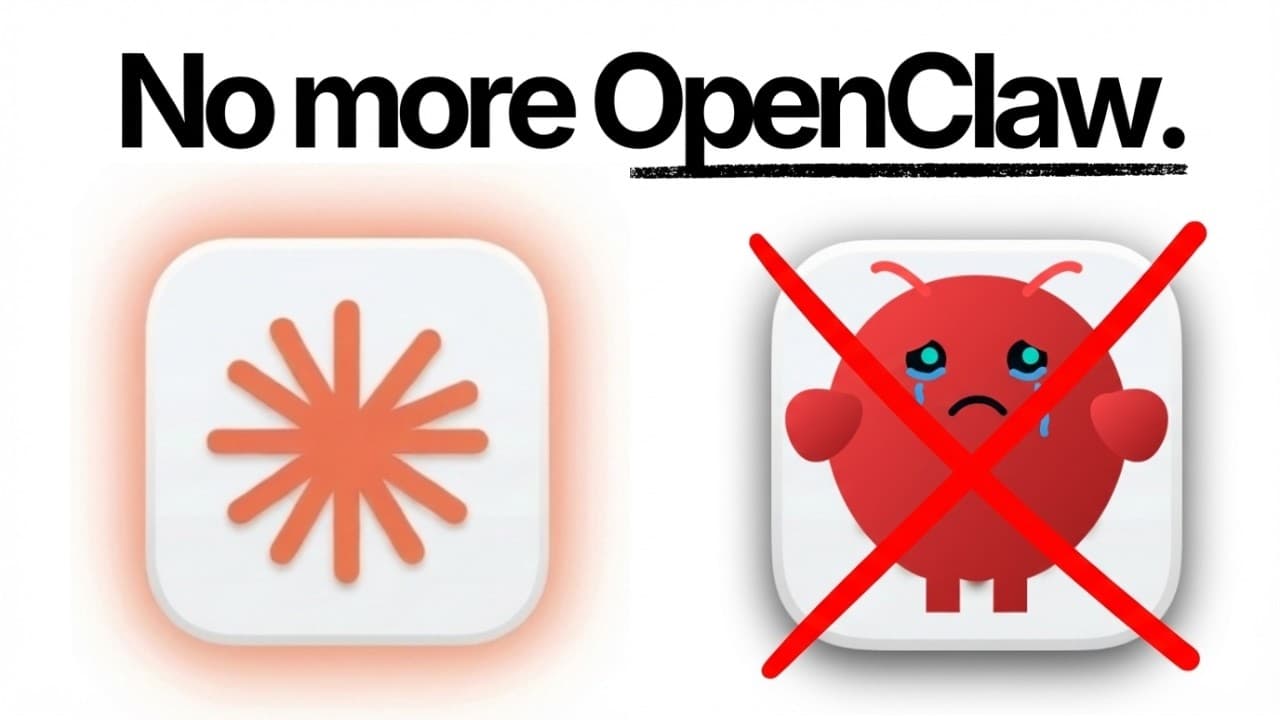
Claude Dispatch lets you run and manage AI agents from your phone via Claude Co-work, delivering hands off automation and secure local execution. It improves on OpenClaw by sandboxing and security, while letting you run multiple skills in parallel and access data like leads, inbox cleaning, and thumbnail generation directly from your device.
Transcript
Enthropic just shipped a feature called claw dispatch which lets you essentially run and manage an AI agent through your phone. In this video, I'm going to show you guys how you can use it, why it's significantly better, and probably more preferable from a security perspective than a lot of the pre-existing solutions like OpenClaw at all, and then ... Read More
Key Insights
- Claude Dispatch enables running AI agent tasks from a mobile device using Claude Co-work.
- Security is emphasized as a core benefit over OpenClaw, due to sandboxing and permission based access.
- The system supports running multiple skills in parallel, like scraping leads and cleaning inboxes, from a phone.
- Results can be generated on the computer and then shown on the phone in real time.
- Users can start, monitor, and QA autonomous workflows remotely, without constant manual input.
- Inbox cleaner can automatically mark spam and pre-draft replies, saving time.
- Thumbnail generation and face swapping are demonstrated as part of the automation capabilities.
- The approach aims to reduce dependence on a laptop while maintaining security and control for business use.
- More videos from this channel:
- More from this channel: Nick Saraev
Install to Summarize YouTube Videos and Get Transcripts
Explore YouTube Video Summarizer or Get YouTube Transcript Extractor
Questions & Answers
Q: What is Claude Dispatch and how does it differ from traditional AI agents?
Claude Dispatch is a feature that lets you run and manage AI agent tasks from a mobile device via Claude Co-work, enabling local and sandboxed execution. Unlike traditional DIY agent stacks like OpenClaw, Dispatch emphasizes security through permission prompts, sandboxing, and cloud based but locally accessible workflows. It allows parallel task execution and automated workflows across devices, reducing the need for a laptop while maintaining control over data and API keys.
Q: How does the video describe the security advantages of Claude Dispatch?
The video argues that Claude Dispatch improves security by using sandboxed, local execution and by requiring explicit permission prompts when a task needs access to resources. This design reduces the risk of exposing API keys or credentials, addressing common security flaws seen in other OpenClaw like deployments. The presenter emphasizes enterprise suitability due to these security controls.
Q: What kind of tasks are demonstrated using Claude Dispatch on mobile?
The demonstration includes scraping leads, specifically 200 agency owners in California, cleaning inboxes, and generating thumbnails based on a provided YouTube link. These tasks are run via Claude Co-work, with results synced to the phone. The example shows how skills can be triggered remotely and completed on a computer, then fed back to the mobile interface.
Q: Can Claude Dispatch run multiple skills at the same time?
Yes, the video shows multiple dispatch conversations running in parallel, allowing concurrent tasks such as data scraping, inbox cleaning, and thumbnail generation. This parallelism is a key feature enabling higher productivity and faster completion of complex workflows without sequential bottlenecks.
Q: How does the mobile workflow affect the need for a laptop according to the video?
The workflow reduces dependence on a laptop by enabling core tasks to run on a computer and be managed from the mobile app. The presenter highlights that you can set up a workflow on a secondary computer or a Mac Mini and port in skills, then monitor and control everything from your phone, increasing mobility and flexibility.
Q: What is a practical example of reducing time with Claude Dispatch?
A practical example is the inbox cleaner workflow that automatically marks spam, pre drafts replies, and routes important messages for user QA. This automation can save two to three hours per day by handling repetitive email tasks and enabling faster follow ups, all while the user remains in control of final decisions.
Q: How does the video position Claude Dispatch relative to OpenClaw?
The video presents Claude Dispatch as a safer, more secure alternative to OpenClaw, arguing that OpenClaw has widespread API key leaks and security vulnerabilities. Dispatch offers sandboxing, permissions based access, and a more controlled workflow, making it preferable for business or enterprise use while maintaining convenience and ease of setup.
Q: What future integrations or availability are hinted at in the video description?
The description hints at Claude Dispatch becoming available to pro plans soon and suggests the potential for broader integrations, including possible future availability of similar functionality in other messaging channels like Telegram. The emphasis remains on secure, local, and scalable AI agent workflows across devices.
Summary & Key Takeaways
-
Claude Dispatch enables mobile autonomous workflows with local execution, simplifying setup and increasing security compared to OpenClaw. It supports parallel skills, live data retrieval, and on device control, reducing the need for a laptop. The system uses permission prompts to allow access, improving safety in business use.
-
The presenter demonstrates real world tasks such as scraping leads, cleaning inboxes, and generating thumbnails via Claude Co-work, all from a mobile device. The workflow includes running skills on a computer, syncing results to the phone, and handling permissions for remote access, which helps maintain control and security.
-
The video emphasizes practical advantages of Claude Dispatch, including ease of use on mobile, security improvements, and the potential to run complex tasks with multiple skills concurrently. It contrasts this with OpenClaw, arguing Claude’s sandboxing and unified app approach offer better risk management and efficiency.
Read in Other Languages (beta)
Share This Summary 📚
Summarize YouTube Videos and Get Video Transcripts with 1-Click
Try YouTube Summary with ChatGPT & Claude or YouTube Transcript Generator
Explore More Summaries from Nick Saraev 📚





Summarize YouTube Videos and Get Video Transcripts with 1-Click
Try YouTube Summary with ChatGPT & Claude or YouTube Transcript Generator