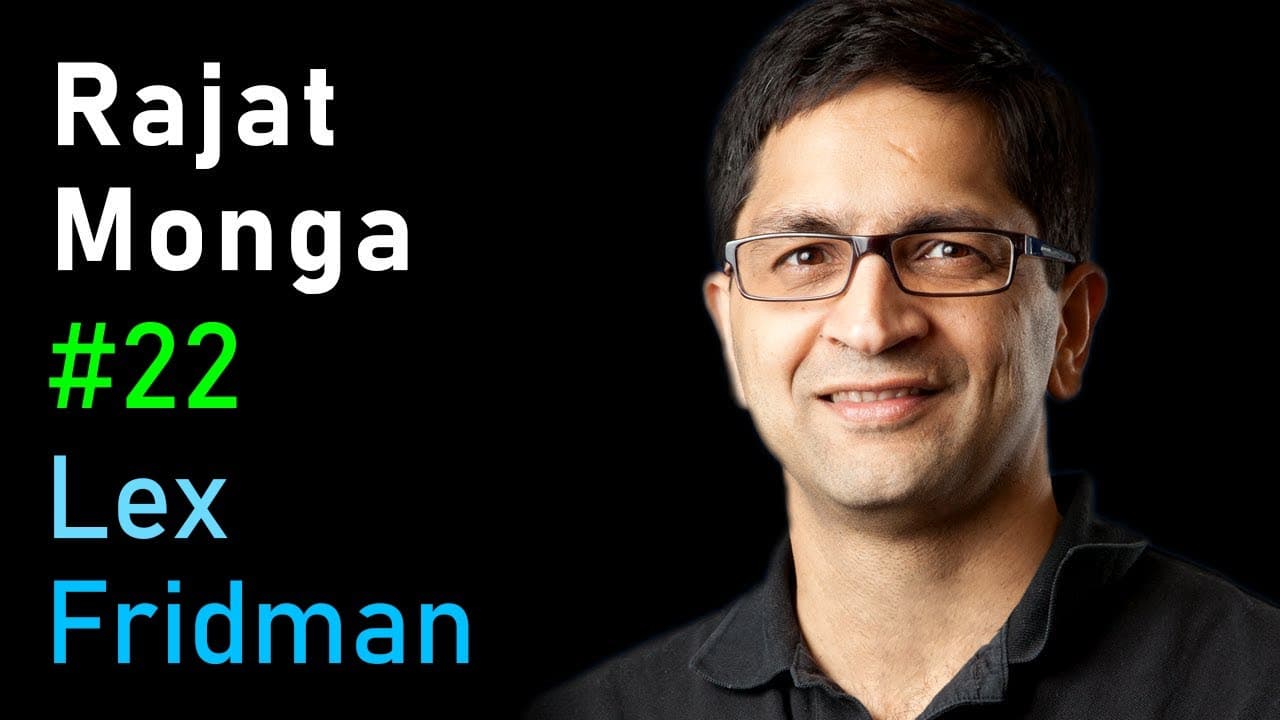
Rajat Monga: TensorFlow | Lex Fridman Podcast #22
TL;DR
TensorFlow, an open-source library for deep learning, has evolved into an ecosystem of tools for machine learning application in various domains, with a strong emphasis on community growth.
Transcript
the following is a conversation with Rajat manga he's an engineering director of Google leading the tensorflow team tensorflow is an open source library at the center of much of the work going on in the world and deep learning both the cutting edge research and the large-scale application of learning based approaches but is quickly becoming much mo... Read More
Key Insights
- 📖 TensorFlow has grown from a proprietary library to an open-source ecosystem with a strong emphasis on community growth and open innovation.
- 👁️🗨️ The early successes of Google Brain in speech and image recognition helped drive the development of TensorFlow and its adoption in various domains.
- 📖 The decision to open-source TensorFlow was a significant moment in the tech industry and inspired other companies to follow suit.
- 📲 TensorFlow's evolution into an ecosystem of tools has made machine learning more accessible and enabled deployment on a wide range of platforms, including mobile and specialized hardware.
- ❓ The focus on scalability, flexibility, and simplicity has been crucial to the success of TensorFlow and its adoption by both researchers and enterprises.
- 📚 TensorFlow 2.0 represents a milestone in the evolution of the library, offering a more user-friendly experience and improved performance.
Install to Summarize YouTube Videos and Get Transcripts
Explore YouTube Video Summarizer or Get YouTube Transcript Extractor
Questions & Answers
Q: What were the early goals of Google Brain and TensorFlow?
The early days of Google Brain focused on scaling deep learning techniques to Google's compute power and data resources. The goal was to see if deep learning could deliver better results when applied on a larger scale.
Q: What were some key early successes of Google Brain?
Google Brain had early successes in the areas of speech recognition and image recognition. These successes included collaborations with the speech research team and the development of the famous "cat paper" that showcased the potential of deep learning in image classification.
Q: What led to the decision to open-source TensorFlow?
The decision to open-source TensorFlow came from a desire to share research and push the state of the art forward. It was also influenced by the success of other open-source projects built on Google's research, and the recognition that deep learning had the potential to impact many areas beyond Google.
Q: How has TensorFlow transformed into an ecosystem of tools?
TensorFlow has evolved from a standalone library to an ecosystem of tools for machine learning. This includes specialized hardware support, tools for deploying models on different platforms, and the development of related projects such as TensorFlow Extended and TensorFlow.js.
Key Insights:
- TensorFlow has grown from a proprietary library to an open-source ecosystem with a strong emphasis on community growth and open innovation.
- The early successes of Google Brain in speech and image recognition helped drive the development of TensorFlow and its adoption in various domains.
- The decision to open-source TensorFlow was a significant moment in the tech industry and inspired other companies to follow suit.
- TensorFlow's evolution into an ecosystem of tools has made machine learning more accessible and enabled deployment on a wide range of platforms, including mobile and specialized hardware.
- The focus on scalability, flexibility, and simplicity has been crucial to the success of TensorFlow and its adoption by both researchers and enterprises.
- TensorFlow 2.0 represents a milestone in the evolution of the library, offering a more user-friendly experience and improved performance.
- The growth of the TensorFlow community is a key factor in its success, with contributions from both individual developers and larger organizations.
Summary
In this conversation with Rajat Monga, Engineering Director of Google TensorFlow, the discussion revolves around the early days of Google Brain and the evolution of TensorFlow into an open-source library. They also discuss the goals and missions of TensorFlow, the decision to open-source the library, and the challenges and future advancements of the TensorFlow ecosystem.
Questions & Answers
Q: What were the early days of Google Brain like and what were the goals and missions?
In the early days, the concept of deep learning was just starting to gain traction. The main goal was to scale deep learning to match Google's computational power and leverage the vast amount of data available. The initial focus was on proving that scaling compute and data could improve deep learning performance.
Q: Can you give examples of early wins in Google Brain that showcased the potential of deep learning?
Two early wins were in speech recognition and image classification. The collaboration with the speech research team resulted in significant advancements, and the "cat paper" on image recognition received a lot of attention. These early successes demonstrated the promise and potential of deep learning.
Q: What was the dream for TensorFlow in terms of scale and the impact on Google as a company?
The initial focus was on scaling TensorFlow within Google, proving its effectiveness in large-scale applications. As time went on, external academia also showed interest in deep learning, and the goal shifted towards growing the TensorFlow ecosystem outside of Google. The dream was to make machine learning accessible to more developers and expand its impact across industries.
Q: How significant was the decision to open-source TensorFlow?
The decision to open-source TensorFlow was a seminal moment in software engineering. It demonstrated that a large company like Google could share a major project with the world, leading to a new era of open innovation. This decision inspired other companies to follow suit and engage in the open exchange of ideas.
Q: What were the discussions around open-sourcing TensorFlow?
The initial idea came from Jeff Dean, who believed in sharing research and pushing the state of the art forward. There were existing academic libraries, but they lacked the level of sophistication and support that TensorFlow could provide. Additionally, Google had a history of open-sourcing software and wanted to continue that trend with TensorFlow.
Q: How does the integration of TensorFlow with Google Cloud impact the ecosystem?
TensorFlow can be used anywhere since it is an open library. However, integrating with Google Cloud ensures seamless integration with other tools and provides a robust infrastructure for machine learning deployment. It allows users to take advantage of Google's resources and makes the deployment process easier and more efficient.
Q: Can you provide a timeline of major design decisions in the TensorFlow project?
TensorFlow started in summer 2014 and was open-sourced in November 2015. During the development process, the team focused on scaling TensorFlow to support various hardware platforms, including GPUs and TPUs. They also considered the need for mobile support, leading to TensorFlow Lite for running models on phones. Major design decisions were made to ensure flexibility, scalability, and compatibility across different environments.
Q: How did the decision to use a graph-based execution model come about?
The decision to use a graph-based execution model was driven by the need for scalable deployment. While Python-based execution seemed simpler, it created challenges when it came to deployment. The graph-based model allowed for easier deployment and integration across different systems. The trade-off was the initial complexity of the graph, but it provided more flexibility and efficiency in the long run.
Q: How has the TensorFlow ecosystem evolved, and what role does it play in the future of machine learning?
The TensorFlow ecosystem has grown significantly, with the goal of making machine learning accessible to a broader audience. It includes various tools, frameworks, and libraries that cater to different needs and use cases. The ecosystem enables researchers, developers, and enterprises to leverage TensorFlow and implement machine learning in their respective domains. The future focus is on making the ecosystem more cohesive and ensuring compatibility across different components.
Q: How do you handle the technical debt and maintain backward compatibility in TensorFlow?
Backward compatibility is crucial, as many production systems rely on TensorFlow. While innovation is essential, compatibility ensures that previous versions still work and that users can transition smoothly. The challenge is to balance innovation with stability and the needs of both researchers and enterprises. The team aims to design with a clean slate while keeping in mind the importance of compatibility with existing systems.
Q: How do you view the competition with other libraries, such as PyTorch?
Competition is healthy and brings different ideas to the table. TensorFlow and PyTorch have their unique strengths and cater to different user needs. The focus is on making TensorFlow the best it can be while learning from the innovations of other libraries. The goal is to provide a seamless experience for developers and researchers, regardless of which library they choose.
Summary & Key Takeaways
-
TensorFlow, led by Rajat Monga, has grown from a proprietary machine learning library at Google to an open-source ecosystem of tools for machine learning application on different hardware platforms.
-
The early days of Google Brain, the team behind TensorFlow, focused on scaling deep learning techniques to the compute power and data resources available at Google.
-
Key early successes included collaborations with the speech research team on speech recognition and the development of the "cat paper" on image recognition.
-
TensorFlow 2.0, currently in alpha, represents a major milestone in the tech industry, showcasing the success of open innovation and inspiring other companies to open source their code.
Read in Other Languages (beta)
Share This Summary 📚
Summarize YouTube Videos and Get Video Transcripts with 1-Click
Try YouTube Summary with ChatGPT & Claude or YouTube Transcript Generator
Explore More Summaries from Lex Fridman Podcast 📚
Summarize YouTube Videos and Get Video Transcripts with 1-Click
Try YouTube Summary with ChatGPT & Claude or YouTube Transcript Generator